
 Home
Home About
About Tours
Tours Bikes Rental
 Contact
Planning where to sleep on the Ha Giang Loop is one of the most underestimated challenges of the entire trip. Unlike a straightforward city break, this mountainous region demands that you make accommodation decisions before you even know how your body will handle six hours of hairpin bends a day. The wrong base can leave you stuck far from the views you came for or worse, scrambling for a room in a remote village with no English-speaking host and a dying phone battery.
This guide Viet motorbike, covers everything: whether to base yourself in Ha Giang City or move nightly along the loop, which regions suit which travel styles, how to choose between a homestay and a hotel, and what to realistically expect when you book.
Understanding the Ha Giang Loop: Why Your Base Matters
Your base on the Ha Giang Loop matters because it directly controls how much riding you do per day, what scenery you wake up to, and whether you spend your evenings socialising with other travellers or sharing dinner with a local family. Choose the wrong base and you’ll either be grinding out punishing daily distances or missing the best viewpoints entirely. The two most common approaches hub-and-spoke versus moving nightly produce completely different trips.
Understanding the structure of the loop before you book anything is not optional. It’s the foundation every accommodation decision builds on.
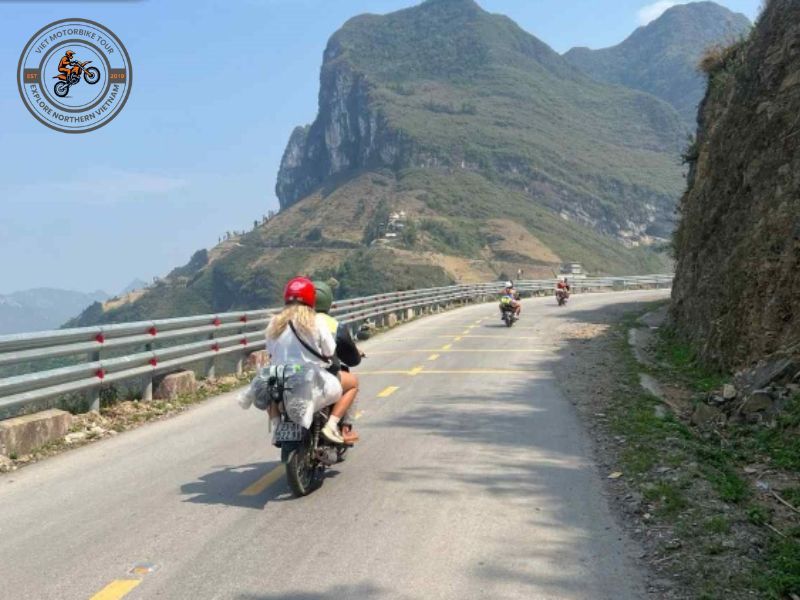
The Hub-and-Spoke vs. The Loop Strategy
Hub-and-spoke means Ha Giang City is your base for the entire trip. You ride out each morning in a different direction and return each evening. The advantages are real: the city has reliable ATMs, good food options, strong Wi-Fi, and comfortable hotels. You only unpack once. The disadvantages, however, are significant. The most dramatic scenery on the loop — Ma Pi Leng Pass, the Nho Que River gorge, the Dong Van Old Quarter — is two to four hours from the city. Doing these as day trips means spending a substantial portion of your riding time covering the same stretches of road twice. It also means you miss the golden light of early mornings in the mountains, which is when the scenery is at its best.
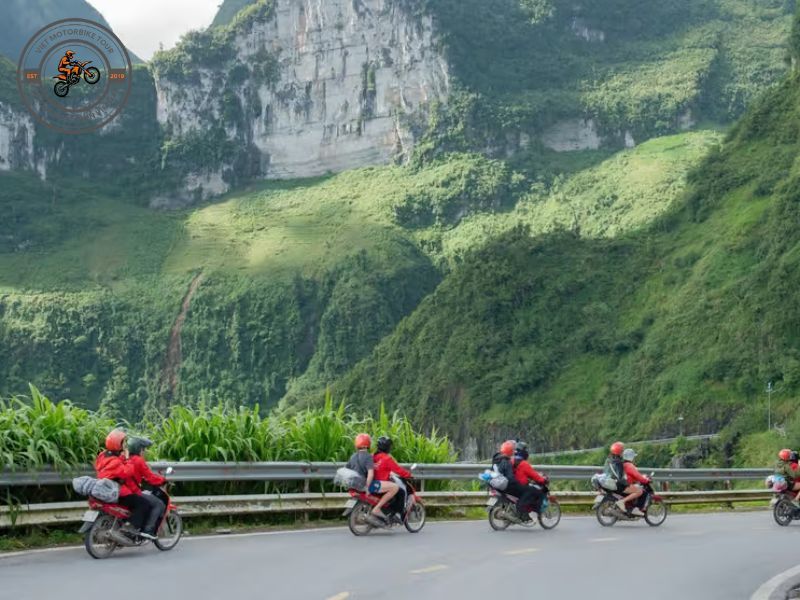
The full loop strategy is what most riders do, and for good reason. You move to a new overnight stop each day — typically Yen Minh or Quan Ba on night one, Dong Van on night two, Meo Vac on night three, and back to Ha Giang City on night four. This approach puts you in the right place at the right time each day. You can wake up in Dong Van and be at Ma Pi Leng Pass within forty minutes, catching the morning mist before the tour groups arrive. The trade-off is logistical complexity: you carry everything with you, you’re dependent on accommodation being available, and the quality of rooms varies considerably between stops.
Distances and Travel Times
Realistic driving times between the major loop hubs matter more than raw distances, because the roads on the Ha Giang Loop are mountain roads steep, winding, and often single-lane. The table below shows approximate riding times between major stops under normal conditions, assuming a leisurely pace with stops for photos and a lunch break.
| Route Segment | Distance (approx.) | Estimated Riding Time |
|---|---|---|
| Ha Giang City → Quan Ba / Heaven’s Gate | 46 km | 1.5 – 2 hours |
| Quan Ba → Yen Minh | 45 km | 1.5 – 2 hours |
| Yen Minh → Dong Van | 48 km | 2 – 2.5 hours |
| Dong Van → Meo Vac (via Ma Pi Leng) | 23 km | 1 – 1.5 hours |
| Meo Vac → Du Gia | ~100 km via main road | 3.5 – 4.5 hours |
| Du Gia → Ha Giang City | 50 km | 2 – 2.5 hours |
| Meo Vac → Ha Giang City (direct return) | 150 km via Yen Minh | 5 – 6 hours |
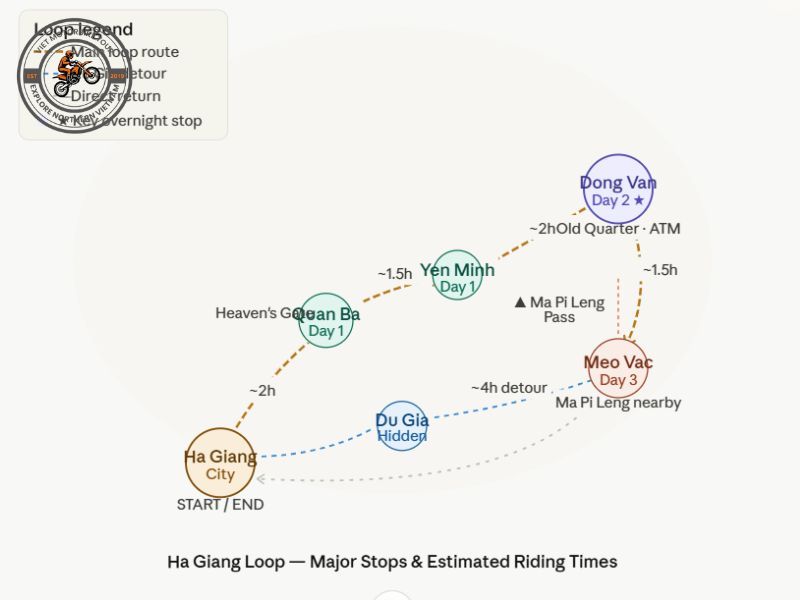
The Best Areas to Stay on the Ha Giang Loop
The best areas to stay on the Ha Giang Loop break down into five distinct zones, each offering a different combination of scenery, amenities, and cultural atmosphere: Ha Giang City, Yen Minh and Quan Ba, Dong Van, Meo Vac, and Du Gia. Moving through them chronologically over a three-to-four day loop gives you a progressively more remote and dramatic experience, culminating in the gorge scenery around Ma Pi Leng before the return journey.
Ha Giang City
Ha Giang City is the practical launchpad for the entire loop — a bustling provincial capital with the infrastructure you need before heading into the mountains. It’s where you rent your motorbike, complete your permit paperwork for the restricted zone (required for foreigners entering Dong Van District), stock up on supplies, and get your first night of solid sleep before the riding begins.
Vibe: Energetic, urban by local standards, and noticeably more developed than anything you’ll find further along the route. The city has a genuine street food scene, coffee shops, convenience stores, and evening markets. It’s not a destination in itself, but it functions extremely well as a base.
Who is it for: Ha Giang City overnights suit late arrivals who fly into Hanoi and catch the overnight bus, travellers whose permits need an extra day to process, first-timers who want to test their motorbike before committing to mountain roads, and anyone who needs to sort mechanical issues before departing.
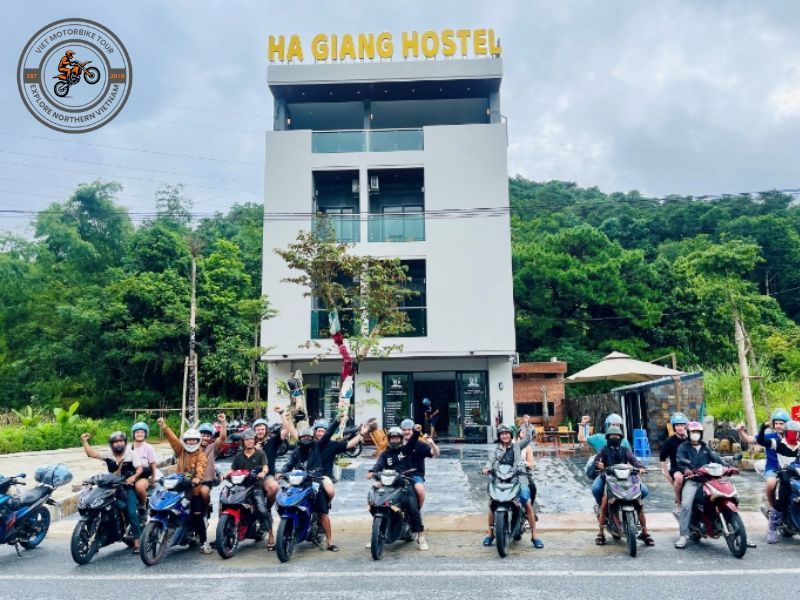
Accommodation scene: The city has the widest range of accommodation options on the entire loop. On the backpacker end, a cluster of hostels along and around Nguyen Trai Street cater specifically to loop riders — they offer bike rentals, guided tour bookings, luggage storage for items you don’t want to carry, and the social buzz of meeting other travellers at the same stage of planning. Dorm beds typically run 80,000–150,000 VND per night. On the hotel Ha Giang side, mid-range guesthouses offer private rooms with en-suite bathrooms, air conditioning, and reliable hot water for 250,000–500,000 VND. A small number of better-appointed hotels exist for those who want a more comfortable first or last night.
Yen Minh / Quan Ba
Yen Minh and Quan Ba represent the loop’s gentle opening movement — pine forest roads, the first mountain passes, and the famous Heaven’s Gate viewpoint at Quan Ba. These towns sit between Ha Giang City and the harder terrain further north, making them natural first-night stops for riders who want to ease into the experience rather than push all the way to Dong Van on day one.
Vibe: Quiet, cool, and pine-scented. Quan Ba in particular has a softness to its landscape that contrasts sharply with the dramatic karst scenery further along. The Twin Mountains (Nui Doi) are visible from the main road and are among the most photographed landmarks in the early loop section. Yen Minh is slightly larger and has a more established food and accommodation scene.
Who is it for: Riders taking a slower pace, travellers who don’t want to cover the full distance to Dong Van on their first riding day, photographers who want to catch the late afternoon light over Quan Ba, and anyone who genuinely enjoys pine forest riding over pure rock-and-gorge scenery.
Accommodation scene: Both towns have a modest but reliable selection of guesthouses and small homestays. Rooms are functional rather than luxurious expect clean beds, cold or warm showers depending on the specific place, and basic Vietnamese food in the attached restaurant. Booking in advance is advisable during peak season but usually unnecessary outside of major holidays. Prices are lower than Ha Giang City: private rooms often run 150,000–300,000 VND per night. Ethnic homestays begin to appear in the villages between Quan Ba and Yen Minh, offering the first genuine taste of H’mong or Tay family hospitality.
Dong Van
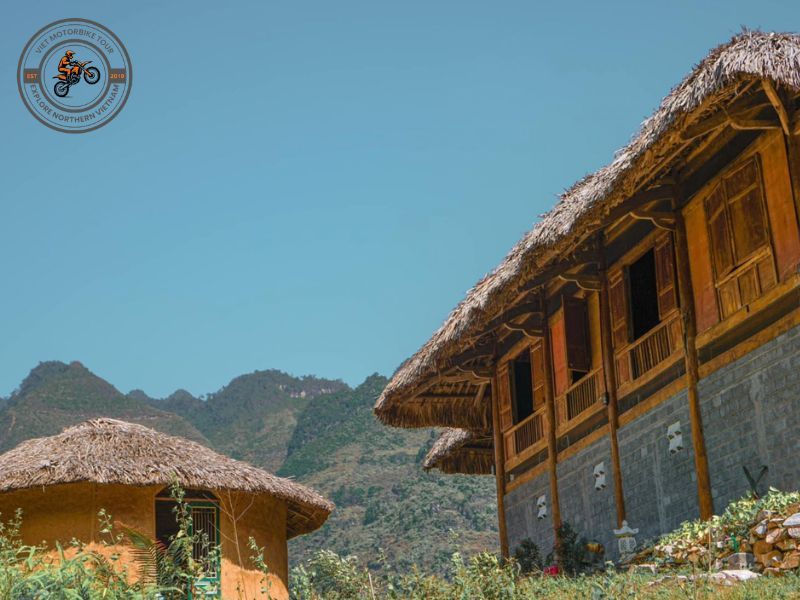
Dong Van is the cultural and logistical heart of the loop a town with an intact Old Quarter dating back to the early twentieth century, a weekly market that draws ethnic minority groups from surrounding villages, and enough amenities to feel genuinely comfortable after days of riding. It is consistently the most popular overnight stop on the loop, and for good reason.
Vibe: Historic, vibrant after dark (by mountain town standards), and surprisingly well-served. The Dong Van Old Quarter is a UNESCO-recognised heritage area — a cluster of traditional stone and timber houses built by Chinese and Tay merchants that has been carefully preserved. Walking its lanes at dusk, with the smell of street food drifting from the market stalls, is one of the most atmospheric moments the entire loop offers.
Who is it for: History and architecture enthusiasts, food-focused travellers, riders who need to withdraw cash (there is an ATM here — one of the few on the loop), and anyone who values having a café to sit in after a long riding day. Dong Van also serves as the logical base for a morning ride to Ma Pi Leng Pass before descending to Meo Vac.
Accommodation scene: Dong Van has the widest range of quality accommodation after Ha Giang City. The Old Quarter contains several guesthouses built into or adjacent to traditional stone buildings — these book up quickly during peak season (October–November for the buckwheat flowers, April for the poppy season) and should be reserved at least a week in advance. Outside the Old Quarter, newer guesthouses offer more reliable amenities. A small number of boutique-style properties have opened in recent years, catering to travellers who want character alongside comfort. Prices range from 150,000 VND for a basic private room to 600,000–900,000 VND for something with genuine design sensibility.
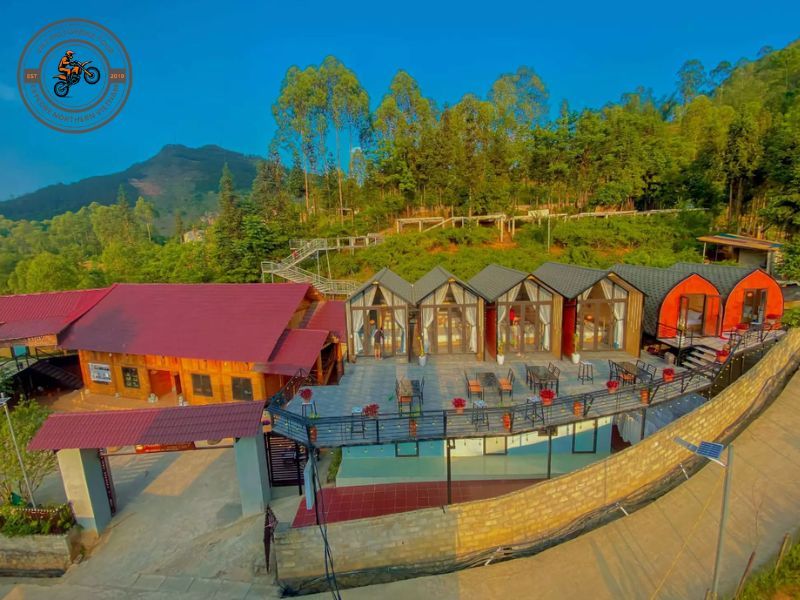
Meo Vac & Ma Pi Leng Pass
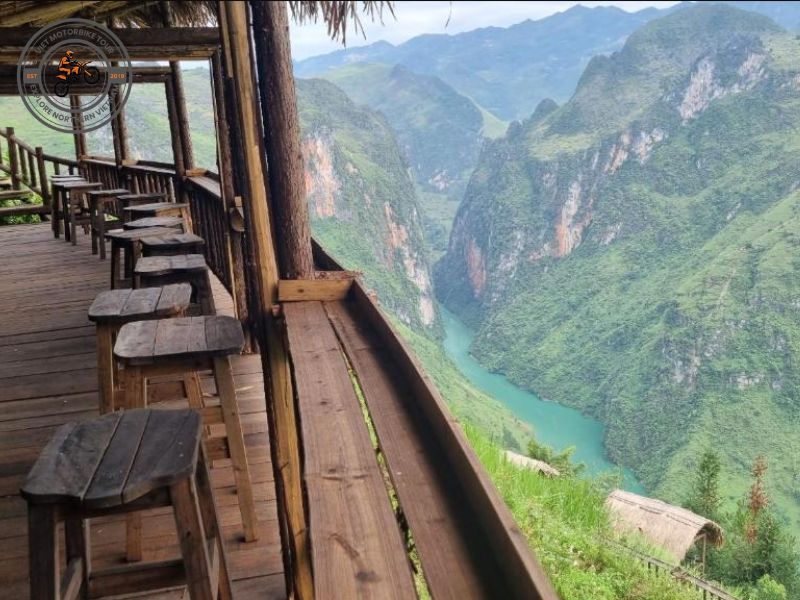
Meo Vac sits at the bottom of the Nho Que River gorge, accessed via Ma Pi Leng Pass — arguably the most dramatic stretch of road in all of Vietnam. The descent from the pass into Meo Vac takes you from sweeping aerial views of turquoise water thousands of metres below to a compact market town where the pace of life feels a world removed from anywhere you’ve been before.
Vibe: Majestic, rugged, and genuinely remote. The scenery around Meo Vac is severe and beautiful in equal measure — towering limestone karst cliffs, the impossibly blue-green Nho Que River visible in the gorge below the pass, and a town that wakes up before dawn when the weekly market brings H’mong, Lolo, and Giay vendors from surrounding villages. The Sunday market in Meo Vac is one of the most authentic in northern Vietnam.
Who is it for: Nature lovers, photographers chasing the sunrise over the Nho Que River gorge (arrive at the Ma Pi Leng viewpoint before 7am for the best light), early risers who can be on the road before the tourist groups begin moving, and travellers who want to feel genuinely off the main circuit even while on the most-ridden route in northern Vietnam.
Accommodation scene: Meo Vac’s accommodation scene is more limited than Dong Van but has improved steadily. A handful of guesthouses near the town centre offer clean private rooms with warm showers. Homestays are available in the surrounding villages and offer deeper cultural immersion these are particularly popular with travellers who arrive for the Sunday market and want to extend their stay. Amenities are basic: expect intermittent Wi-Fi, functional rather than plush bathrooms, and very limited dining options after 8pm. This is part of the appeal. Book ahead for Sunday market weekends when the town fills with both domestic tourists and visiting vendors who need accommodation.
Du Gia
Du Gia is the loop’s secret a village of waterfalls, emerald rice terraces, and walking trails that sees a fraction of the traffic that passes through the main loop towns. Reaching it requires a detour from the standard Meo Vac–Ha Giang City return route, adding distance and time, but the riders who make the detour consistently describe it as one of the highlights of their entire trip.
Vibe: Pristine, unhurried, and genuinely off-grid in feel. The main draw is Lung Khuy Cave and the series of waterfalls accessible on foot from the village. The scenery here is softer and greener than the harsh karst of Dong Van and Meo Vac rice paddies, bamboo groves, and clear mountain streams. The Tay ethnic minority community in and around Du Gia maintains traditional stilt house architecture and farming practices that feel largely untouched by the tourism economy developing elsewhere on the loop.
Who is it for: Adventure seekers, travellers who have done the main loop before and want a different angle, hikers who want to spend a day on their feet rather than on a motorbike, and anyone who has deliberately built an extra day into their itinerary. Du Gia is not for riders on a tight schedule — the detour adds significant distance and the accommodation scene is limited enough that arriving without a plan is inadvisable.
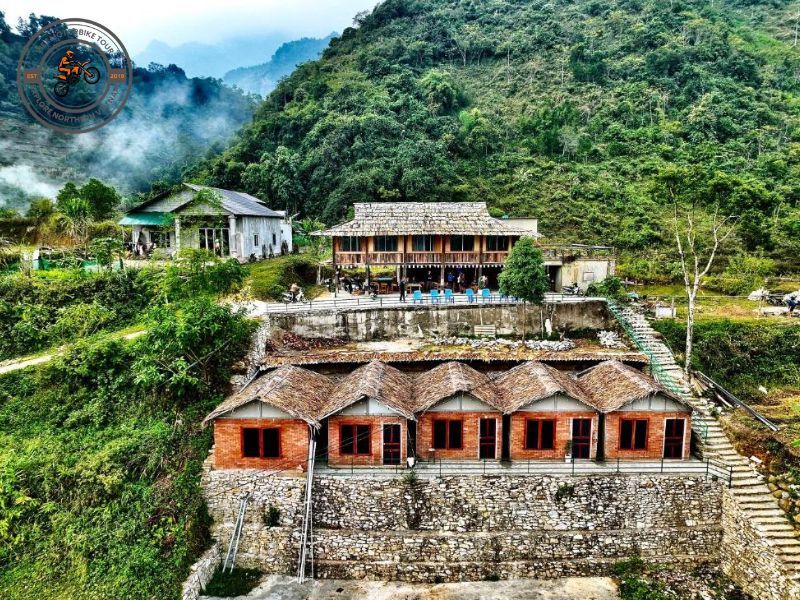
Accommodation scene: Du Gia’s options are almost exclusively homestays with local Tay families. This is both a strength and a constraint. The strength is that a Du Gia homestay is among the most immersive cultural experiences the loop offers — family meals, bamboo sleeping platforms, and evenings spent around a fire with hosts who have little contact with mainstream tourism. The constraint is that availability is limited, English communication is minimal, and expectations around amenities (hot water, Wi-Fi, private bathrooms) need to be kept low. Book through a tour operator or local contact well in advance — walk-ins are possible but not reliable.
Choosing Your Accommodation Type: Homestay, Hostel, or Hotel?
There are three main accommodation types on the Ha Giang Loop ethnic homestays, backpacker hostels and motorbike camps, and boutique hotels or eco-lodges — and each delivers a fundamentally different experience in terms of price, cultural immersion, and comfort. The right choice depends entirely on what you’re travelling for, not on which option sounds most impressive.
| Type | Price Range (per night) | Comfort Level | Cultural Experience |
|---|---|---|---|
| Ethnic Homestay | 100,000 – 250,000 VND | Basic to moderate | Very high — family meals, local customs |
| Backpacker Hostel / Camp | 80,000 – 350,000 VND | Moderate (dorms to private) | Medium — traveller community focus |
| Boutique Hotel / Eco-Lodge | 400,000 – 1,500,000+ VND | High | Low to medium — comfort prioritised |
Authentic Ethnic Homestays
Ethnic homestays are the most culturally rich accommodation option on the loop, and for many travellers they become the defining memory of the entire trip. These are family homes — not commercial properties — where you sleep in a room or on a sleeping platform within the family’s living space, share meals cooked over a wood fire, and spend evenings in the kind of easy cross-cultural company that no hotel lobby can replicate.
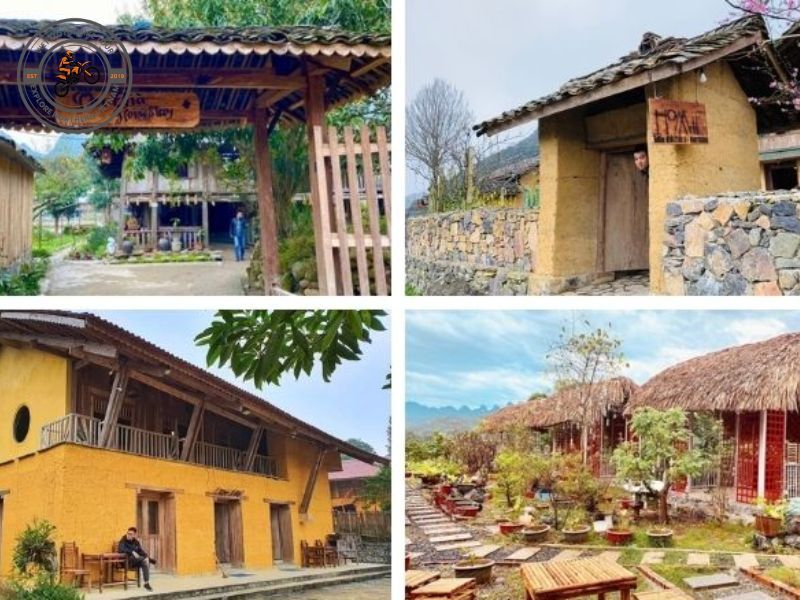
Backpacker Hostels & Motorbike Camps
Backpacker hostels and motorbike-specific camps are concentrated primarily in Ha Giang City and Dong Van, with a smaller presence in Yen Minh and Meo Vac. They serve a clear function: connecting riders with each other, with rental bikes, with guided tour options, and with the practical information (road conditions, permit updates, mechanical help) that makes the loop safer and more enjoyable.
Boutique Hotels and Eco-Lodges
Boutique hotels and eco-lodges represent the luxury end of Ha Giang accommodation — a category that is growing but remains small relative to the overall accommodation market. The best of these properties offer something genuinely rare: serious comfort in a strikingly beautiful environment, without the sterility of a conventional hotel.
Essential Tips for Booking Your Ha Giang Accommodation
The Buckwheat Flower Festival (typically late October through mid-November) is the most popular time to visit the loop. The fields between Quan Ba and Dong Van turn a vivid pink-purple as buckwheat blossoms, and the visual effect against the limestone karst has made this one of the most photographed natural events in northern Vietnam. Accommodation in Dong Van and along the northern loop fills weeks in advance during this period. Prices rise by 30–50% at many properties. If your dates fall in this window, book everything — especially Dong Van — at least three to four weeks ahead.
The Poppy and Plum Blossom Season (February through March) draws a smaller but significant crowd. The landscape around Dong Van turns white and pink with plum blossoms, and lingering poppy fields add colour to the ridgelines. This period is slightly less crowded than buckwheat season but still warrants advance booking for popular properties.
Low season (May through August) coincides with the rainy season. Roads can be slippery, some passes close temporarily after landslides, and the landscape is lush but visibility at the high viewpoints is frequently obscured by cloud. The upside is near-empty accommodation — you can walk into most guesthouses and find a room, prices are at their lowest, and the green-season rice terrace scenery is genuinely beautiful in its own right. Experienced riders often prefer this period precisely because the loop feels less like a tourist circuit.
Major Vietnamese public holidays (Tet, National Day in September, Reunification Day in April) bring a surge of domestic tourists to Ha Giang that rivals the buckwheat festival for accommodation pressure. Always check the Vietnamese public holiday calendar before assuming you can find rooms on arrival during these periods.
Frequently Asked Questions (FAQs)
1. Do I need to book my Ha Giang homestays in advance?
Yes, for the most popular stops, you should book ahead, particularly during peak season.
2. Where is the best place to stay near Ma Pi Leng Pass?
The two practical options are Dong Van (approximately 30–40 minutes from the top of the pass via a morning ride) and Meo Vac (30–40 minutes on the other side, at the bottom of the descent)
3. Are homestays in Ha Giang safe for solo female travellers?
Yes, in general — Ha Giang has a strong reputation among the solo female travel community as a safe and welcoming destination.
4. Can I pay by credit card in rural Ha Giang?
No, cash is essential on the loop beyond Ha Giang City. The only reliable ATMs on the route are in Ha Giang City itself and in Dong Van town.
Choosing the right places to stay on the Ha Giang Loop is ultimately a question of matching your riding endurance, cultural priorities, and comfort expectations to the options each region offers. Ha Giang City gives you the infrastructure to start well. Yen Minh and Quan Ba offer a gentle entry into mountain living. Dong Van is the cultural centrepiece that justifies the entire journey north. Meo Vac places you at the foot of the most spectacular road in Vietnam. And Du Gia rewards the travellers who take the extra day to find it.
The riders who get the most out of the loop are the ones who plan their overnight stops deliberately — not just for convenience, but for what they’ll see and experience from each base. Build your accommodation plan around your itinerary, not the other way around.
Viet Motorbike Tour offers a range of options to make that planning easier: semi-automatic and manual motorbike rentals with full mechanical support, guided Ha Giang Loop tours with accommodation at vetted stops along the route, and a comprehensive four-day loop itinerary that places you in the right location each night. Whether you want to go solo with a bike and a booking list or join a small group with a local guide who knows every bend in the road, the team can put the right package together.
Contact Viet Motorbike Tour:
📞 WhatsApp: +84 889 860 860
🌐 Website: https://vietmotorbiketour.com/