
 Home
Home About
About Tours
Tours Bikes Rental
 Contact
Nestled deep in the mist-covered highlands of Hoang Su Phi, Pan Hou Village Ha Giang is not just a place to sleep — it is the reason many travelers reroute their entire Ha Giang itinerary. This guide Viet Motorbike Tour covers honest room reviews, current pricing.
What Makes Panhou Village, Hoang Su Phi Special?
Panhou Village stands out as Hoang Su Phi’s premier ecolodge because it sits at the precise intersection of authentic ethnic minority culture, sustainable design, and genuine wilderness immersion — in a district that most Ha Giang visitors bypass entirely.
Specifically, Panhou’s distinctiveness comes from three interlocking strengths: its remote yet accessible location in Thong Nguyen commune, its eco-friendly architecture that uses living materials rather than concrete, and its curated cultural programming built around the Red Dao community. Together, these elements create an experience that no urban spa resort can replicate.
Location & Ecosystem
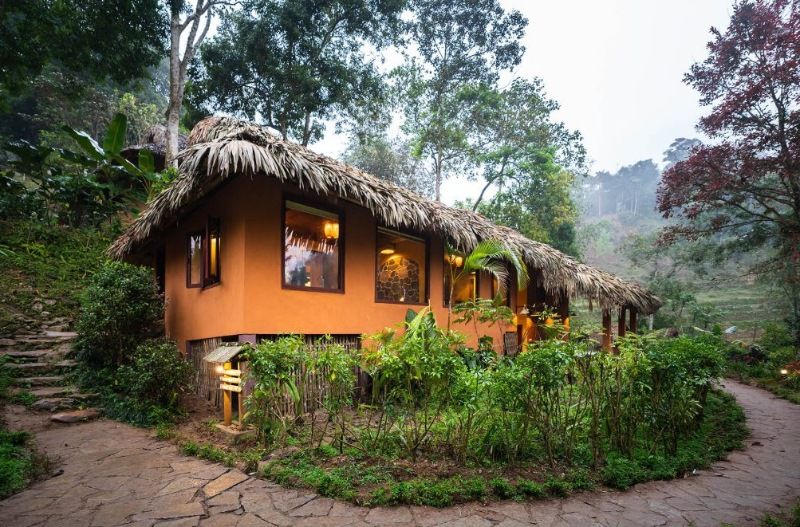
Panhou Retreat sits within Thong Nguyen commune, Hoang Su Phi district, approximately 45 kilometers southwest of Ha Giang City. This placement is deliberate and meaningful. Unlike the Dong Van Karst Plateau — which draws the majority of Ha Giang Loop traffic and can feel congested during peak season Hoang Su Phi remains quieter, wilder, and less commercialized.
The surrounding ecosystem belongs to the subtropical highland forest zone of the Hoang Lien Son mountain range, where elevation ranges between 500 and 2,400 meters. Panhou’s grounds are threaded by a clear mountain stream, which provides both acoustic backdrop and natural cooling throughout the property. The resort borders terraced rice fields that cascade down the hillsides in sweeping geometric arcs recognized nationally when the Hoang Su Phi terraced fields were designated a National Scenic Heritage Site by the Vietnamese Ministry of Culture in 2012.
Architecturally, Panhou Retreat uses bamboo frames, woven palm-leaf ceilings, natural stone foundations, and reclaimed timber throughout its structures. Solar energy powers the common areas and reduces grid dependence to near zero. Rainwater harvesting systems supplement water supply during dry months. The entire property is designed without air conditioning relying instead on elevation, cross-ventilation, and the natural cool of the surrounding jungle to regulate temperature. This is not an inconvenience; at 900 meters above sea level, nighttime temperatures in Thong Nguyen rarely climb above 22°C even in midsummer.
Detailed Review: Rooms, Amenities, and Pricing
Panhou Retreat offers 3 main room categories across a spectrum of comfort and privacy levels, with pricing that reflects both room type and seasonal demand. The table below summarizes the key differences across room categories to help you choose the right option for your stay.ư
| Room Category | Capacity | Key Features | Approx. Price/Night (USD) | Best For |
|---|---|---|---|---|
| Superior Room | 2 adults | Garden or stream view, natural materials, fan cooling | $45 – $65 | Budget-conscious couples, solo travelers |
| Deluxe Room | 2 adults | Elevated jungle view, larger footprint, private terrace | $70 – $95 | Couples, short retreats |
| Suite / Bungalow | 2–3 adults | Standalone structure, panoramic views, full privacy | $110 – $160 | Honeymoons, special occasions, families |
Room Categories & Honest Assessment
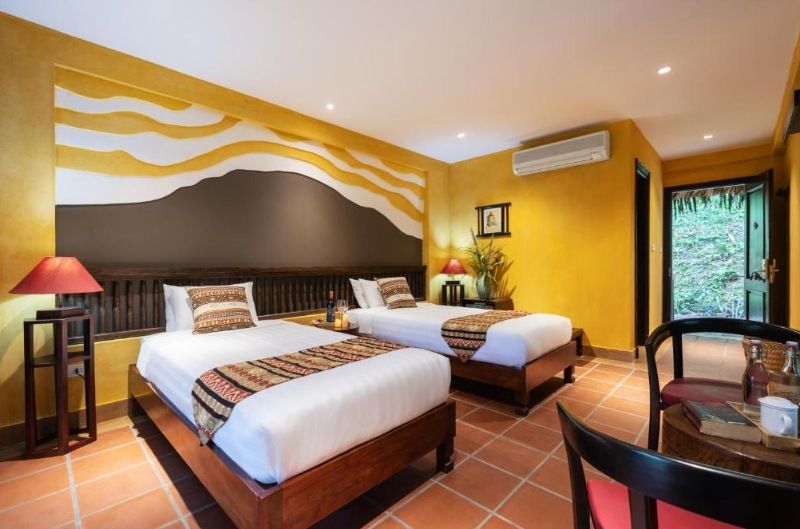
Superior and Deluxe Rooms occupy the main lodge building and are interconnected with the central dining and communal areas. Both feature locally crafted bamboo furniture, handwoven textile accents, natural ventilation, and en-suite bathrooms with hot water — essential given cool mountain mornings. The Deluxe Rooms add a private terrace or balcony overlooking the stream valley, which is worth the upgrade if your budget allows.
Suites and Bungalows are Panhou’s crown jewel. These standalone structures are set slightly apart from the main building, giving guests the sensation of sleeping in a private treehouse. Each bungalow features floor-to-ceiling openings that frame the rice terrace panorama, a daybed for reading, and enough space to unwind after a full day of trekking. Bathrooms in the bungalows are particularly well-designed — open-air rain showers bordered by living plant walls create an outdoor bathing experience without sacrificing warmth.
Honest Pros and Cons
Pros:
- Absolute quiet no road noise, no neighboring properties audible at night
- Authentic design language rooted in local materials and craftsmanship
- Exceptionally clean and well-maintained despite the forest setting
- Warm, attentive service from local staff who genuinely know the region
- Meals served from the on-site restaurant using fresh local produce
Cons:
- Wi-Fi is weak to non-existent in bungalows — plan accordingly and treat it as a digital detox feature
- Insects are present, as expected in any jungle-adjacent property; the resort provides mosquito nets and repellent, but light sleepers sensitive to natural sounds should bring earplugs
- The remote location means there is no “pop out for a convenience store” option pack personal medications and snacks for late-night cravings
- Booking availability is limited, especially during September–October peak season; reserve at least 3–4 weeks in advance
Culinary Experience at the Retreat
The on-site restaurant at Panhou Retreat operates on a farm-to-table philosophy sourced from the surrounding Hoang Su Phi valley and the resort’s own kitchen garden. Breakfasts are generous — freshly steamed rice, pickled mountain vegetables, herb omelets, and locally grown coffee set the tone for the day. Lunch and dinner menus rotate seasonally and feature dishes drawn from the culinary traditions of the Dao, La Chi, and Nung ethnic communities.
Standout dishes include thắng cố (a highland mountain broth traditionally served at Sunday markets), cá suối nướng (grilled stream fish caught locally), and xôi ngũ sắc (five-color sticky rice prepared with natural plant dyes). Vegetarian guests are well-accommodated with advance notice. Portions are generous and prices are included or low-cost add-ons to room rates.
The dining terrace overlooks the stream and the lower rice terraces, making every meal a visual experience in addition to a culinary one. Breakfast in particular — served as the morning mist lifts off the valley floor — is something guests consistently cite in reviews as an unexpectedly emotional experience.
Signature Experiences at Panhou Retreat
Panhou Retreat offers two experiences that no other property in Hoang Su Phi can fully replicate: the authentic Red Dao herbal bath and guided trekking routes into working ethnic minority villages. Both are built on genuine community relationships rather than staged cultural performances.
These experiences are what separate Panhou from a standard jungle lodge and elevate it into the category of meaningful travel. Specifically, they create direct value exchange with the local Red Dao community, support the preservation of traditional knowledge, and give guests memories that outlast any Instagram post.
The Authentic Red Dao Herbal Bath
The Red Dao herbal bath — known locally as tắm thuốc người Dao Đỏ is a traditional healing practice passed down through generations of the Red Dao (Dao Đỏ) people, one of the most culturally distinctive ethnic groups in Vietnam’s northern highlands. At Panhou, this experience is facilitated in direct partnership with Red Dao families from the surrounding communes.
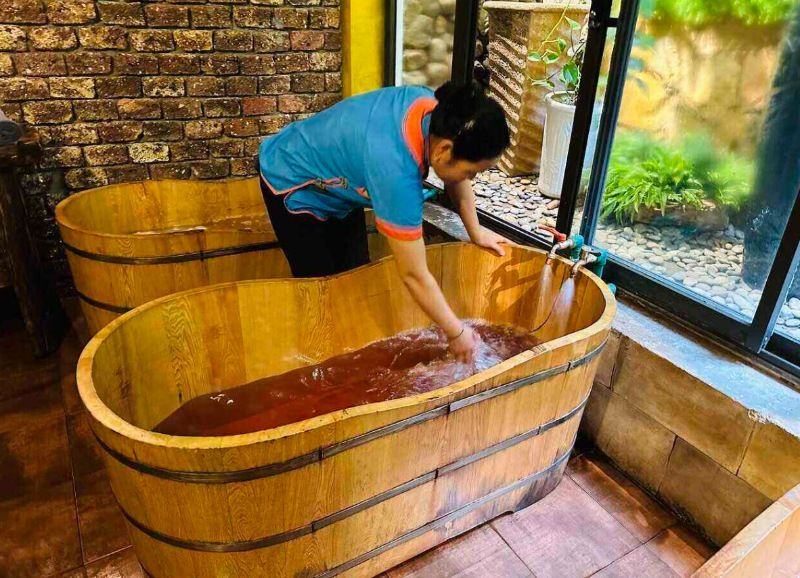
The bath preparation involves gathering and boiling over 100 species of medicinal mountain herbs, roots, and bark — a formula that varies slightly by family and season but typically includes ingredients known for anti-inflammatory, circulatory, and muscle-recovery properties. The resulting dark-amber herbal water is poured into a deep wooden soaking tub and maintained at approximately 38–42°C for the bathing session, which lasts 20–30 minutes.
The physical benefits are significant after long days of trekking or motorbike riding: deep muscle relaxation, improved circulation, reduced joint inflammation, and a pronounced improvement in sleep quality. Many guests report that a single Red Dao herbal bath session resolves soreness that would otherwise persist for days. Beyond the physical, there is a meditative quality to sitting in a cedar tub, in a bamboo bathhouse, surrounded by jungle sounds a quiet that is genuinely rare in modern travel.
Practical notes for booking the Red Dao herbal bath at Panhou:
- Pre-booking is strongly recommended; the resort has limited tub capacity
- Sessions are best scheduled in the late afternoon after a day of trekking
- The herbal water will temporarily stain light-colored skin and swimwear this is normal and fades within hours
- Pregnant women and guests with certain cardiovascular conditions should consult a doctor before soaking at high temperatures
Trekking Trails & Local Villages
Panhou Retreat serves as one of the best trekking base camps in all of Hoang Su Phi, with direct trail access to multiple ethnic minority villages within 2–8 kilometer walking distance of the property.
The most accessible route leads to Nam Hong village, a 3-kilometer moderate trail that passes through active rice terraces before descending into a La Chi farming settlement. Morning departures (6:30–7:00 AM) offer the best light for photography and the chance to observe farmers preparing their fields before the heat of the day. The return journey climbs back through secondary forest and offers sweeping views of the Panhou valley.
For more experienced trekkers, the route to Phin Ho village extends to approximately 8 kilometers round-trip through denser jungle terrain, crossing several stream fords and gaining 300 meters of elevation before reaching a Dao Ao Dai community. Panhou’s local guides all of whom are from the surrounding communes provide context on farming practices, plant identification, and village customs that no guidebook can replicate.
The terraced rice field circuit is a gentler 4-kilometer loop that prioritizes visual reward over physical challenge, designed for guests who want to experience the landscape without a strenuous hike. This route is ideal during harvest season (September–October) when the fields turn gold and village activity is at its peak.
Frequently Asked Questions (FAQs)
1. Is Panhou Village family-friendly?
Yes, Panhou Village is family-friendly, with its safest experience for families with children aged 8 and above. The resort’s natural setting, open grounds, and stream access create a genuine outdoor playground for curious children, and the farm-to-table meals accommodate young eaters well
2. What is the best time of year to visit Hoang Su Phi?
The best time to visit Hoang Su Phi is between September and early October, when the terraced rice fields reach peak golden color just before harvest.
3. Do I need to book the Red Dao bath in advance?
Yes, booking the Red Dao herbal bath in advance is strongly recommended, ideally at the time of making your room reservation. Panhou has limited bathing capacity (typically 2–4 tubs available per session), and demand from in-house guests frequently exceeds availability during peak season
Final Thoughts & Conclusion
Panhou Retreat earns its reputation as Ha Giang’s finest ecolodge by doing something genuinely difficult: delivering authentic cultural immersion, restorative wellness, and sustainable design without slipping into either luxury cliché or rustic discomfort.
Ready to plan your stay? Check current availability, confirm pricing for your preferred dates, and ask about custom itinerary planning for a complete Ha Giang experience that includes both the famous loop and the serene highlands of Hoang Su Phi