 Home
Home About
About Tours
Tours Bikes Rental
 Contact
When it comes to the Ha Giang Loop, Self-Ride wins on raw cost savings while Easy Rider wins on value, safety, and cultural depth — and which one actually saves you more depends entirely on your experience level, group size, and how you define “saving.” For budget backpackers with solid motorbike skills, securing affordable Ha Giang motorbike rental and self-riding a 3-day loop can cost as little as $70–$120 total, compared to $130–$220 for a guided Easy Rider package — though that gap is less decisive than it first appears once hidden costs are factored in. That gap looks significant on paper but hidden repair costs, permit fees, and wrong turns can quietly close it.
To understand where that gap truly lies, you need a clear breakdown of every cost item: motorbike rental, fuel, accommodation, food, entry fees, and the expenses most travelers forget to budget for. Each of these variables behaves differently depending on your travel style, and the difference between a $90 trip and a $200 trip often comes down to a single blown tire or a missed booking.
Beyond the numbers, your traveler profile matters just as much as your wallet. A solo first-timer navigating mountain switchbacks in the rain faces a very different risk equation than an experienced rider who has tackled similar terrain before. The “cheaper” option can quickly become the expensive one the moment something goes wrong at kilometer 200 with no mechanic in sight.
That said, both options can be done smartly — and this guide will show you exactly how. Below, you’ll find a full cost comparison across every major expense category, a side-by-side total for a 3-day trip, a profile-based recommendation, and proven money-saving tips that work whether you self-ride or book an Easy Rider.
What Does “Self-Ride” Mean on the Ha Giang Loop?
Self-Ride means you rent a motorbike independently, navigate without a guide, and manage your own itinerary from start to finish. You book your own accommodation each night, find your own food, and handle any mechanical issues yourself or with the help of a local roadside mechanic.
This option suits travelers who:
- Have prior experience riding motorbikes on winding or mountain roads
- Are comfortable with offline maps and limited phone signal
- prefer setting their own pace for this group, building a personalized Hagiangloop itinerary before departure is one of the highest-impact preparations they can make, ensuring flexibility is used strategically rather than wasted on wrong turns.”
- Want maximum flexibility and minimum daily spend
The core cost items for Self-Ride are: motorbike rental, fuel, accommodation, food, and any unplanned repair or permit costs. Every single one of these is fully in your control — which is both its greatest advantage and its greatest risk.
What Is an Easy Rider and How Does the Service Work?
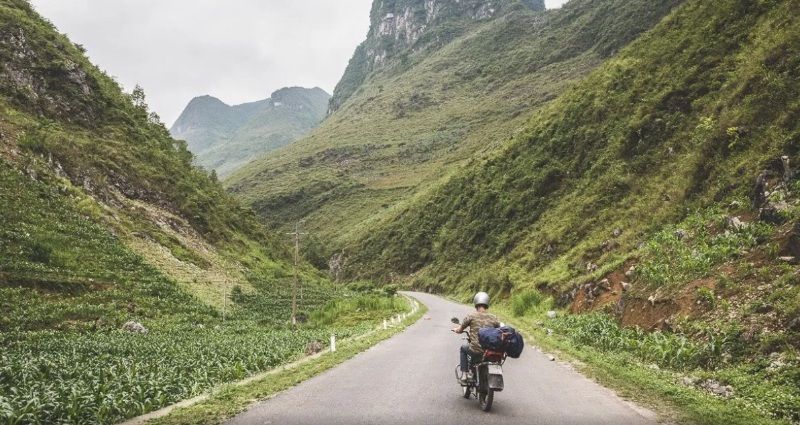
An Easy Rider is a local motorbike guide who either rides you as a passenger on their bike or leads a small convoy while you ride your own rented bike alongside them. The key distinction from a standard group tour is the personal, flexible nature of the experience — Easy Riders are typically born in the region, speak conversational English, and adapt the route based on your interests.
Most Easy Rider packages include:
- A local guide/driver for the full duration
- Pre-arranged accommodation (usually homestays)
- Most meals (breakfast and dinner are commonly included)
- Planned route with all major highlights: Quan Ba Heaven Gate, Ma Pi Leng Pass, Lung Cu Flagpole, Dong Van Old Quarter
- Motorbike provided (you ride your own or sit behind the guide)
The package model means you pay one upfront price and the logistics are handled. This fundamentally changes the cost structure — instead of variable daily spending, you have a fixed package fee with a small number of extras on top.
How Much Does Self-Riding the Ha Giang Loop Actually Cost?
Self-riding the Ha Giang Loop involves 5 core cost categories: motorbike rental, fuel, accommodation, food, and additional fees, which together typically total $70–$150 for a 3-day trip depending on your choices.
Cụ thể, here is how each category breaks down in real numbers, so you can build an accurate budget before you arrive.
The Motorbike Rental and Fuel Costs for Self-Riding
Motorbike rental is typically the largest single daily expense for self-riders, and the type of bike you choose has a significant impact on both daily cost and total trip reliability.
| Bike Type | Daily Rental Cost | Notes |
|---|---|---|
| Semi-automatic (Honda Wave, etc.) | 150,000–200,000 VND ($6–8) | Budget option; adequate for experienced riders |
| Manual/trail bike (Honda XR150, CRF) | 350,000–550,000 VND ($14–23) | More reliable on steep terrain; recommended |
| Automatic scooter | 100,000–150,000 VND ($4–6) | Not recommended for mountain roads |
The Accommodation and Food Costs When Self-Riding
Accommodation along the Ha Giang Loop ranges from ultra-basic dorm beds to comfortable private rooms with mountain views — and the price difference between them is dramatic.
Accommodation options and costs:
- For the most budget-conscious self-riders, a dorm bed at a well-reviewed Ha Giang loop hostel typically costs 80,000–150,000 VND per night ($3–6), with the main concentration of options in Ha Giang City and Dong Van town booking ahead during peak season (October–November) is strongly advised as these fill quickly.
- Homestay (shared room): 150,000–250,000 VND/night ($6–10) — the most authentic option; often includes breakfast
- Private guesthouse room: 250,000–500,000 VND/night ($10–20) — for those wanting privacy and a hot shower
How Much Does Hiring an Easy Rider for the Ha Giang Loop Cost?
Travelers who choose the Ha Giang loop easy rider model can expect to pay $130–$330 total for a full package, with the final price determined primarily by trip duration, what is included, and the operator you book through understanding these variables before committing is the key to avoiding overpaying for services you do not need.
Here is a structured breakdown of what you’re actually paying for — and what the price typically covers at each tier.
Typically Included in an Easy Rider Package Price
The table below shows standard pricing tiers across the most common trip lengths:
| Duration | Typical Price Range | What’s Usually Included |
|---|---|---|
| Ha Giang loop 2 days | $130–$150 | Guide, motorbike, accommodation (1 night), some meals, Quan Ba + Yen Minh highlights |
| 3 days / 2 nights | $170–$220 | Guide, motorbike, accommodation (2 nights), most meals, full loop including Ma Pi Leng + Dong Van |
| 4 days / 3 nights | $200–$330 | Guide, motorbike, accommodation (3 nights), most meals, hidden villages + Nho Que River boat ride |
Self-Ride vs Easy Rider — Which Option Saves You More Money?
Self-Ride saves more money on paper, but Easy Rider delivers better value per dollar for most first-time travelers, especially when you account for what’s included vs. what you’re risking.
The Total Cost Comparison Between Self-Ride and Easy Rider for a 3-Day Trip
| Expense Category | Self-Ride (Budget) | Self-Ride (Mid) | Easy Rider (Std Package) |
|---|---|---|---|
| Motorbike rental (3 days) | $18–24 | $42–69 | Included |
| Fuel | $8–14 | $8–14 | Included |
| Accommodation (2 nights) | $6–12 | $20–40 | Included |
| Food (3 days) | $25–40 | $40–55 | Mostly included (~$10 extra) |
| Entry fees | $5–10 | $5–10 | $5–10 (usually excluded) |
| Repairs/insurance buffer | $10–30 | $10–30 | $0 |
| Tips | $0 | $0 | $15–30 |
| Estimated Total | $72–$130 | $125–$218 | $145–$260 |
In conclusion, the Ha Giang Loop can be done affordably and safely regardless of your gender but solo female travelers will generally find the Easy Rider model delivers the best balance of safety, cultural access, and per-person cost when booked as part of a small assembled group.