
 Home
Home About
About Tours
Tours Bikes Rental
 Contact
The best time to visit Ha Giang is September through November when golden rice terraces blanket the hillsides, buckwheat flowers paint the plateau in pink and purple, and clear mountain skies stretch endlessly above Ma Pi Leng Pass. But Ha Giang rewards visitors in every season: spring brings peach blossoms and cultural festivals, early summer fills the terraces with mirror-like reflective water, and winter wraps the karst peaks in mystical morning mist. Choosing the right window depends entirely on what kind of experience you are seeking. In this guide, Viet Motorbike Tour breaks down Ha Giang’s seasons month by month so you can plan your visit with confidence and arrive exactly when Ha Giang is at its best for you. Let’s find your perfect time to ride.
Is Ha Giang Worth Visiting Year-Round?
Ha Giang is absolutely worth visiting year-round, for at least three compelling reasons: every season delivers a visually distinct and emotionally different landscape, no single month is entirely without merit, and the region’s cultural richness remains constant regardless of weather conditions.
That said, not every season offers equal comfort or safety. July and August stand out as the months requiring the most caution, when heavy monsoon rainfall increases the risk of landslides along the steep mountain roads of the Ha Giang Loop, and visibility on passes like Ma Pi Leng can drop significantly. However, even this period attracts a dedicated group of travelers who specifically seek out the jungle-green intensity of a landscape drenched in summer rain.
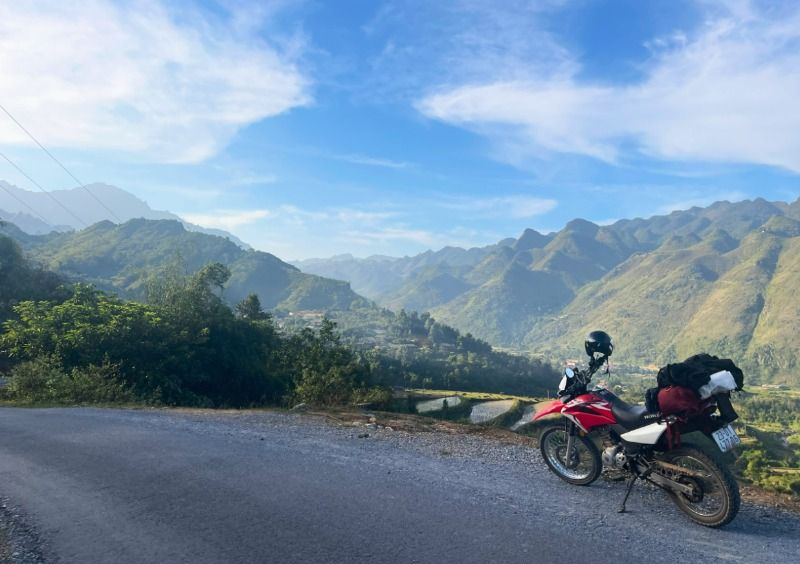
What makes Ha Giang genuinely exceptional year-round is the variation in its microclimates across different districts. The three primary travel zones each behave differently:
- Dong Van – Meo Vac: The coldest and most dramatic zone, with an annual average temperature of 12–18°C. Winters here are the harshest, and the rocky plateau takes on a stark, almost lunar quality in December and January.
- Quan Ba – Bac Me: Slightly milder than Dong Van, with more forested landscapes that absorb rainfall and moderate temperatures across all seasons.
- Yen Minh: The most temperate of the mountainous districts, offering more consistent riding conditions throughout the year and making it the most accessible entry point regardless of when you visit.
What Are the Key Factors That Define the “Right Time” for Ha Giang?
Four factors define the “right time” to visit Ha Giang:
- Factor — temperature — matters enormously on the Ha Giang Loop, where riders spend four to eight hours per day exposed to wind and altitude. A pleasant 22°C in the valley can feel closer to 14°C at the summit of Ma Pi Leng Pass. Autumn’s temperature range of 18–26°C across most districts hits a comfortable sweet spot for active travel.
- Rainfall is the second decisive factor. The wet season (June through August) brings an average of 200–300mm of rainfall per month across many parts of Ha Giang’s mountainous interior, making unpaved sections and steep descents genuinely hazardous. By contrast, October typically records the lowest rainfall of the year — often under 50mm — creating the dry, clear conditions that make the Loop’s sharp corners and cliffside roads dramatically more manageable.
- Landscape seasonality is perhaps the most visually dramatic. Ha Giang’s agricultural calendar determines when the rice terraces glow gold, when the paddies fill with reflective water, when buckwheat blooms, and when fruit trees flower in the valleys. Timing a visit to coincide with one of these landscape events transforms the journey from a scenic motorbike ride into something closer to riding through a living painting.
- crowd levels deserve honest consideration. October and November see the highest international visitor numbers of the year. Homestays in popular villages like Lo Lo Chai and Dong Van fill weeks in advance, and passes like Quan Ba Heaven’s Gate see long queues during morning golden hour. Travelers who prioritize solitude and spontaneity often discover that late November, early March, or even a well-planned December visit delivers 80% of the beauty with significantly less competition for the best viewpoints.
Ha Giang Look Like in Each Season
Spring (February–April)
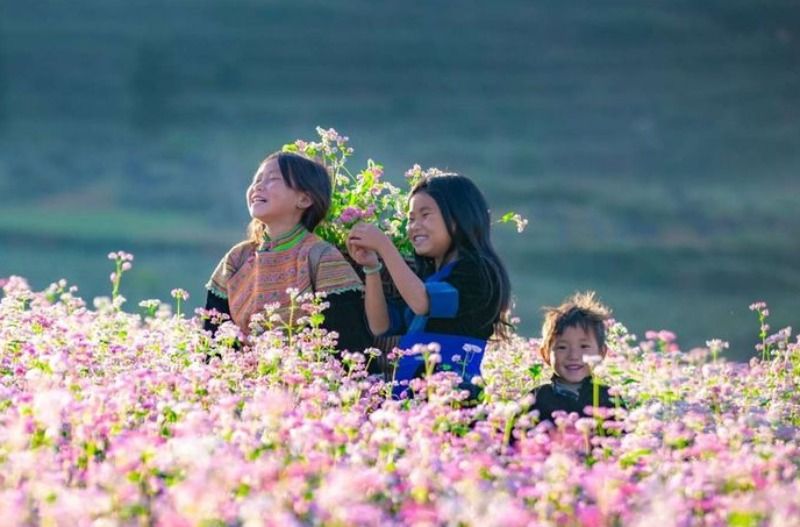
spring is genuinely the best season for flower viewing in Ha Giang, with peach blossoms, plum flowers, mustard blooms, and cherry blossom-like apricot trees creating one of the most visually striking landscapes in northern Vietnam typically peaking between late February and mid-March.
Spring in Ha Giang delivers comfortable riding temperatures between 15°C and 25°C, roads that remain dry and firm after the previous autumn, and the festive energy of Tet and post-Tet ethnic minority celebrations. For first-time visitors to the Ha Giang Loop, spring represents perhaps the most forgiving entry point: the weather is cooperative, the scenery is spectacular, and the cultural calendar is at its richest.
Summer (May–August)
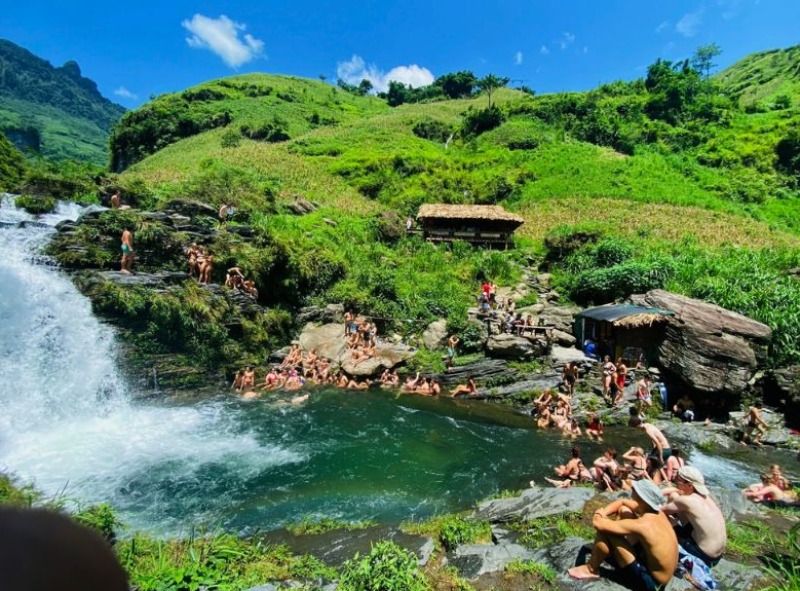
You should not avoid Ha Giang during the rainy season entirely but you should approach it with clear expectations, because the summer experience divides cleanly into two distinct phases that require different levels of preparation and risk tolerance.
Early summer (May–June) is actually one of the most underrated windows in Ha Giang’s annual calendar. Rice planting begins across the terraced fields of Hoang Su Phi, Xin Man, and Yen Minh, filling the paddies with water that mirrors the sky in extraordinary reflective pools. Photography enthusiasts specifically seek out this “water-pouring” season, when the terraces at Ban Phung and Nam Ty shimmer at sunrise with an almost surreal luminosity. Temperatures hover between 22°C and 28°C, rainfall remains moderate, and visitor numbers are substantially lower than in autumn meaning accommodation is easier to book and prices are more favorable.
Late summer (July–August) demands a more honest assessment. Monthly rainfall frequently exceeds 250mm across the mountainous interior, and the combination of steep unpaved sections, heavy downpours, and geological instability creates real risks on the more remote stretches of the Loop. Road closures due to landslides are not uncommon in August, and visibility on passes like Ma Pi Leng can drop to near zero during afternoon storms.
Autumn (September–November)
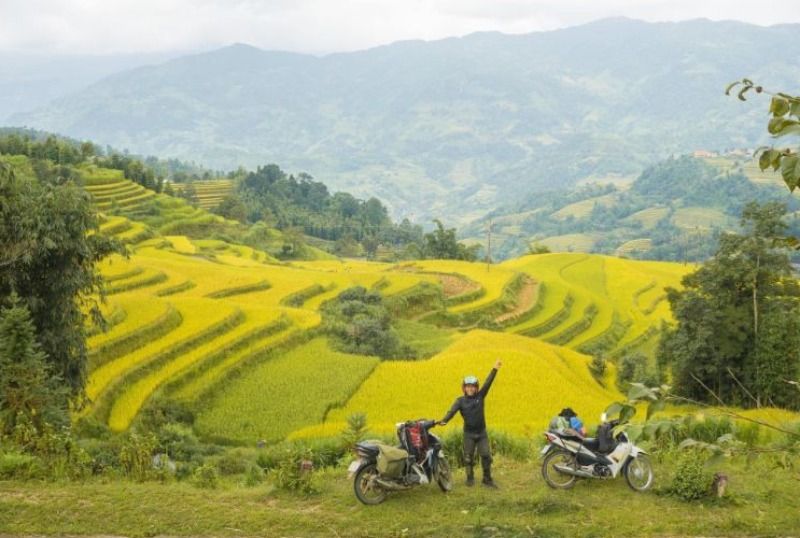
Autumn is Ha Giang’s peak season because September through November delivers a rare convergence of four ideal conditions simultaneously: cool and dry weather, golden rice terraces at full harvest color, blooming buckwheat fields, and the clearest atmospheric visibility of the year creating the photogenic landscapes that have made Ha Giang one of the most searched travel destinations in Southeast Asia.
Winter (December–January)
Ha Giang is beautiful in winter — uniquely and unexpectedly so — with mist-draped mountain passes, moody low-contrast light, and the kind of quiet intimacy that peak-season crowds make nearly impossible to find.Winter temperatures in Ha Giang range from as low as 5°C in the early mornings at elevation to a more manageable 15–18°C at midday in the valleys. The Dong Van Karst Plateau and the approaches to Meo Vac are the coldest areas, where frost coats the rocky ground on clear nights and morning fog creates a landscape that many photographers describe as the most dramatic lighting conditions of the year.
Season You Can See Both Golden Terraces and Buckwheat Flowers in Ha Giang
There is a narrow overlap window of approximately two weeks, typically from late September to early October, during which a carefully planned itinerary can include both the golden rice terraces of Hoang Su Phi and the early buckwheat blooms of the Dong Van Karst Plateau.
The geographic separation of these two landscapes is the key logistical challenge. Golden rice terraces reach their peak in Hoang Su Phi (western Ha Giang, in Xin Man and Hoang Su Phi districts), while buckwheat flowers bloom on the eastern karst plateau centered on Dong Van, Lung Cu, and Meo Vac. These two zones sit roughly 150–200km apart by road, making them impossible to visit simultaneously in a single day.
Which Month in Ha Giang Has the Best Weather for Motorbike Riding?
October ranks as the single best month for motorbike riding in Ha Giang, followed closely by March, April, and late September with each offering a distinct combination of dry roads, comfortable temperatures, and reliable daytime visibility across the Loop’s most demanding sections.
A practical month-by-month riding conditions ranking helps clarify the options:
- October : Near-perfect conditions. Dry roads, 20–25°C, maximum visibility. Suitable for all experience levels. Book well in advance.
- March: Equally safe for riding. Dry, 15–22°C. Morning mist clears quickly. Blossoms enhance the visual experience of each pass.
- April : Warm, bright, excellent visibility. Slightly warmer on descents. Good beginner option.
- November : Dry through early November, turning crisper by month’s end. Pack warm layers for dawn starts.
- Late September : Improving rapidly from summer. Some morning wetness in early September; excellent by the 20th.
- February : Cold mornings, potential fog on Dong Van plateau. Manageable with proper gear.
- May: Early rainy season showers. Manageable if rides start before noon.
- December–January: Cold, short days, morning fog. Experienced riders with appropriate gear only.
- June: Rain increases. Early starts essential. Suitable for experienced riders.
- July–August : High landslide risk on remote sections. Easy Rider or vehicle strongly recommended over self-riding.
Ha Giang does not have a single perfect season it has the right season for each kind of traveler. We hope this guide helps you find your ideal window and arrive prepared for everything Ha Giang has to offer.
If you are ready to make it happen, Viet Motorbike Tour is here to take care of every detail from guided motorbike tours and curated travel itineraries to quality hotel bookings and trusted bike rentals across Ha Giang