
 Home
Home About
About Tours
Tours Bikes Rental
 Contact
When is the best time to ride the Ha Giang Loop and which months should you avoid entirely? Ha Giang Loop weather is the single most common question our team at Vietmotorbiketour receives from riders planning their northern Vietnam adventure. And for good reason: the difference between September and July on these mountain roads is the difference between golden terraces under clear blue skies and fog-covered passes with active landslide warnings. This guide covers everything monthly temperatures, road conditions, peak scenery windows for golden rice fields and buckwheat flowers, and honest advice on when self-riding is safe versus when an Easy Rider tour is the smarter call.
What Is Ha Giang Loop Weather Like?
Ha Giang Loop is a mountain motorbike route stretching roughly 350–400 km through Vietnam’s far north, passing through Dong Van, Meo Vac, Yen Minh, and the Dong Van Karst Plateau at average elevations between 800 and 1,600 meters above sea level. This high-altitude karst terrain produces a subtropical highland climate with four clearly defined seasons, temperatures consistently cooler than Vietnam’s northern lowlands, and weather that can shift rapidly between valleys and mountain passes within the same hour.
More specifically, two forces drive Ha Giang Loop weather: terrain elevation and seasonal rainfall. Temperatures range from around 5°C on cold winter mornings to 35°C in the low-lying valleys during summer. Annual rainfall averages between 1,500 and 2,000 mm, concentrated heavily in June through August.
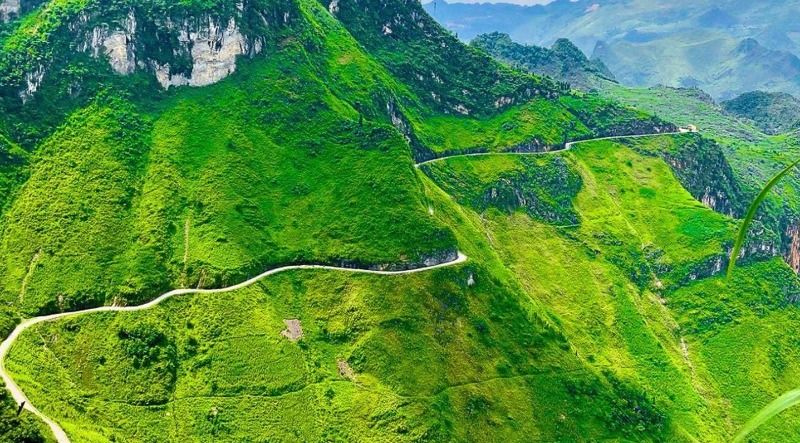
How Does Elevation Shape Weather Conditions Along the Route?
Terrain elevation creates significant differences in temperature and weather between points on the same Ha Giang Loop route within a single day and this is exactly why two riders departing on the same morning can experience completely different conditions depending on which segment they are riding.
- Dong Van Plateau (elevation ~1,000–1,600m): Lowest temperatures, strongest winds, densest morning fog in winter and spring. This is the coldest section of the entire loop and the most likely to experience frost.
- Meo Vac Valley (lower elevation, flanked by high cliff walls): Noticeably warmer during the day often 5–8°C warmer than Dong Van but drops sharply at night due to valley cooling effects.
- Yen Minh to Quan Ba section (elevation ~600–800m): The most moderate temperatures on the route, less morning fog, and roads that dry out faster after rain.
Dry Season vs. Rainy Season on the Ha Giang Loop
The dry season (October–April) wins on safety and rideability, the rainy season (May–September) delivers richer green scenery but carries serious road hazards, and the shoulder months of May and September offer a balance between visual reward and acceptable riding conditions.
The table below compares both main seasons across the criteria that matter most to riders road conditions, visibility, temperature, scenery, and suitability by vehicle type:
| Criteria | Dry Season (Oct–Apr) | Rainy Season (May–Sep) |
|---|---|---|
| Road conditions | Dry, good grip | Slippery, landslide risk |
| Visibility | Clear, long-range | Fog and low cloud common |
| Temperature | 5–25°C | 20–35°C |
| Signature scenery | Golden terraces, buckwheat flowers, peach blossoms | Intense green fields, water-pouring reflections |
| Self-riding suitability | High | Medium to low |
| Crowd levels | High (autumn) to low (winter) | Low to medium |
Best Season for Seeing Golden Rice Terraces and Buckwheat Flowers
Autumn — specifically from late September through the end of November — stands as the most beautiful and most sought-after season for riding the Ha Giang Loop, because this is when the two most iconic visual events of the entire region happen back to back: golden terraced rice fields at harvest (September–October) and buckwheat flowers in full bloom (October–November). Yes — autumn is definitively the best season for the Ha Giang Loop, and here is exactly why.
To begin, each of these two scenic phenomena deserves a precise breakdown of when and where it peaks so you can plan your itinerary with real accuracy.
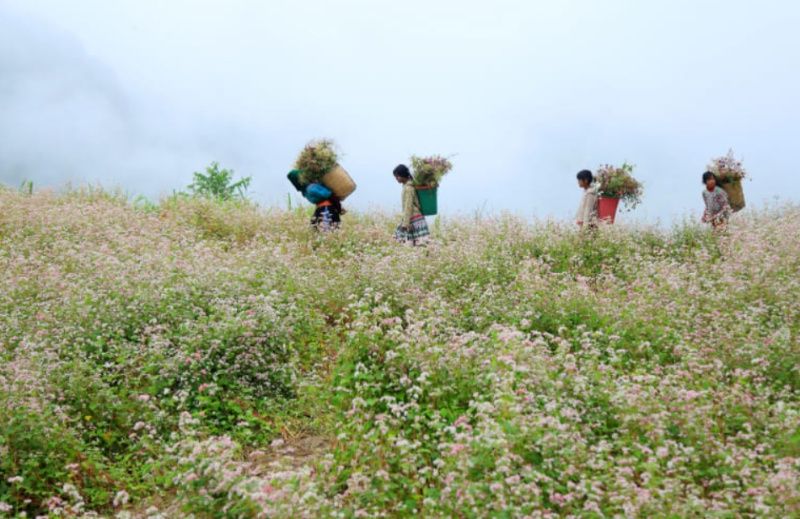
When Do the Golden Rice Terraces Peak on the Ha Giang Loop?
The terraced rice fields of Ha Giang hit their most vivid golden color in the window between late September and early October, particularly across Hoang Su Phi, Yen Minh, and the Dong Van Plateau this is when the rice has fully ripened and sits ready for harvest, painting entire mountainsides in warm gold that cascades from ridgeline to valley floor.
Weather conditions during this window align perfectly with the scenery: temperatures between 20–28°C, rainfall dropping sharply after summer, consistently clear skies, and moderate humidity. The soft, diffused autumn sunlight interacts with the golden rice to produce what travel photographers describe as an extended golden hour that lasts the better part of the day.
One critical practical point: this peak window typically lasts only two to three weeks before farmers begin harvesting and the fields return to bare earth or green stubble. Planning precisely and booking in advance matters enormously homestays in Dong Van and Meo Vac routinely fill up three to four weeks ahead during this period.
When Do Buckwheat Flowers Bloom on the Dong Van Plateau?
Buckwheat flowers bloom across the Dong Van Karst Plateau between October and November, covering the rocky limestone hillsides in distinctive pink and purple — a landscape that is entirely exclusive to Ha Giang and cannot be found anywhere else along the Loop or on any other motorbike route in northern Vietnam.
What makes buckwheat flower season strategically valuable for trip planning is that it follows directly after the golden rice terrace peak, creating two consecutive visual highlights within a six-to-eight-week window. Flowers typically begin opening in early October at lower elevations around Dong Van town, then spread progressively to higher slopes through mid-to-late November. Temperatures during the buckwheat season range from 15–22°C — cool, crisp air, ideal for early morning walks through the flower fields or leisurely riding without the heat fatigue of summer.
Because this period draws the largest crowds of the entire year, a practical note applies: if you prefer quiet viewpoints and photographs without other tourists in the frame, aim for weekdays rather than weekends, or shift your visit to early November instead of peak October to step just past the busiest window.
the Ha Giang Loop Weather Like in Each Season
Ha Giang Loop runs through four clearly defined weather seasons: spring (February–April) with blooming flowers and stable riding conditions, summer (May–August) hot and wet with high landslide risk, autumn (September–November) as the most beautiful season overall, and winter (December–January) cold and quiet with rare atmospheric phenomena. Each season creates a fundamentally different experience in terms of both scenery and road conditions.
The table below provides a quick reference across the twelve months of the year covering the most important weather indicators for riders daily temperature range, approximate rainfall, road status, and the signature scenery for each period:
| Month | Avg. Daily Temp | Rainfall | Road Status | Signature Scenery |
|---|---|---|---|---|
| January | 8–15°C | Low | Dry, morning fog | Cloud sea, mountain mist |
| February | 10–18°C | Low | Dry | Peach and plum blossoms |
| March | 15–22°C | Low–Medium | Good | Peach blossoms, yellow mustard fields |
| April | 18–25°C | Medium | Good | Fresh green, forest flowers |
| May | 22–30°C | Increasing | Becoming slippery | Water-pouring terraces |
| June–July | 25–33°C | High | Dangerous | Deep green, landslide risk |
| August | 24–32°C | High | Dangerous | Maximum green intensity |
| September | 20–28°C | Decreasing | Improving | Rice beginning to turn gold |
| October | 18–25°C | Low | Good | Golden terraces, early buckwheat |
| November | 15–22°C | Very low | Good | Buckwheat flowers at peak |
| December | 8–18°C | Very low | Good, morning fog | Mountain mist, quiet roads |
Spring (February–April): Blossoming Flowers and Stable Riding Conditions
Spring is one of the two best seasons to ride the Ha Giang Loop, with comfortable temperatures between 18–25°C, low rainfall, and the most visually distinctive flowering scenery of the year covering hillsides across the route. Local guides consistently rate spring as the most beginner-friendly season for self-riding — roads are dry, visibility is excellent across all major passes, and temperatures are neither dangerously cold nor exhaustingly hot.
A closer look at each month within the spring window reveals important distinctions:
- February: The air still carries a winter chill but peach and plum blossoms begin opening across the villages around Dong Van shortly after the Lunar New Year. This is also the season of traditional H’Mong and Lo Lo ethnic minority festivals, with folk games and khèn flute performances in village squares.
- March: The single best month in the spring window for most riders. Peach blossoms peak, interspersed with yellow mustard flowers filling lower valley floors. Temperatures are warm enough for comfortable full-day riding, rain is minimal, and road conditions are stable. Experienced riders consistently rank March among the top three months of the entire year.
- April: Flowers gradually give way to the vivid green of young rice shoots and forest canopy. Temperatures climb higher and rainfall begins increasing modestly toward the end of the month. Still an excellent time to visit, but weather forecasts deserve closer monitoring than in March.
Summer (June–August): Vivid Green Landscapes but Significant Landslide Risk
Summer is the highest-rainfall season on the Ha Giang Loop, with temperatures reaching 25–35°C in valley floors and regular afternoon thunderstorms from June through August — this is the period not recommended for inexperienced self-riders because road hazards including slippery surfaces and landslide risk are at their annual peak. That said, summer also brings a visual identity completely distinct from any other season.
The trade-offs of riding in summer are real and worth understanding clearly:
- Rice paddies and hillsides turn an intense, saturated green unlike anything visible in the dry season the kind of deep emerald color that makes every valley look freshly painted.
- Waterfalls and streams run at full force, audible from mountain roads above and dramatic at the base of cliff faces along routes like the descent into Meo Vac.
- Low cloud and morning mist wrap around peaks and ridges, creating an atmospheric, almost cinematic quality to the early morning hours before rain arrives.
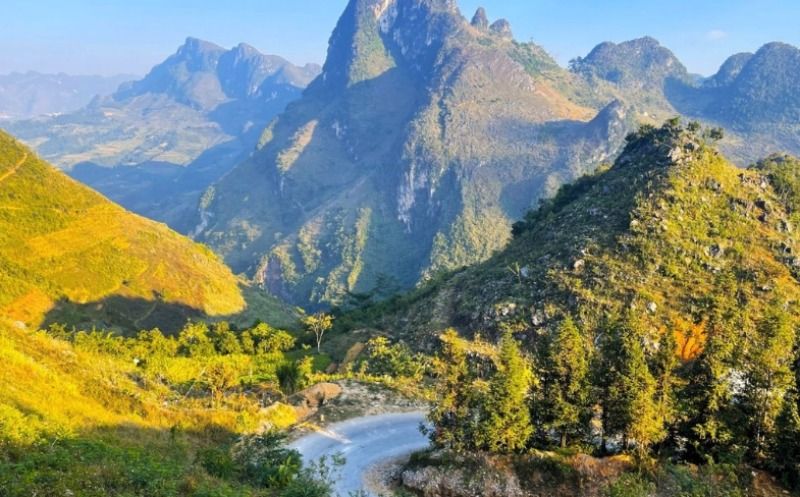
Autumn (September–November): Peak Season for Both Scenery and Riding Conditions
Autumn is the most celebrated and most visited season on the Ha Giang Loop, delivering ideal riding temperatures of 15–25°C, consistently clear skies, dry well-gripped roads, and the region’s two most iconic scenic events in immediate succession — golden harvest terraces in September–October followed by buckwheat flowers in October–November. The combination of optimal weather and peak scenery makes this the season that fills accommodation fastest and draws the highest visitor numbers of any time of year.
Riding conditions in autumn are rated the best of all four seasons: road surfaces provide excellent grip, visibility stretches far across the landscape from famous viewpoints like Ma Pi Leng Pass, and available daylight is sufficient to complete long daily segments without any risk of riding in darkness. This is also the season most consistently recommended for first-time visitors who want to experience the Loop under the safest possible conditions with the most rewarding visual payoff.
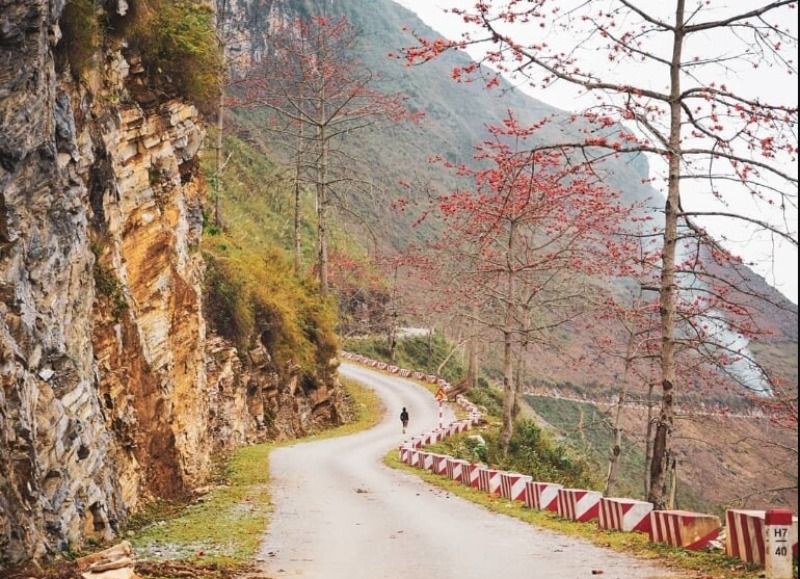
Winter (December–January): Cold, Quiet, and Mysteriously Misty Mountain Roads
Winter is the coldest and quietest season on the Ha Giang Loop, with temperatures potentially dropping below 5°C on high-elevation passes before dawn, dense morning fog reducing visibility on hairpin mountain roads, and occasional frost appearing on the Dong Van Plateau at the highest points — yet paradoxically, road surfaces are actually at their driest and safest of the year during this period.
Winter is the right choice for travelers who specifically want to experience Ha Giang in complete solitude, save money through significantly lower low-season accommodation rates, and have a realistic chance of witnessing the rare “cloud sea” phenomenon or frost-white mountain passes — atmospheric conditions that even veteran Ha Giang riders do not encounter on every visit. The essential preparation requirement for winter: thermal base layers, windproof outerwear, gloves, and a warm helmet liner. The priority is warmth, not rain protection as in summer.
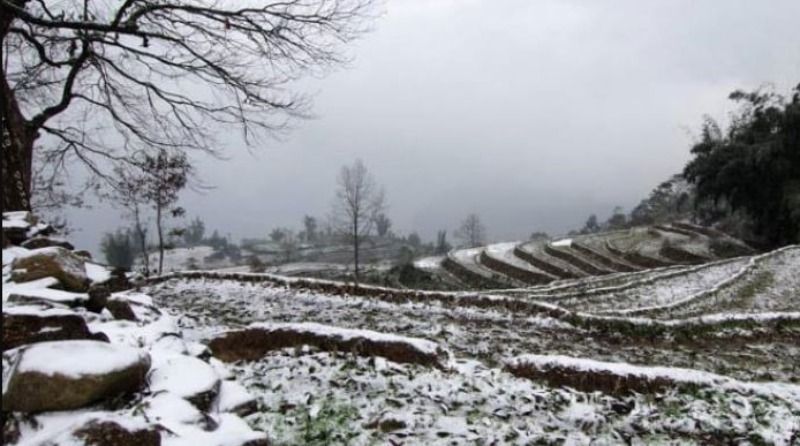
Rare Weather Phenomena and Seasonal Events the Ha Giang Loop
The Ha Giang Loop hosts at least four rare seasonal weather and landscape phenomena that standard travel guides almost never cover fully: the winter cloud sea, the water-pouring terrace reflections of May–June, plateau frost in December–January, and the Khau Vai Love Market cultural-nature intersection in March–April. This is precisely why so many riders who complete the Loop once return in a different season — because each season genuinely delivers a completely different journey through the same geography.
So, that covers everything you need to know about Ha Giang Loop weather across every season of the year. We hope this breakdown helps you choose the right month, pack the right gear, and arrive at the Loop fully prepared for whatever the mountain skies throw at you. Whether you’re chasing golden rice terraces in October, buckwheat flowers in November, or peach blossoms in March, timing your ride correctly makes all the difference. At Vietmotorbiketour, we’re here to make that ride as smooth as possible from guided Easy Rider tours and self-ride motorbike rentals to comfortable accommodation right in Ha Giang. Ready to plan your Loop? Get in touch with our team today.