
 Home
Home About
About Tours
Tours Bikes Rental
 Contact
Lo Lo Chai Village is one of northern Vietnam’s most extraordinary destinations a centuries-old highland community nestled beneath Dragon Mountain in Ha Giang Province, just 1.4 kilometres from the Lung Cu Flag Tower at Vietnam’s northernmost tip. Whether you are planning your first trip to Ha Giang or searching for the most authentic cultural experience in the north, this guide gives you everything you need to explore Lo Lo Chai with confidence.
Where Is Lo Lo Chai Village Located in Ha Giang?
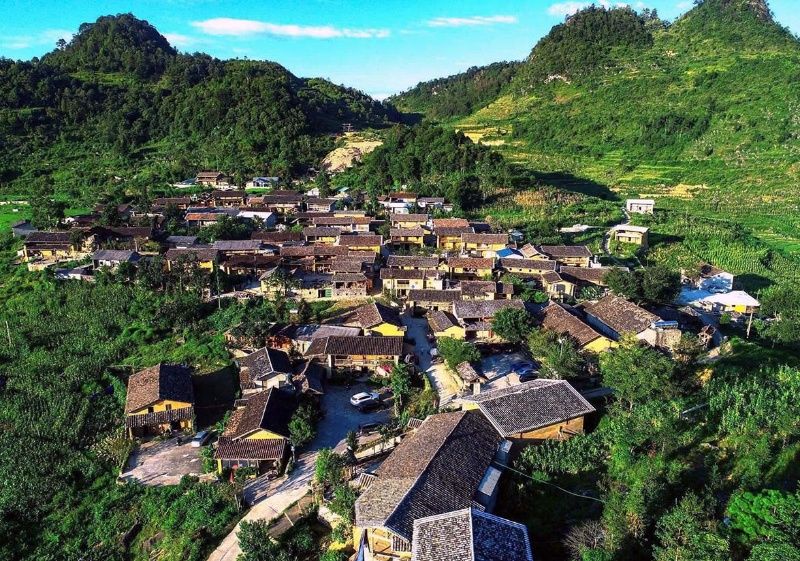
Lo Lo Chai is a highland ethnic village belonging to Lung Cu Commune, Dong Van District, Ha Giang Province, positioned directly beneath Dragon Mountain at approximately 1,600 metres above sea level, just 1.4 kilometres from the Lung Cu Flag Tower Vietnam’s symbolic northernmost point.
Ha Giang Province sits in the far north of Vietnam, bordering China, and is home to the Dong Van Karst Plateau a UNESCO-recognised geological park celebrated for its dramatic limestone formations, deep gorges, and ancient stone villages. Lo Lo Chai sits at the heart of this plateau, a village so tucked into the mountains that its roads wind along jagged ridgelines before revealing the settlement below.
The Historical Background of Lo Lo Chai Village
Lo Lo Chai has been continuously inhabited by the Lo Lo ethnic people for several hundred years, with the village’s identity shaped by its remoteness, its elevation, and the deep-rooted customs of one of Vietnam’s smallest recognised ethnic minorities.
The Lo Lo people belong to the Tibeto-Burman language family, speaking a language called Mantsi a tongue so rare that only a few thousand people across northern Vietnam and southern China still use it today. Long before tourism arrived, the community sustained itself through subsistence farming growing corn and vegetables on terraced slopes and raising livestock among the stone-fenced yards.
The village only began formally welcoming tourists in 2011. At that point, 37 traditional rammed-earth houses still stood intact, their walls built using a centuries-old compaction technique that blends soil, lime, and organic material into structures thick enough to insulate against the region’s bitter winters. Of those 37 homes, 28 have since been thoughtfully adapted as homestays — not demolished or replaced, but carefully modified to accommodate guests while retaining their original architecture. Some of these houses are over 200 years old, making them among the oldest inhabited structures open to travellers anywhere in northern Vietnam.
How Many Households Does Lo Lo Chai Have and Which Ethnic Groups Live There?
Lo Lo Chai is home to approximately 120 households, with over 90% belonging to the Lo Lo ethnic minority making it one of the highest concentrations of Lo Lo people in any single settlement in Vietnam.
Vietnam officially recognises two branches of the Lo Lo ethnic group: the Flower Lo Lo (Lô Lô Hoa) and the Black Lo Lo (Lô Lô Đen). The Flower Lo Lo are predominantly found in Ha Giang Province, particularly across Dong Van and Meo Vac Districts, while the Black Lo Lo are more commonly settled in Bao Lac District of Cao Bang Province. Lo Lo Chai is primarily a Flower Lo Lo community, distinguished by their intricately embroidered clothing featuring geometric patterns in vivid reds, blues, and yellows.
Of the roughly 120 households in the village, 56 are currently active participants in community-based tourism — hosting overnight guests, guiding cultural activities, cooking traditional meals, and demonstrating crafts. The remaining households continue their traditional agricultural lifestyles, contributing to the authentic atmosphere that makes the village feel genuinely lived-in rather than performed.

Why Did UN Tourism Honor Lo Lo Chai as the “World’s Best Tourism Village 2025”?
The UN Tourism Best Tourism Villages initiative, launched in 2021 under the UN Tourism for Rural Development Programme, evaluates applicant villages against a rigorous multi-criteria framework. The table below outlines the five main criteria and how Lo Lo Chai demonstrated strength in each area.
| Evaluation Criterion | How Lo Lo Chai Demonstrated Excellence |
|---|---|
| Governance | Community-led management structure; 56 households participate in organised tourism operations; local training programmes in hospitality, food safety, and tourism etiquette |
| Innovation | Adoption of digital transformation tools by farmers-turned-tourism-ambassadors; online booking systems and social media presence developed by young villagers |
| Sustainability | Preservation of 37 ancient rammed-earth houses; tourism revenue reinvested into community infrastructure including roads, clean water, and sanitation |
| Environment | Located within the Dong Van Karst Plateau UNESCO Geopark; minimal construction impact; stone fences and traditional landscaping maintained throughout |
| Contribution to SDGs | Economic inclusion of ethnic minority households; gender participation — women lead guest hosting and traditional cooking; youth employment as cultural guides |
The Top Attractions and Cultural Experiences at Lo Lo Chai Village
The rammed-earth houses of Lo Lo Chai are the architectural soul of the village structures built using a technique called trình tường in Vietnamese, where layers of compacted soil, sometimes mixed with lime or organic binders, are pressed into wooden formwork to create walls up to 50 centimetres thick.
These walls serve multiple functions beyond shelter. Their mass regulates interior temperature naturally, keeping homes warm during winters that can drop below 0°C on the karst plateau, and cool during the relatively mild summers. The exteriors weather beautifully over time, developing a mottled, moss-covered texture that photographers find endlessly compelling. Roofs are finished with yin-yang tiles a curved interlocking clay tile system that channels rainwater and creates the distinctive rippled silhouette visible from the surrounding hillsides.
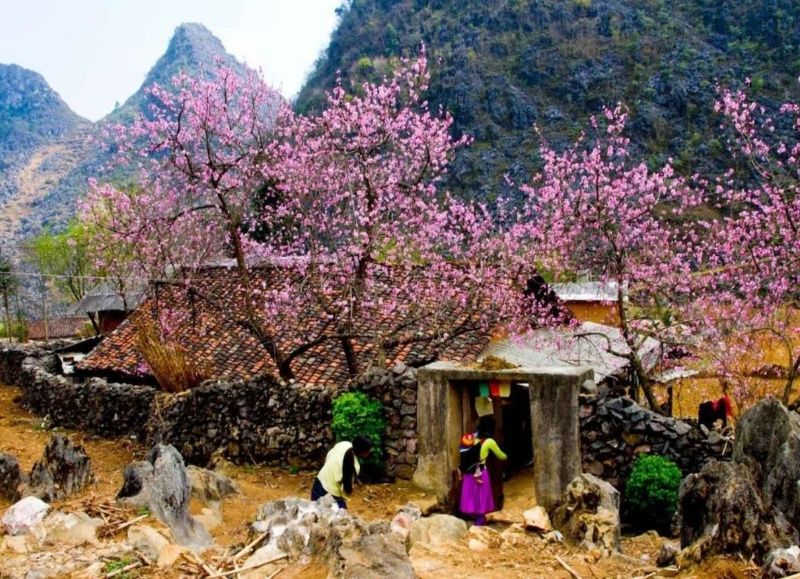
What sets Lo Lo Chai’s architecture apart from other ethnic minority villages in northern Vietnam is the completeness of its preservation. Stone-fenced courtyards, wooden verandas, hand-carved timber pillars, and low stone gates all remain intact, creating streetscapes that have changed remarkably little since the early twentieth century. The village does not feel like a reconstructed heritage site it is a working community that happens to have maintained its built environment through genuine cultural continuity.
When Is the Best Time to Visit Lo Lo Chai Village?
Autumn (September – November) is widely regarded as the peak season for visiting the Ha Giang karst plateau. Daytime temperatures are comfortably cool, ranging between 15°C and 22°C, and the landscape is at its most visually dramatic. October and November bring the buckwheat flower bloom — a phenomenon unique to Ha Giang — when the surrounding hillsides turn pale pink and purple, creating a backdrop that has made Lo Lo Chai one of the most photographed villages in northern Vietnam. The harvest season also means that corn-drying activities and agricultural rituals are visible throughout the village during this period.
Winter (December – February) brings the coldest conditions on the plateau, with temperatures regularly dropping below 5°C and occasional frost or ice forming on the higher elevations. This season creates an atmospheric, mist-heavy landscape that appeals to visitors seeking solitude and dramatic photography. The village population remains active, with wood fires burning constantly in the earthen houses and the daily rhythm of highland life continuing undisturbed. The cold also intensifies the appeal of sitting around a fire with a local family, sharing corn wine and traditional food.
How Do You Travel to Lo Lo Chai Village from Ha Giang?
Motorbike wins on freedom and immersion. You can stop at any viewpoint, adjust your pace, take detours to small villages, and feel the mountain air throughout the journey. The Ha Giang Loop is legendary among motorcyclists precisely because the road’s dramatic character is best experienced at low speed on two wheels. However, the route demands confident riding skills — the passes are steep, trucks and buses share the road, and weather changes rapidly. Renting a semi-automatic or automatic motorbike from Ha Giang City costs approximately 150,000–250,000 VND per day.
Hired car or jeep with a local driver wins on safety and comfort. An experienced local driver knows the road intimately, can navigate the passes in fog or rain, and frees passengers to focus entirely on the landscape. This option is particularly practical for groups of three to four people, as the per-person cost becomes comparable to motorbike rental when shared. Private car hire from Ha Giang City to Lo Lo Chai and back costs approximately 1,500,000–2,500,000 VND depending on the vehicle type and negotiated itinerary.
A third option joining an organised motorbike tour with a local guide combines the experiential benefits of two-wheel travel with the safety net of an experienced leader familiar with the road and the villages along the way.
The information above covers everything a traveller needs to know about Lo Lo Chai its location at Vietnam’s northernmost tip, its centuries-old Lo Lo ethnic culture, its UN Tourism World’s Best Tourism Village 2025 title.
Reach out to Viet Motorbike Tour a trusted specialist in quality Ha Giang tours built around authentic cultural immersion, safe highland riding, and unforgettable homestay experiences.
Contact Viet Motorbike Tour to receive a customised itinerary and make Lo Lo Chai your next destination.
- Whatsapp: +84889.860.860
- Website: https://vietmotorbiketour.com/