
 Home
Home About
About Tours
Tours Bikes Rental
 Contact
Ha Giang, the rugged frontier of northern Vietnam, is not only famous for its dramatic mountain passes but also for a hidden network of pristine, wild waterfalls waiting to be explored. Scattered across the limestone landscapes of Ha Giang, these nine waterfalls from the misty charm of Tien Waterfall to the serene pools of Du Gia offer a perfect blend of adventure, tranquility, and untouched natural beauty.
Whether you are planning a motorbike journey along the Ha Giang Loop or seeking off-the-beaten-path destinations, these cascades provide unforgettable stops along the way — and booking a well-located Ha Giang hostel in advance ensures you have a reliable base from which to reach each one without wasted riding time.
In this guide, you will discover essential travel tips, best visiting seasons, and what makes each waterfall uniquely worth the journey for gear and preparation, pair this guide with a complete Ha Giang loop packing list to ensure you are fully equipped before setting off.
What Makes Ha Giang Waterfalls Wild Beauty So Distinctive?
Ha Giang’s waterfalls are a system of permanent cascades formed within the Dong Van Karst Plateau Geopark — a UNESCO-recognized geological heritage site — where ancient limestone ridges channel high-altitude rainfall into spectacular free-falling streams year-round. Unlike waterfalls in Vietnam’s coastal or delta regions, Ha Giang’s cascades descend through vertically fractured karst rock faces, producing tall, narrow, mist-laden curtains of water surrounded by primary forest canopy.
To understand what sets them apart, consider the geology beneath your feet. The Dong Van Karst Plateau contains some of the oldest exposed rock formations in Southeast Asia — limestone layers laid down over 400 to 600 million years ago. As rainwater percolates through natural fissures in this porous rock, it carves underground channels and eventually resurfaces as powerful, mineral-rich springs that feed the waterfalls. This process gives the water an unusually clear, turquoise tint, particularly striking during the dry season when suspended sediment drops to near zero.
Equally important, the altitude dramatically shapes the character of these falls. Most Ha Giang waterfalls originate at elevations above 1,000 meters, meaning they experience persistent cloud cover and high humidity throughout the year. The result is an almost perpetual mist around the base of many falls — a natural phenomenon that creates the ethereal, otherworldly atmosphere travelers consistently describe as unlike anything else in Vietnam.
Furthermore, the surrounding biodiversity amplifies the visual experience. The forests flanking Ha Giang’s waterfalls harbor rare orchid species, silver pheasants, and slow lorises. Several cascades flow directly through traditional ethnic minority farmland, where rice terraces cascade down the hillsides in tiers that mirror the waterfalls themselves a visual harmony between human agriculture and raw nature.
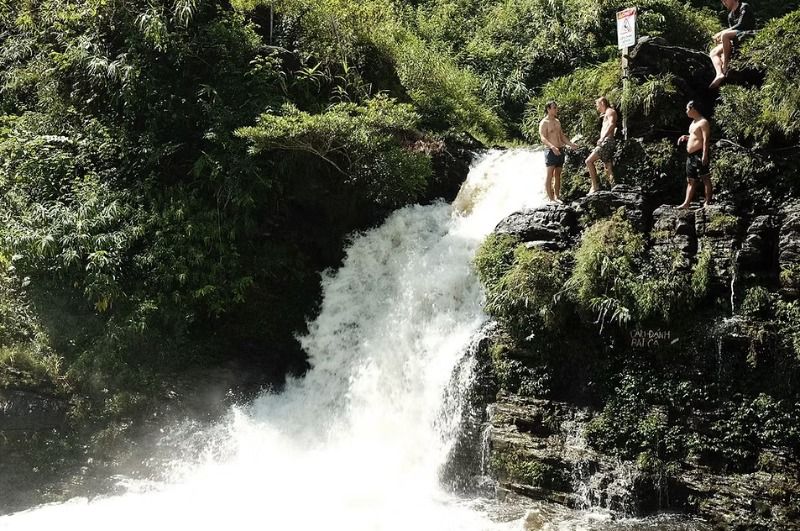
Top 9 Wild Waterfalls in Ha Giang You Cannot Afford to Miss
1. Tien Waterfall
Hidden deep within the misty valleys of Yen Minh District, Tien Waterfall offers a serene escape that feels almost untouched by time. True to its name “Fairy Waterfall”—this cascade possesses a soft, dreamlike quality. Water flows gently over multiple limestone tiers, dropping nearly 30 meters into a calm, crystal-clear pool below. The surrounding landscape, thick with greenery and often veiled in low-hanging clouds, creates an atmosphere that is both tranquil and slightly otherworldly.
One of Tien Waterfall’s most appealing features is its accessibility. Located just off the Ha Giang Loop, it requires only a short and relatively easy 15–20 minute walk along a well-trodden path, making it suitable for travelers of all fitness levels. Despite this convenience, the site remains pleasantly uncrowded, offering a rare sense of solitude compared to more popular attractions in the region.
For the best experience, consider visiting early in the morning. Between 6:00 and 8:00 AM, sunlight filters through the forest canopy at a low angle, interacting with the mist to create delicate rainbow effects above the water. This is also when the area is at its quietest, allowing visitors to fully appreciate the natural beauty and soothing sounds of the falls.
Whether you’re seeking a peaceful rest stop or a scenic highlight along your Ha Giang journey, Tien Waterfall is a destination that quietly rewards those who take the time to find it.
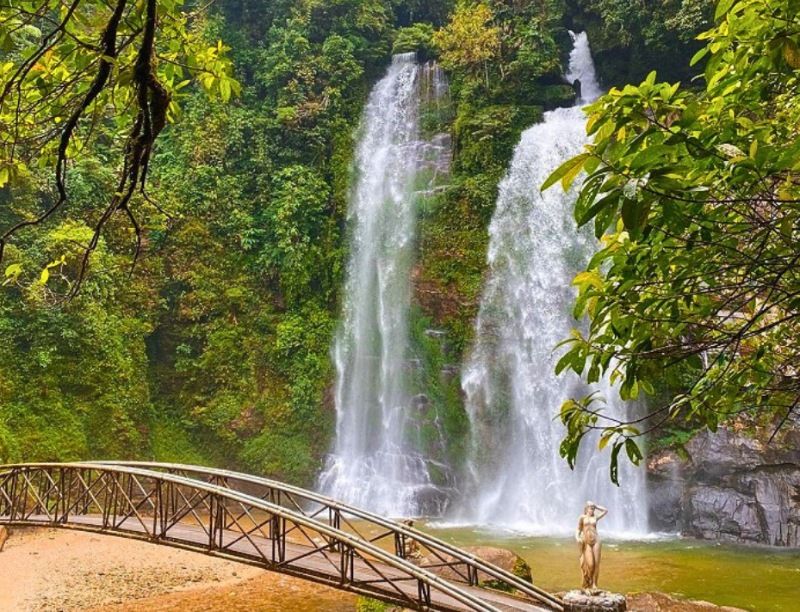
2. Du Gia Waterfall
Often referred to as the “Sleeping Fairy” of Ha Giang’s northeastern wilderness, Du Gia Waterfall stands out as one of the most complete and rewarding natural attractions in the province. Tucked away in Ban Tien hamlet of Yen Minh District, this waterfall combines visual beauty with practical accessibility, making it a favorite stop for travelers exploring the Ha Giang Loop. Unlike narrower cascades, Du Gia spreads gracefully across a wide limestone face, creating a soft, curtain-like flow that feels both powerful and calming at once.
At its base lies a broad, natural swimming pool that is arguably the best in Ha Giang. Measuring roughly 15 to 20 meters across, the pool offers clear, cool water with depths reaching up to 2.5 meters in the center. Its stable temperature hovering between 18 and 22°C year-round makes it especially inviting after a long day on the road. Smooth river stones and lush greenery frame the area, providing ideal spots for picnicking or simply relaxing by the water.
Reaching Du Gia Waterfall requires a moderate 30–40 minute walk from the nearest parking point, but the trail is manageable and well worth the effort. Visitors who stay longer can enjoy activities such as swimming, photography, or even camping overnight along the riverbank. Whether you visit during the high-water months of summer or the crystal-clear season in winter, Du Gia offers a balanced blend of adventure and tranquility that few other waterfalls in the region can match.
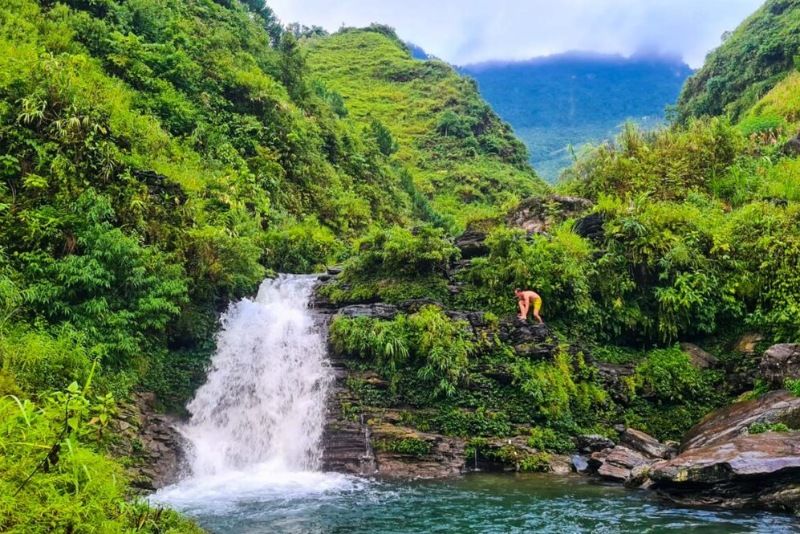
3. Waterfall No. 6
Waterfall No. 6, locally known as Thac So 6, is one of the most structurally distinctive cascades in Ha Giang and a standout destination in Bac Me District. Unlike the dramatic vertical drops commonly associated with waterfalls, this site features a broad, sloping formation where water glides smoothly over a vast expanse of rounded cobblestones and pale limestone slabs. Spanning nearly 40 meters at its widest point, the cascade creates a gentle, fan-shaped flow that is both visually striking and unusually accessible.
What truly sets Waterfall No. 6 apart is its interaction with light and motion, making it a favorite among landscape photographers. The shallow water typically ranging from 5 to 20 centimeters in depth during the dry season flows evenly across the rock surface, producing a soft, textured effect. At dawn or during overcast conditions, long-exposure photography transforms the moving water into a silky white veil, contrasting beautifully with the darker tones of the stone beneath. Even amateur photographers can capture compelling images here with minimal effort.
Reaching the waterfall is relatively straightforward, as visitors can travel by motorbike to within about 500 meters of the site, followed by a short walk. During the wetter months from June to October, the cascade is at its most dynamic, while the dry season from November to April allows for a unique “walk-on-water” experience across the exposed stone surface. For those seeking a blend of accessibility, originality, and photographic appeal, Waterfall No. 6 offers an experience unlike any other in the region.
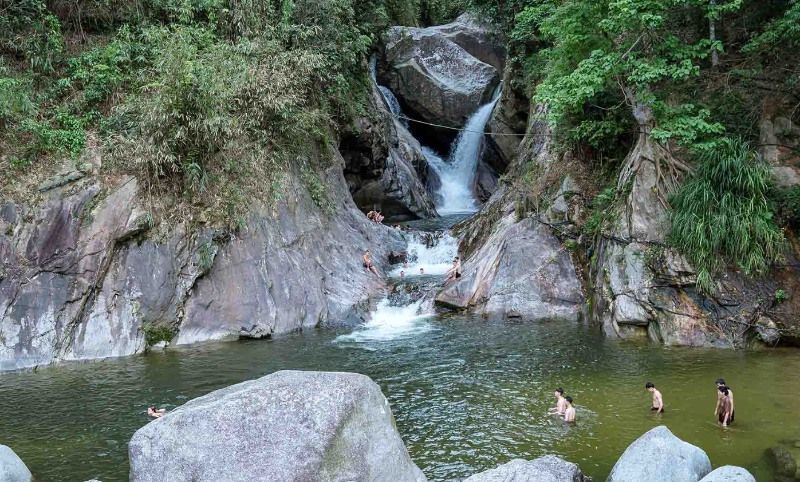
The table below provides a consolidated reference for the remaining six waterfalls, comparing their locations, defining visual characteristics, peak visiting season, and trail difficulty — enabling you to efficiently match each site to your itinerary and physical capabilities.
| Waterfall | District | Defining Feature | Peak Season | Trail Difficulty |
|---|---|---|---|---|
| 4. Nam Ma Waterfall | Bac Me | Three-tiered cascade above ethnic Tay village | Jun–Sep | Moderate |
| 5. Thi Waterfall | Vi Xuyen | Twin falls framing a natural rock arch | Jul–Oct | Challenging |
| 6. Mo Waterfall | Quan Ba | Hidden in a karst valley, accessible only by foot | Jun–Sep | Challenging |
| 7. Khau Lan Waterfall | Xin Man | Rarely visited; natural limestone pool with turquoise water | May–Sep | Difficult |
| 8. Na Thac Waterfall | Vi Xuyen | Falls adjacent to Dao community village homestays | Year-round | Easy |
| 9. Lung Phinh Waterfall | Meo Vac | Remote plateau waterfall with 360° panoramic view | Jun–Aug | Difficult |
How to Get to Ha Giang’s Waterfalls
The most effective way to reach Ha Giang’s waterfalls is via self-driven motorbike along the Ha Giang Loop a 350-kilometer circuit departing from Ha Giang City that passes within striking distance of seven of the nine waterfalls on this list, with two requiring short detours off the main route.
To plan your logistics efficiently, start with the following framework:
Step 1: Reach Ha Giang City
Ha Giang City serves as the gateway hub for all waterfall exploration in the province. Three transport options connect it to Hanoi, 320 kilometers to the southeast:
- Sleeper bus from Hanoi’s My Dinh Bus Station: 6 to 7 hours, departures at 6:00 PM and 7:00 PM daily, cost approximately 200,000 to 280,000 VND (roughly $8 to $11 USD)
- Limousine minivan services (Ha Giang Express, Hung Thanh): 5.5 to 6 hours, approximately 320,000 to 380,000 VND, door-to-door from central Hanoi accommodations
- Private car: 5 to 5.5 hours via National Highway 2, recommended for groups of 4 or more
Step 2: Secure a Motorbike or Join a Guided Loop Tour
From Ha Giang City, choose one of two primary travel modes:
- Travelers who choose to motorbike for rent in Ha Giang will find semi-automatic options (110–150cc) available at 150,000 to 200,000 VND per day ($6 to $8 USD); a valid driving license and confidence on steep mountain roads are required, but this option provides maximum flexibility to stop at waterfalls entirely on your own schedule.”
- Easy rider (xe om) guided tour: A local driver-guide navigates while you ride pillion. Cost ranges from 700,000 to 1,200,000 VND per day depending on itinerary. Ideal for solo travelers unfamiliar with Vietnamese mountain roads.
For quality motorbike rentals at great prices, feel free to contact Vietmotorbiketour — a trusted provider offering a wide range of motorbike options to suit every traveler’s needs and riding style.
Step 3: Plan a Waterfall-Optimized Itinerary
| Day | Route | Waterfalls Covered | Distance |
|---|---|---|---|
| Day 1 | Ha Giang City → Yen Minh | Tien Waterfall, Du Gia Waterfall | ~80 km |
| Day 2 | Yen Minh → Dong Van | Mo Waterfall, Thi Waterfall | ~70 km |
| Day 3 | Dong Van → Meo Vac → Bac Me | Lung Phinh Waterfall, Nam Ma Waterfall, No. 6 | ~110 km |
| Day 4 | Bac Me → Vi Xuyen → Ha Giang City | Na Thac Waterfall, Khau Lan Waterfall | ~90 km |