
 Home
Home About
About Tours
Tours Bikes Rental
 Contact
Ha Giang Loop itinerary for beginners 4 day is the perfect guide for travelers who want to explore Vietnam’s most breathtaking mountain route safely and confidently; this scenic 350–400 km motorbike loop reveals dramatic limestone peaks, deep valleys, and remote ethnic villages unlike anywhere else in Southeast Asia.
In this beginner-friendly guide, you will discover everything you need to confidently complete the ha giang loop 4 days — a clear day-by-day itinerary, essential riding tips, and the best stops from Quan Ba to Dong Van and Meo Vac; whether you plan to self-ride or choose an easy rider, this guide helps you prepare properly and enjoy the journey without stress.
Why should you experience the Ha Giang Loop?
The Ha Giang Loop offers one of the most dramatic landscapes in Southeast Asia; the route runs through the famous Dong Van Karst Plateau, a UNESCO Global Geopark covering more than 2,300 square kilometers of ancient limestone formations; these mountains were formed roughly 400–600 million years ago, creating the towering karst peaks, deep valleys, and winding cliffside roads that make this journey visually unforgettable.
- The route is filled with iconic viewpoints that turn every riding day into a highlight; one of the first breathtaking stops is Quan Ba Heaven’s Gate, where the road climbs high above the valley and reveals sweeping mountain scenery; many travelers say this moment is when they truly realize how unique northern Vietnam’s landscapes are.
- Cultural experiences are just as powerful as the scenery; in the historic streets of Dong Van Old Quarter, visitors can explore a preserved mountain town where ethnic groups such as the H’Mông, Lô Lô, and Tày have traded goods for generations; colorful markets, traditional houses, and local food create a deep cultural connection to the region.
- The journey also includes some of Vietnam’s most famous landmarks; riders can visit Lung Cu Flag Tower, the northernmost point of the country, before crossing the legendary Ma Pi Leng Pass; this dramatic mountain pass stretches along steep cliffs high above the emerald waters of the Nho Que River and is widely considered one of Vietnam’s most spectacular roads.
- Finally, the Ha Giang Loop has become increasingly accessible for beginners; the main route along QL4C Highway is now fully paved, homestays are available throughout the loop, and experienced Easy Riders can guide travelers safely; with the right 4-day itinerary and proper preparation, even first-time riders can complete this adventure comfortably and create unforgettable memories.
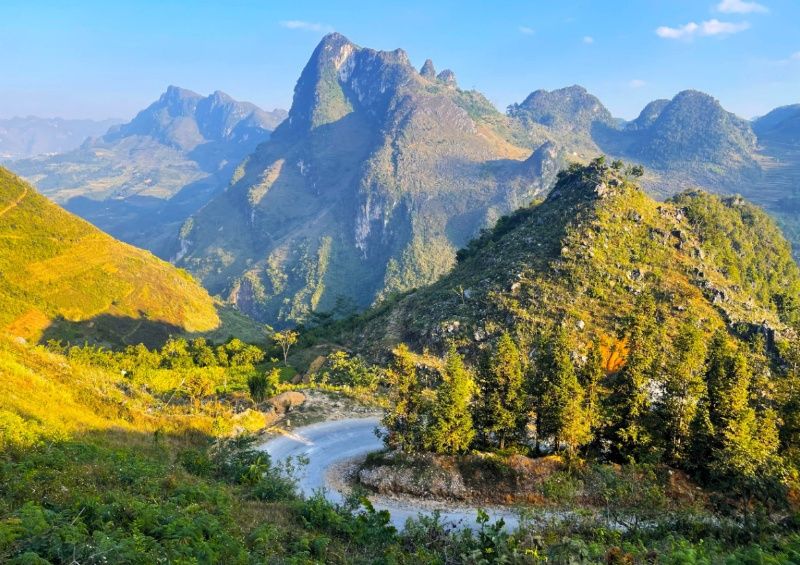
The Best 4-Day Ha Giang Loop Itinerary for Beginners
The best 4-day Ha Giang Loop itinerary for beginners covers approximately 380km total, averages 3–5 hours of riding per day, and sequences the route to place the most challenging section (Yen Minh to Dong Van) on Day 2 when riders are warmed up but not yet fatigued.
Before diving into daily details, here is the full route overview:
| Day | Route | Distance | Riding Time | Difficulty |
|---|---|---|---|---|
| Day 1 | Ha Giang City → Tam Son (Quan Ba) | ~60km | 2–3 hours | Easy |
| Day 2 | Tam Son → Dong Van | ~100km | 4–5 hours | Moderate–Hard |
| Day 3 | Dong Van → Meo Vac (via Ma Pi Leng) | ~25km | 1.5–2 hours | Hard (short) |
| Day 4 | Meo Vac → Ha Giang City (via Du Gia) | ~195km | 5–6 hours | Easy–Moderate |
Day 1: Ha Giang City to Tam Son (Quan Ba)
Day 1 of the Ha Giang Loop covers approximately 60km from Ha Giang City to Tam Son in Quan Ba District, taking 2–3 hours of relaxed riding along QL4C with the first major landmark Quan Ba Heaven’s Gate (Cổng Trời) appearing roughly 45km into the journey.
This is the perfect warm-up day. The road is wide, well-paved, and relatively gentle compared to what follows. Traffic thins significantly once you clear Ha Giang City, and the landscape shifts quickly from valley floor to mountain foothills. Riders begin climbing above 1,200 meters before reaching Heaven’s Gate, where a viewing platform on the right side of the road reveals one of the most photographed panoramas in northern Vietnam the twin limestone hills called the Fairy Bosom Hills (Núi Đôi) rising from a green valley floor.
Key stops on Day 1:
- Quan Ba Heaven’s Gate: 45km from Ha Giang City, viewpoint on the right, free entry. Allow 30 – 45 minutes.
- Tam Son town center: Quiet market town with basic guesthouses and local restaurants serving pho and bun bo. Good place to fuel up the bike.
- Optional: Fairy Spring near Tam Son a short walk to a small waterfall popular with local families.
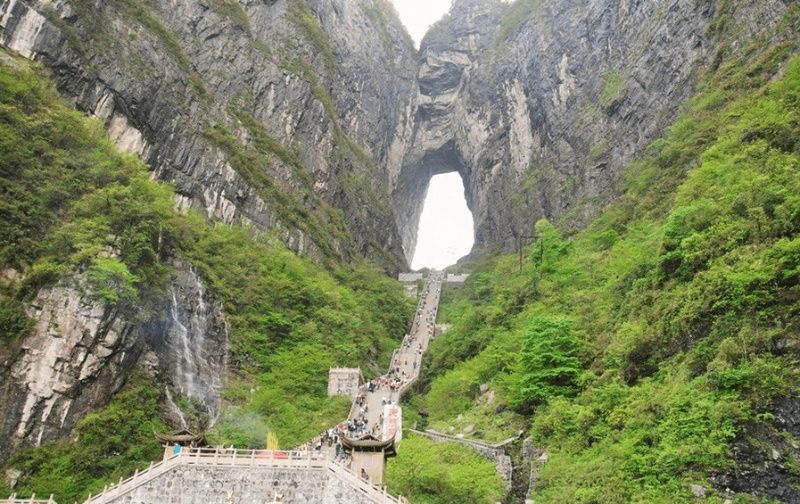
Day 2: Tam Son to Dong Van
Day 2 is the most demanding riding day of the loop, covering approximately 100km from Tam Son to Dong Van over 4–5 hours, including the long mountain climb through Yen Minh District and the culturally rich approach into Dong Van Old Quarter.
This day separates confident riders from anxious ones. The road between Yen Minh and Dong Van narrows considerably, and several long switchback sequences climb above 1,400 meters with limited guardrails. The reward is proportional: the views from these switchbacks endless karst peaks layered in morning mist are what most travelers picture when they imagine the Ha Giang Loop.
Key stops on Day 2:
- Yen Minh town (40km from Tam Son): Natural breakfast stop. The town has several cafes and pho shops open from 6:30am. Good place to refuel the bike before the harder section begins.
- Sung La Valley: A flat, green valley carved between limestone towers approximately 70km into the day’s ride. Pull over on the roadside for the full panorama.
- Hmong King’s Palace, Dong Van: The residence of the H’Mông tribal king Vuong Chi Sinh, built between 1919–1928. Entry fee approximately 20,000 VND. Allow 45–60 minutes.
- Dong Van Old Quarter: Vietnam’s northernmost heritage district, with 19th-century stone houses, local fabric shops, and evening market stalls.
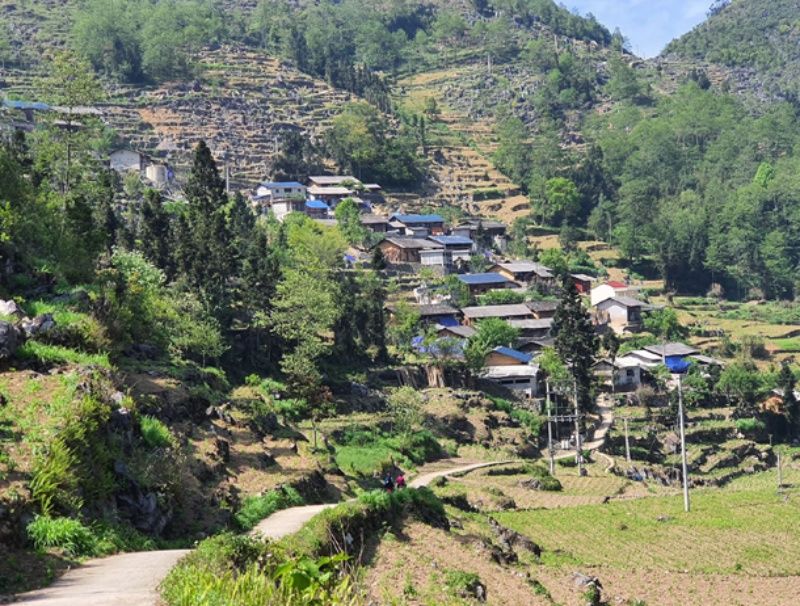
Day 3: Dong Van to Meo Vac (via Ma Pi Leng Pass)
Day 3 is the shortest day by distance just 25km but the most visually spectacular of the entire loop, as the route crosses Ma Pi Leng Pass, widely considered one of the four most beautiful mountain passes in Vietnam.
Despite the short distance, allow a full day. Ma Pi Leng is not a road you drive across in 30 minutes and forget. The pass stretches approximately 20km along a cliffside carved directly into the limestone mountain face, with the Nho Que River running jade-green 1,000 meters below. Multiple stopping points dot the road, and riders typically spend 2–3 hours photographing, sitting with the view, and descending slowly.
Key stops on Day 3:
- Ma Pi Leng Pass summit viewpoint: Approximately 8km from Dong Van, a small terrace is built directly into the cliff face where riders can park, absorb the full panorama of the gorge below, and capture some of the most iconic Ha Giang check in places on the entire loop — this viewpoint alone is worth slowing the day’s pace considerably
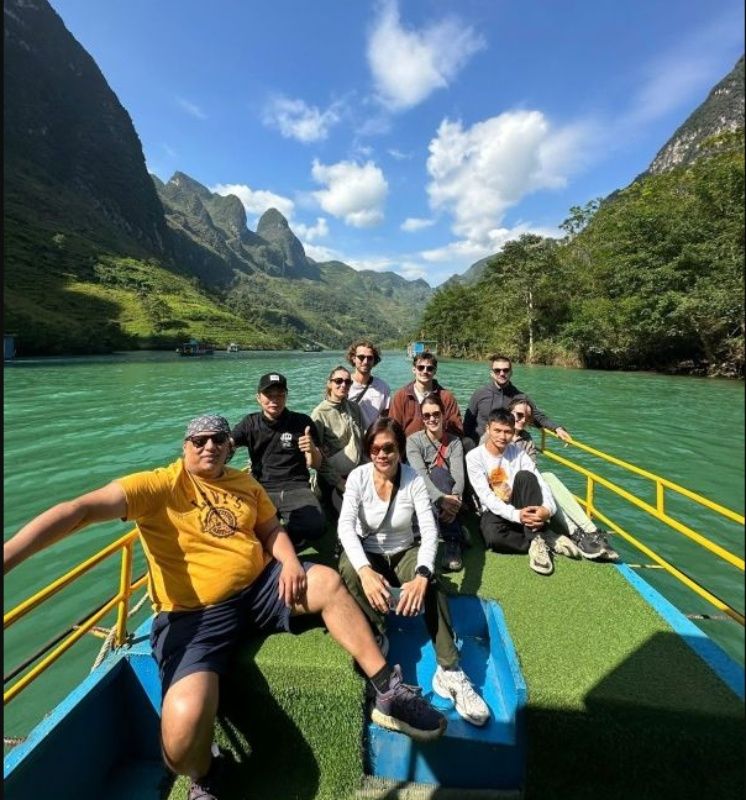
- Nho Que River boat tour: At the base of the descent near Meo Vac, local operators offer 30-minute boat trips along the river gorge between the limestone walls. Cost: approximately 150,000–200,000 VND per person. Highly recommended for riders who have time.
- Meo Vac central market: A busy local market town with authentic northern Vietnamese street food — thắng cố (horse meat stew), corn wine, and freshly made tofu are local specialties.
Day 4: Meo Vac Back to Ha Giang City
Day 4 covers approximately 195km from Meo Vac back to Ha Giang City via the return route through Du Gia, taking 5 – 6 hours total with stops, completing the full loop along a different road from the outbound journey.
The return route is significantly wider and less technically demanding than Days 2 and 3, making it a satisfying and relatively relaxed conclusion to the loop. The road passes through Du Gia District, where the landscape opens up into wider river valleys and terraced rice fields a different visual character from the tight karst peaks of the northern section.
Key stops on Day 4:
- Tu San Canyon lookout (Hẻm Tu Sản): Approximately 20km from Meo Vac, a viewpoint above the narrowest section of the Nho Que River gorge. Short 10-minute walk from the roadside parking area.
- Du Gia District: Worth a 20-minute stop to explore the weekly market (check day of week as it rotates) and try local sticky rice prepared by Tày people.
- Lung Tam linen village: Approximately 40km from Ha Giang City, a village famous for hand-woven linen fabric produced by H’Mông women. Good place for authentic textile souvenirs directly from producers.
The Cost of a 4-Day Trip on the Ha Giang Loop
The total cost of a Ha Giang loop motorbike tour over 4 days ranges between $120–$280 USD depending on whether you self-ride or hire an Easy Rider, covering motorbike rental or guide fees, accommodation, food, fuel, and entrance tickets.
| Expense Category | Self-Ride | Easy Rider | Notes |
|---|---|---|---|
| Motorbike rental Ha Giang | $24–$56 | $0 (included in guide fee) | 150,000–350,000 VND/day |
| Guide / Easy Rider fee | $0 | $140–$220 | $35–$55/day per guide |
| Fuel | $10–$15 | $0 (included) | ~7–8 liters per day |
| Accommodation (4 nights) | $24–$48 | $24–$48 | 150,000–300,000 VND/night |
| Food (all meals) | $20–$40 | $20–$35 | Street food 30,000–60,000 VND/meal |
| Entrance tickets | $8–$12 | $8–$12 | Hmong King’s Palace, boat tour |
| Emergency/miscellaneous | $10–$20 | $5–$10 | Bike repair, tips, extra stops |
| Total estimate | $96–$191 | $197–$325 | Per person |

The Best Time to Ride the Ha Giang Loop
- October and November are widely considered the best months to ride the Ha Giang Loop; during this period the mountains surrounding the Dong Van Karst Plateau are covered with blooming buckwheat flowers, creating pink and white hillsides that stretch across the valleys; the weather is dry, temperatures usually range from 12–22°C, and the clear skies make long mountain views possible; these stable road conditions make this season especially ideal for beginner riders.
- September is an excellent alternative for travelers who want stunning landscapes with fewer crowds; the terraced rice fields across Yen Minh District and Quan Ba District turn golden during the harvest season; rainfall is gradually decreasing after the summer monsoon, so roads are generally safe while accommodation prices remain lower than the peak months of October and November.
- December to February offers a quiet winter atmosphere with dramatic mountain scenery; temperatures in towns like Dong Van can drop to around 5–10°C at night, and fog sometimes appears on high passes such as Ma Pi Leng Pass; while roads remain dry and rideable, beginners should prepare warm clothing and allow more travel time due to reduced visibility in the mornings.
- March to May is a comfortable spring travel window with fewer tourists; the weather becomes gradually warmer, fruit trees blossom across valleys near Quan Ba, and the overall riding experience is peaceful; this is also a good period for budget travelers because homestay prices and Easy Rider guide fees are often lower than in peak season.
- June to August is generally not recommended for beginners due to the rainy season; heavy monsoon storms can create landslides in mountain areas near Yen Minh and reduce visibility along steep sections of the loop; wet roads, mud, and gravel significantly increase riding difficulty, making this season more suitable for experienced motorbike riders only.
Frequently Asked Questions About the Ha Giang Itinerary
Is the Ha Giang Loop Safe During Rainy Season?
No, the Ha Giang Loop is not safe for beginner riders during the rainy season (June–August), primarily because active landslide risk on the Yen Minh to Dong Van section, severely reduced visibility on Ma Pi Leng Pass, and wet road surfaces on cliff-edge sections create a combination of hazards that exceeds acceptable risk for riders without extensive mountain riding experience.
Do You Need an International Driving Permit (IDP) for the Ha Giang Loop?
Yes, you need a valid International Driving Permit (IDP) endorsed for motorbikes (Category A) to legally self-ride the Ha Giang Loop, and police checkpoints along the route — particularly before Dong Van — actively enforce this requirement.
Can You Do the Ha Giang Loop Without a Motorbike (Jeep Tour Option)?
Yes, you can complete the Ha Giang Loop without riding a motorbike by booking a Jeep tour a guided group or private vehicle tour that covers the same route in a 4WD Jeep, typically over 3–4 days — making it a viable option for travelers who are not comfortable with motorbikes under any conditions.
Thus, the above information covers the complete 4-day Ha Giang Loop itinerary for beginners. Hopefully, these insights and tips will help you plan a safe, enjoyable, and unforgettable journey through the stunning landscapes of Ha Giang.
If you are looking to book a tour or rent a quality motorbike, feel free to contact Vietmotorbiketour directly — a provider of premium Ha Giang travel tour services, with a team of experienced guides ready to assist you every step of the way.