
 Home
Home About
About Tours
Tours Bikes Rental
 Contact
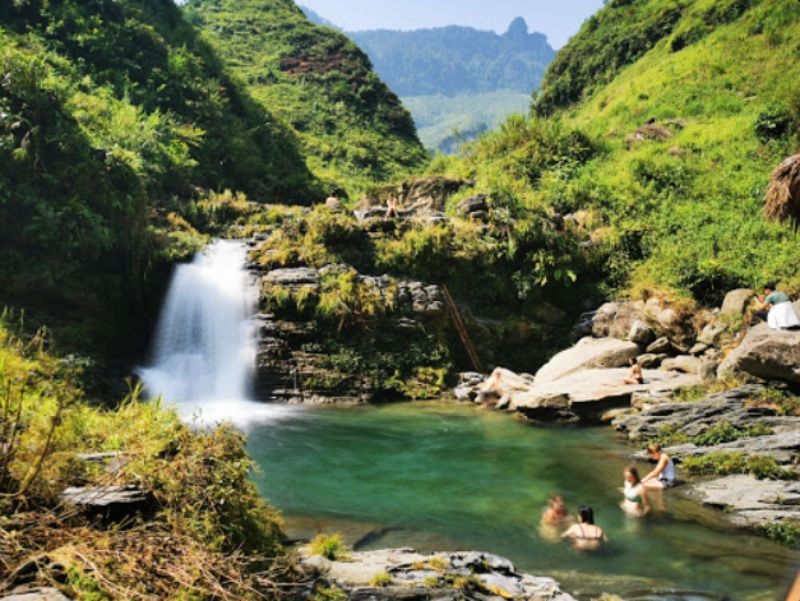
Du Gia Waterfall is Vietnam’s most serene natural pool and jungle retreat on the Ha Giang Loop a cascading oasis tucked inside Tien Village, Du Gia Commune, Yen Minh District, roughly 70 kilometers from Ha Giang City. Framed by six-meter limestone cliffs that plunge into a deep, year-round green pool, Du Gia is widely regarded as one of the most breathtaking among all waterfalls Ha Giang has to offer — an unspoiled natural destination that rewards travelers willing to seek it out
Where Exactly Is Du Gia Waterfall Located in Ha Giang?
Du Gia Waterfall is located in Du Gia Commune, Yen Minh District, within Ha Giang Province, approximately 70 kilometers from Ha Giang City. When traveling via the full Ha Giang Loop along QL4C through Quan Ba and Yen Minh, the total distance extends to around 130 kilometers. The waterfall emerges from deep karst ravines, fed by underground springs that maintain a steady flow even during the dry season. Geographically, Du Gia sits along the southeastern segment of the loop, positioned between Yen Minh town and the route toward Dong Van. This makes it an ideal overnight stop for travelers, helping break up long riding distances into more manageable segments. The surrounding valley is home to the Tay ethnic community, where traditional stilt houses line the landscape, adding cultural depth to the natural scenery.
Du Gia Waterfall Stands Out from Other Waterfalls in Vietnam
Du Gia Waterfall stands apart from other waterfalls in Vietnam through a rare combination of accessibility, freedom, and authentic immersion, especially when compared to iconic sites like Ban Gioc Waterfall. While Ban Gioc impresses with its massive scale and dramatic cross-border setting, the experience there is structured—visitors follow designated paths, pay entrance fees, and engage with the landscape through organized services. In contrast, Du Gia offers something far less mediated and far more personal. There are no barriers or ticket booths; visitors can approach the water freely, swim in a crystal-clear natural pool, or simply relax on sun-warmed rocks surrounded by jungle.
What truly distinguishes Du Gia is the convergence of features rarely found in one place. The waterfall maintains year-round water flow, ensuring a swimmable pool even during the dry months. Its setting within a limestone karst amphitheater creates an enclosed, tranquil atmosphere where the sound of cascading water dominates. Just as importantly, the nearby Tay village adds a layer of cultural authenticity—travelers are not observing local life from a distance but can actively engage through homestays and guided experiences. Additionally, a growing cliff-jumping culture has introduced a subtle social energy, attracting adventurous travelers without overwhelming the site. Although Du Gia is becoming more widely known, it remains significantly less crowded than most comparable destinations, preserving its appeal as a genuinely immersive natural retreat.
What Activities Can You Do at Du Gia Waterfall?
There are five main activity categories at Du Gia Waterfall: swimming in the natural pool, cliff jumping from limestone ledges, jungle trekking to secondary cascades, relaxing at the riverside bamboo café, and bamboo raft drifting on the upstream section of the stream
The table below outlines the five core activities, their difficulty level, required equipment, and the type of traveler each suits best:
| Activity | Difficulty | Equipment Needed | Best For |
|---|---|---|---|
| Swimming in natural pool | Easy | Swimwear, water shoes | All travelers, families |
| Cliff jumping (3.5–6 m) | Moderate–High | Swimwear, confidence | Adventure travelers, experienced swimmers |
| Jungle trekking to secondary cascades | Easy–Moderate | Trekking shoes, water | Nature lovers, photographers |
| Bamboo café relaxation | None | None | Every visitor |
| Bamboo raft drifting (upstream) | Easy | None (provided) | Slow travelers, couples |
Trekking Routes Lead to Du Gia Waterfall
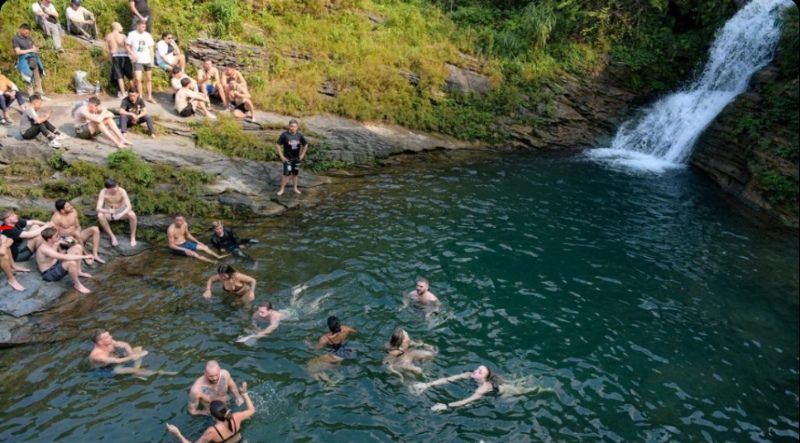
Du Gia Waterfall is accessible through two distinct trekking routes, each offering a different level of effort and reward, making the journey itself an integral part of the experience in Ha Giang Province. Both trails begin from the commune road in Du Gia Village, where vehicles are typically parked about one kilometer from the main waterfall.
Main Trekking Options
1. Short Trail (15–20 minutes)
- This is a flat, well-marked path suitable for all fitness levels.
- The trail runs alongside a gentle stream, with the sound of the waterfall guiding the way.
- Terrain includes packed earth and stone, manageable even in sandals during dry weather.
- However, slippery rocks caused by algae near water crossings make footwear with grip highly recommended.
- Ideal for casual travelers seeking quick and easy access to the main pool.
2. Extended Jungle Loop (60–90 minutes)
- A more demanding route that climbs limestone terrain and navigates jungle paths.
- Requires proper trekking shoes due to uneven, slippery surfaces—especially after rain.
- Leads to Tham Luong Waterfall, a quieter and less-visited cascade deeper in the jungle.
- Offers elevated viewpoints overlooking the Du Gia valley, ideal for photography.
- Best experienced with a local guide, who can help navigate complex karst terrain and avoid dead ends.
The Best Route from Ha Giang City to Du Gia Waterfall
The best route from Ha Giang City to Du Gia Waterfall follows QL4C northward — riders who have arranged motorbike rental Ha Giang in advance will find the 130-kilometer journey straightforward, passing Heaven’s Gate viewpoint at Quan Ba (approximately 50 kilometers, 1.5 hours), continuing through Yen Minh town (another 45 kilometers, approximately one hour), and then turning southeast toward Du Gia Commune for the final approach
Total riding distance via this scenic route is approximately 130 kilometers, making it a comfortable half-day ride when photography stops, fuel breaks, and a roadside meal are factored in.
Key waypoints and estimated riding times from Ha Giang City:
| Waypoint | Distance from Ha Giang City | Estimated Riding Time | Notes |
|---|---|---|---|
| Quan Ba / Heaven’s Gate | ~50 km | 1.5 hours | Last major fuel stop before Yen Minh |
| Yen Minh Town | ~95 km | 2.5 hours | Top up fuel here — last reliable station |
| Du Gia Commune | ~130 km | 3–3.5 hours | Park vehicles at commune road |
| Du Gia Waterfall (on foot) | +1 km trail | +20 minutes walk | Follow stream sound |
The Best Time to Visit Du Gia Waterfall in Ha Giang
The best time to visit Du Gia Waterfall is between September and April with October and November representing the single optimal window for most travelers, delivering clear and swimmable water, amber-gold rice terraces throughout the Yen Minh valley, comfortable riding temperatures, and the Valley of Flowers in bloom just kilometers from the waterfall. This dry-season period provides the convergence of conditions that makes Du Gia most rewarding: stable water levels, clean pool visibility, safe road surfaces along QL4C, and the kind of clear mountain light that makes karst landscape photography genuinely spectacular.
Ha Giang’s climate divides sharply into two distinct seasons. The dry season runs from October through April, with temperatures in the Du Gia valley ranging from roughly 10°C in December and January — cold but entirely manageable with proper riding gear — to a comfortable 22–25°C in March and April when the pool is warm enough for extended swimming. The rainy season dominates from May through September, bringing daily precipitation, dramatically elevated water flow, roads that can become hazardous with mud and occasional rockslides, and pool conditions that render cliff jumping genuinely dangerous.
What Should You Pack and Prepare Before Visiting Du Gia Waterfall?
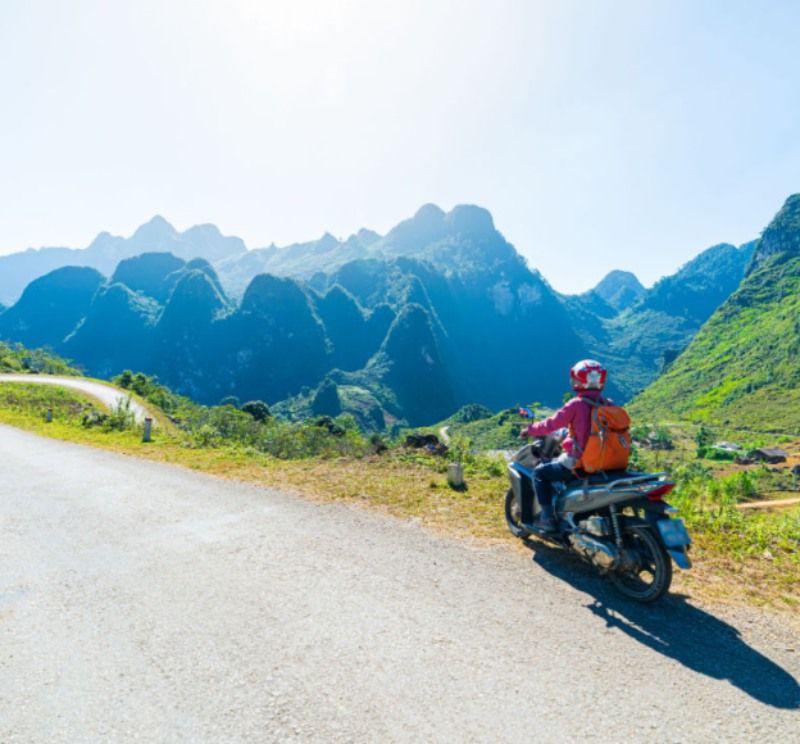
Preparing for Du Gia Waterfall requires specific attention to seven categories of gear and logistics, with the microclimate of the Du Gia valley presenting particular conditions that general Ha Giang Loop packing lists do not fully address. The valley generates persistent morning mist, significant temperature differential between the valley floor (where the waterfall sits) and the mountain passes on the approach road, and trail surfaces that are slippery regardless of how long it has been since the last rainfall — the limestone and algae combination around the pool is reliably treacherous in any footwear without grip.
Complete packing list for Du Gia Waterfall:
- Swimwear and a quick-dry towel — the natural pool is the central experience; arriving without these means watching others swim, which is a regret you will carry back to Ha Giang City
- Water shoes or grip sandals — the flat rocks around the pool are uniformly coated in algae and will send you to the ground in ordinary shoes, bare feet, or flip-flops without grip; this is not optional
- Lightweight trekking shoes — essential for the upper jungle trail and the Tham Luong route; trail runners are ideal; anything with a smooth sole is insufficient
- Insect repellent and broad-spectrum sunscreen — jungle canopy provides psychological shade, but UV intensity at elevation is significant even on overcast days; mosquitoes become active from late afternoon and are present year-round
- A packable rain jacket or poncho — afternoon showers occur in the Du Gia valley even during the dry season, and the microclimate of the gorge generates its own moisture independently of regional weather patterns
- Sufficient Vietnamese dong in cash — there are no ATMs in Du Gia Commune; the nearest reliable machine is in Yen Minh town, approximately 30 kilometers away; budget generously and withdraw before leaving Yen Minh
- Offline maps downloaded before departure — mobile signal is intermittent on the QL4C approach road and absent on the jungle trail; Maps.me or Google Maps offline mode prevents disorientation on the longer trekking route
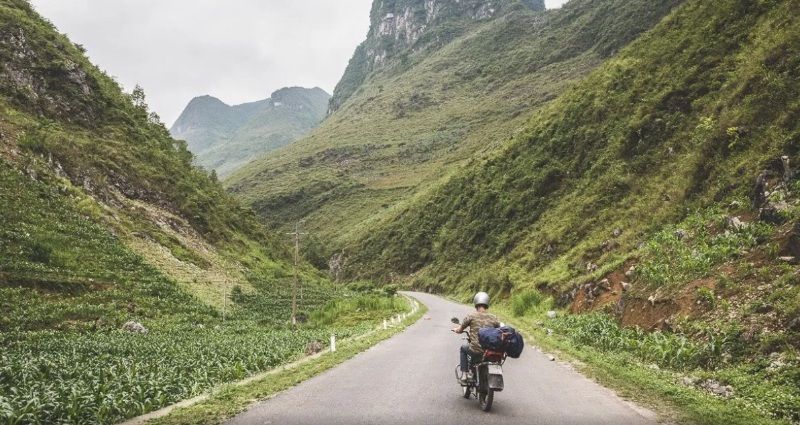
Du Gia Waterfall is not the most dramatic stop on the Ha Giang Loop. It is not the most photographed, the most written-about, or the most logistically significant. What it offers is something the loop’s headline attractions rarely can: a place where the scenery is still wild, the community still present, and the experience still genuinely yours to shape. That combination increasingly rare in Vietnam’s most-visited destinations is precisely why those who find it come back