
 Home
Home About
About Tours
Tours Bikes Rental
 Contact
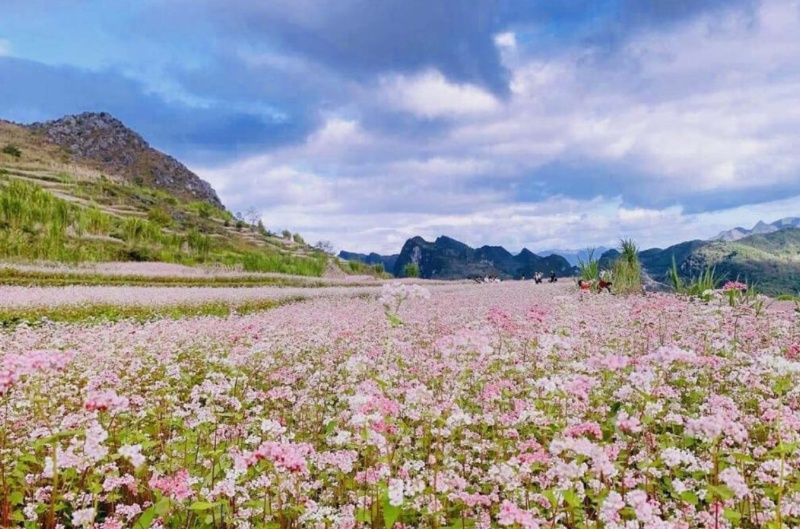
Buckwheat flower season in Ha Giang is an annual natural phenomenon occurring on the Dong Van Karst Plateau — a UNESCO-recognized highland region in northern Vietnam — during which buckwheat plants produce cascading blooms in three distinct colors: white, soft pink, and deep red-purple, depending on the variety and stage of maturity.
Below is everything you need to plan the perfect buckwheat flower trip — from timing and bloom locations to the most rewarding Ha Giang check in places that put you closest to the fields at golden hour
The Best Time to See Buckwheat Flowers in Ha Giang
The best time to see buckwheat flowers in Ha Giang is from late October to mid-November, when bloom density peaks across the plateau’s most photogenic valleys though the broader season stretches from late September through early December, offering multiple windows depending on which part of Ha Giang you plan to visit.
Below is a breakdown of what to expect month by month, followed by a key insight about how bloom timing varies geographically.
Late October to mid-November is definitively the peak bloom period for buckwheat flowers in Ha Giang, for three compounding reasons: optimal climatic conditions, maximum field coverage, and the highest concentration of visitors and cultural events.
The first two weeks of November consistently produce the most photogenic conditions. By this time, the majority of buckwheat fields across Dong Van and Meo Vac districts are in full bloom simultaneously, creating the “sea of flowers” effect that defines Ha Giang’s iconic autumn imagery. Temperatures at this elevation drop to between 10°C and 18°C during the day, with cool nights and morning mist that softens the light and adds a dreamlike quality to the landscape particularly beneficial for photography. The combination of cooler air and highland humidity also slows the flowers’ transition from pink to red, extending the peak-color window.
What makes this timing particularly significant is that the Buckwheat Flower Festival Ha Giang’s official cultural celebration of the season is also held during this period, typically in early to mid-November.
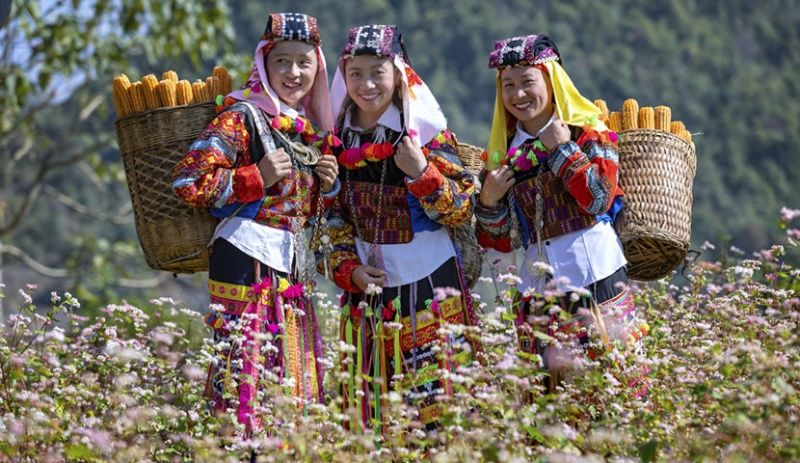
Travelers who time their visit to coincide with the festival experience not only peak blooms but also traditional H’Mông music performances, ethnic markets, and costume displays that add cultural depth to the scenic experience.
The full seasonal breakdown is summarized in the table below:
| Month | Bloom Stage | Dominant Color | Visitor Volume | Best For |
|---|---|---|---|---|
| Late September | Early bloom begins | White | Low | Photographers seeking solitude |
| October | Mid bloom, spreading | White to pale pink | Moderate | Balanced experience, fewer crowds |
| Early November | Peak full bloom | Pink to deep red | High | Festival-goers, first-time visitors |
| Mid–Late November | Late bloom, fading | Deep red-purple | Moderate | Budget travelers, relaxed pace |
| Early December | Post-peak, sporadic | Faded red | Low | Off-season explorers |
Does Bloom Timing Vary Across Different Valleys in Ha Giang?
Bloom timing varies noticeably across Ha Giang’s valleys, with lower-elevation areas like Sung La Valley (approximately 1,000–1,100m) blooming one to two weeks earlier than higher plateaus around Dong Van Town and Meo Vac (1,400–1,600m). This staggered bloom schedule, driven by micro-climate differences between valleys, is one of the season’s most useful characteristics for trip planning.
The elevation gradient across the Ha Giang Loop creates a natural flowering calendar that experienced travelers use to their advantage. Travelers who secure Ha Giang motorbike rental before departing can use this elevation gradient to their full advantage — riding northward along the Loop from Ha Giang City through Quan Ba, Yen Minh, Dong Van, and Meo Vac means moving into progressively cooler, higher terrain where the bloom cycle lags behind the valleys below, effectively chasing peak color across the entire route.
This means a traveler who begins the Loop in mid-October will encounter early white blooms in Sung La, then catch full pink bloom in Pho Cao by the time they reach Dong Van three to four days later.
The table below compares bloom timing and characteristics across the four main buckwheat-viewing areas along the Loop:
| Location | Elevation | Peak Bloom Window | Flower Density | Best Feature |
|---|---|---|---|---|
| Sung La Valley | ~1,000m | Mid–Late October | Very high — wide open fields | Panoramic meadow views, accessible from main road |
| Pho Cao Village | ~1,200m | Late October – Early November | High — village-integrated fields | Stone houses framed by flowers, cultural immersion |
| Sa Phin | ~1,300m | Early–Mid November | Moderate | Combines with Vuong Palace visit |
| Ma Pi Leng Pass area | ~1,500m | Mid November | Lower density, dramatic scenery | Cliff-face flowers above Nho Que River gorge |
The Best Places to See Buckwheat Flowers in Ha Giang
1. Sung La Valley (Dong Van District)
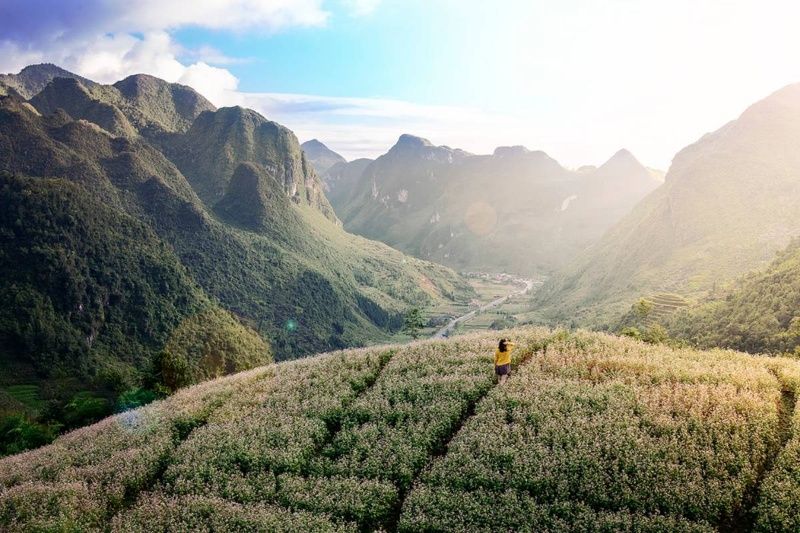
Sung La Valley is the single most iconic buckwheat destination in Ha Giang, renowned for its vast, open fields that stretch across the valley floor and climb the surrounding slopes without interruption. Unlike more compact village settings, Sung La offers genuinely panoramic bloom a quality that makes it the preferred location for wide-angle landscape photography. The valley is accessible via a well-marked side road off the main Loop, approximately 25 kilometers from Dong Van Town, and most visitors spend two to three hours exploring the fields on foot.
2. Pho Cao Village (Dong Van District)
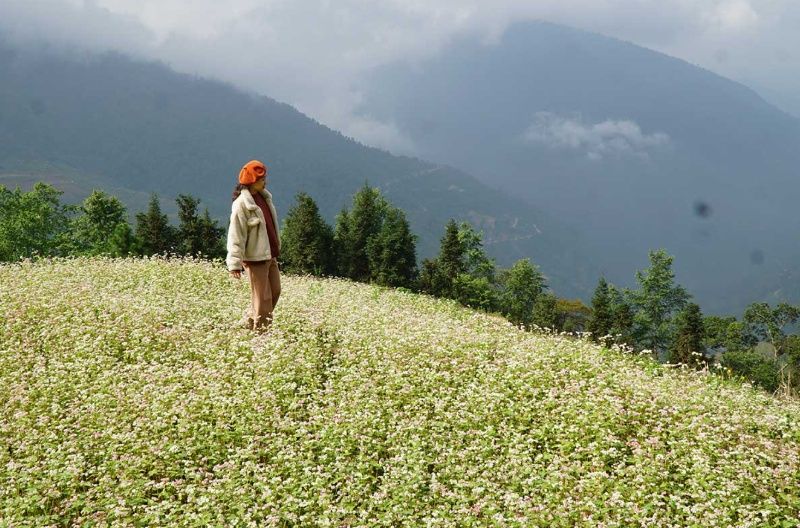
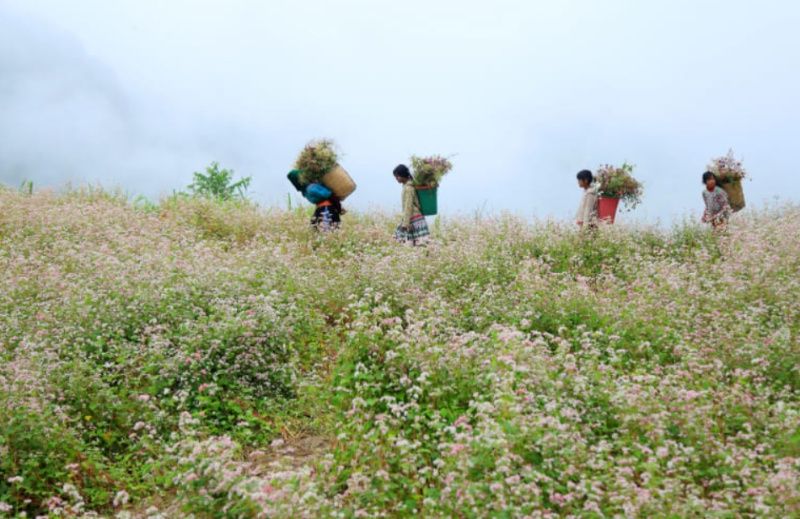
Pho Cao offers what Sung La lacks: intimate integration of buckwheat flowers with human settlement. The village’s stone houses, built in the traditional H’Mông style with dry-stacked limestone walls and dark tile roofs, sit directly among buckwheat fields that fill every available strip of land between houses, along pathways, and on the hillside terraces above. Walking through Pho Cao during peak bloom is the closest experience to inhabiting the flower landscape rather than simply observing it.
3. Sa Phin (Dong Van District)
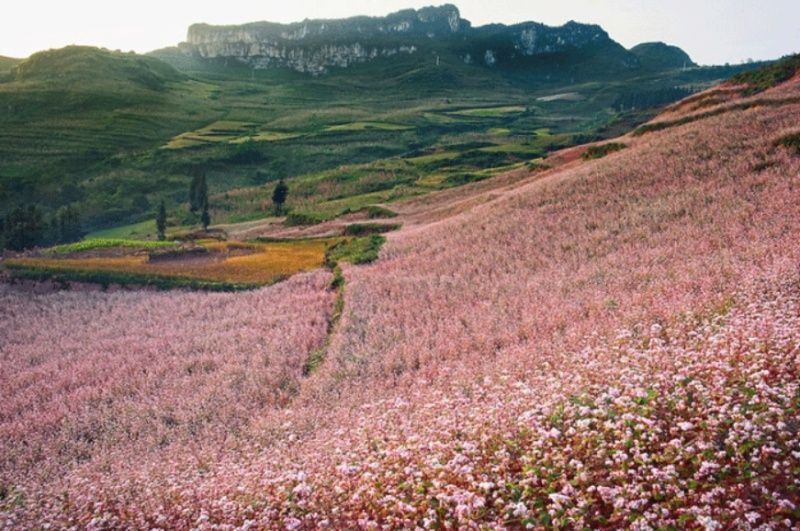
Sa Phin’s appeal is its combination of buckwheat scenery with one of Ha Giang’s most significant historical landmarks: the Vuong Palace (Dinh Vua Meo), the grand stone residence of H’Mông chieftain Vuong Chi Sinh, built in 1914. The palace complex is surrounded by buckwheat fields during the flower season, creating an unusual juxtaposition of architectural heritage and natural beauty. For travelers interested in both history and scenery, Sa Phin offers the most content-rich stop on the Loop.
4. Ma Pi Leng Pass Area (Meo Vac District)
Ma Pi Leng is fundamentally different from the other three locations. Rather than valley floors and village fields, buckwheat here grows on steep hillsides and cliff ledges along one of Vietnam’s most dramatic mountain passes a 20-kilometer stretch of road carved into the face of a 1,500-meter limestone ridge above the Nho Que River gorge. The flower density is lower than in the valleys, but the setting flowers clinging to near-vertical rock faces with the turquoise river far below is visually incomparable.
The Buckwheat Flower Spots Along the Ha Giang Loop Compare
The table below compares all four destinations across five key criteria to help travelers prioritize based on their specific interests:
| Criteria | Sung La Valley | Pho Cao Village | Sa Phin | Ma Pi Leng |
|---|---|---|---|---|
| Flower Density | ⭐⭐⭐⭐⭐ Very high | ⭐⭐⭐⭐ High | ⭐⭐⭐ Moderate | ⭐⭐ Lower |
| Crowd Level (Nov) | High | Moderate | Moderate | High at viewpoints |
| Cultural Experience | Low | High | Very High | Low |
| Photography Potential | Wide landscape | Intimate village | Heritage + flower | Dramatic cliff scenery |
| Difficulty of Access | Easy (main road detour) | Easy (secondary road) | Easy | Easy but slow (winding pass) |
| Best Traveler Type | Landscape photographers | Cultural travelers | History + nature | Adventure riders |
Traditional Foods and Drinks Are Made from Buckwheat in Ha Giang
Buckwheat in Ha Giang is used to produce two primary traditional food products buckwheat flatcakes (bánh tam giác mạch) and buckwheat distilled wine (rượu tam giác mạch) both of which are sold at markets, roadside stalls, and homestays throughout the plateau during the flower season.
Buckwheat flatcakes
These small, dense cakes are made from coarsely ground buckwheat flour mixed with water and pressed into thin rounds before being pan-fried on low heat. The result is a slightly nutty, subtly earthy cake with a firm texture quite different from the delicate crepes associated with buckwheat in Western cuisine. Street vendors throughout Dong Van and Meo Vac sell them fresh from cast-iron pans, typically wrapped in banana leaf and served plain or with a light sprinkle of sugar. For many travelers, eating a buckwheat cake while standing in a flower field on a cool November morning becomes one of the defining sensory memories of the trip.
Buckwheat wine
Is a traditional H’Mông distilled spirit made by fermenting buckwheat grain, which is then slowly distilled in small clay or copper stills. The resulting liquid is typically clear, with an alcohol content ranging from 30% to 45%, and a flavor profile described as earthy, slightly floral, and less harsh than corn-based Vietnamese spirits. It is consumed both recreationally and ceremonially offered to guests as a gesture of welcome in H’Mông households, used in traditional rituals, and sold in repurposed bottles at market stalls throughout the season.