 Home
 About
 Tours
 Bikes Rental
 Contact
The Ha Giang Loop is famous for its breathtaking mountain passes and dramatic karst landscapes — but the ethnic minority markets scattered along the route reve…The Ha Giang Loop is famous for its breathtaking mountain passes and dramatic karst landscapes but the ethnic minority markets scattered along the route reveal a side of Northern Vietnam that no viewpoint or winding road can fully capture.
In this guide, Viet Motorbike Tour shares a complete breakdown of the top 10 ethnic minority markets on the Ha Giang Loop: where they are, when they happen, which communities gather there, and exactly what to buy, eat, and look for when you arrive.
Top 10 Ethnic Minority Markets to Visit on the Ha Giang Loop
There are 10 standout ethnic minority markets on the Ha Giang Loop worth building your itinerary around, selected based on cultural richness, accessibility from the main route, uniqueness of atmosphere, and the diversity of ethnic groups represented. Dưới đây is a detailed profile of each market to help you decide which ones match your travel style and schedule.
1. Meo Vac Market
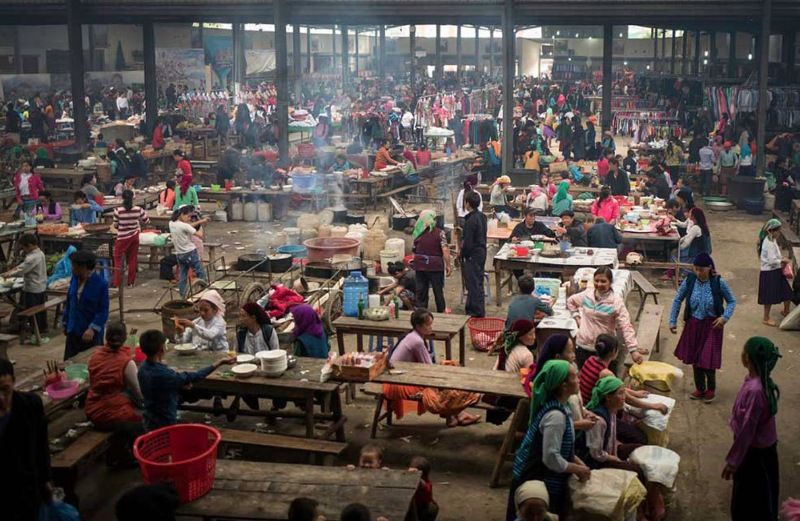
Meo Vac Market is the largest and most dynamic ethnic minority market on the entire Ha Giang Loop, held every Sunday morning in the center of Meo Vac town, approximately 150 km from Ha Giang City. The market draws participants from the H’Mong, Dao, Nung, and Giay communities, creating one of the most visually spectacular and culturally dense gatherings in Northern Vietnam.
What makes Meo Vac Market unmistakable is its livestock trading section. Every Sunday, hundreds of buffalo, cows, horses, and pigs are herded into a designated area just outside the main market square, where farmers from surrounding communes inspect, negotiate, and trade animals in scenes of controlled chaos — hooves on stone, voices overlapping, ropes taut under the weight of restless cattle. For first-time visitors, this section alone justifies the entire trip.
Beyond the livestock, the indoor market hall overflows with:
- Fresh produce: locally grown vegetables, wild herbs, medicinal roots, and corn
- Traditional textiles: H’Mong embroidered fabric panels, indigo-dyed cloth, and woven blankets
- Silver jewelry: Dao-crafted necklaces, earrings, and bracelets
- Street food stalls: thang co (horse meat stew), corn wine, grilled pork skewers, and buckwheat cake
Arrive by 6:00 AM to witness the market at its fullest. By 10:00 AM, the crowds begin to thin as vendors pack up and locals begin the journey home.
2. Dong Van Market
Dong Van Market takes place every Sunday morning in the heart of Dong Van Ancient Town, a UNESCO-recognized heritage site and the cultural capital of the Dong Van Karst Plateau Geopark. The market draws primarily H’Mong, Dao, and Tay vendors and shoppers from villages across the surrounding plateau.
What distinguishes Dong Van Market from others on the Loop is its setting. Stalls spill out across the cobblestone streets of a preserved 19th-century trading town, with the backdrop of karst limestone peaks rising sharply in every direction. The combination of architectural heritage and living ethnic culture makes this market as visually compelling as it is culturally rich.
Key items to look for at Dong Van Market include:
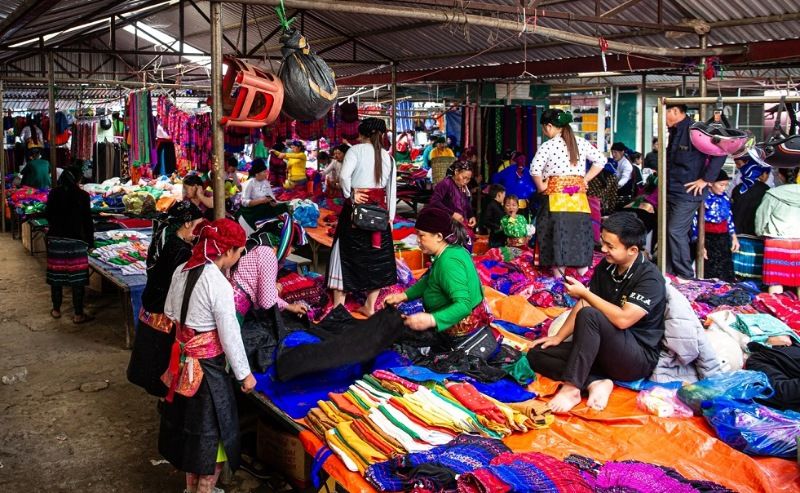
- H’Mong embroidered garments: intricately stitched jackets, skirts, and headscarves in bold geometric patterns
- Handmade farming tools: sickles, plows, and wooden implements crafted by local blacksmiths
- Local food: thang co served from large iron cauldrons, rice wine, fresh corn, and highland vegetables
- Silver and bead jewelry: worn daily by local women and sold in small quantities to travelers
3. Khau Vai Love Market
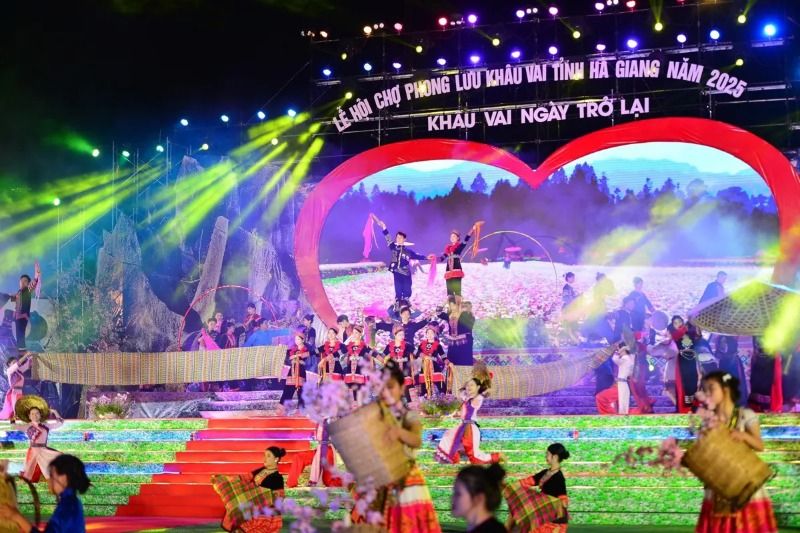
Khau Vai Love Market is the most culturally singular market not only on the Ha Giang Loop, but in all of Vietnam — a once-a-year event held on the 27th day of the 3rd lunar month (typically falling in late April or early May) in Khau Vai Village, Meo Vac District.
The origin of this market is rooted in a tragic local legend: a young H’Mong man and a Nung woman fell deeply in love but were forbidden to marry by their respective families due to clan differences. Unable to be together, they agreed to meet once a year in secret at a remote mountain location — a pact that eventually gave birth to the tradition of the Love Market. Over generations, the gathering evolved into a community-sanctioned space where former lovers, separated couples, and old sweethearts could reunite for a single day each year, regardless of their current marriages or family obligations.
Today, Khau Vai Love Market functions on multiple levels simultaneously:
- For elders: a bittersweet annual reunion with people they once loved and lost
- For young people: one of the few accepted social spaces to meet and court potential partners from other ethnic groups
- For visitors: an extraordinary window into the emotional and relational complexity of highland ethnic life
4. Yen Minh Market
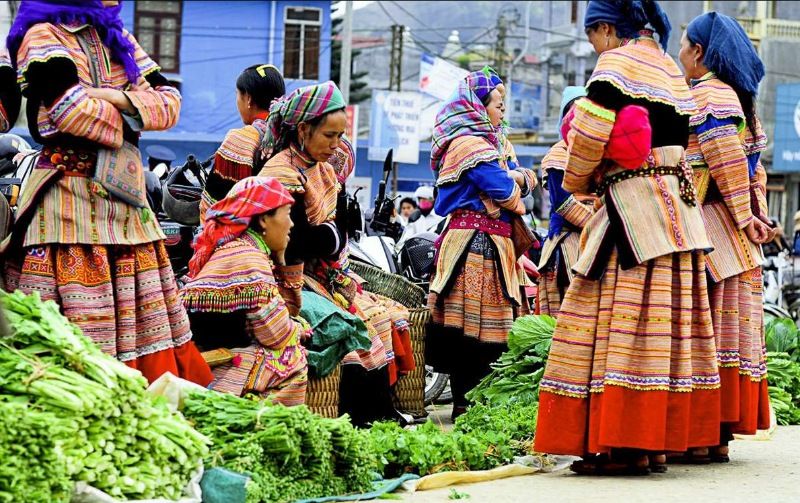
Yen Minh Market is located 100 km northeast of Ha Giang City in the district with the highest concentration of market sessions in the entire province. On Sunday mornings, villagers who live in remote areas begin their journey to Yen Minh at midnight, arriving before dawn to secure stall positions. The sheer variety of produce — particularly the fresh medicinal herbs and organic highland vegetables — makes this market a compelling stop for food-focused travelers.
5. Du Gia Market
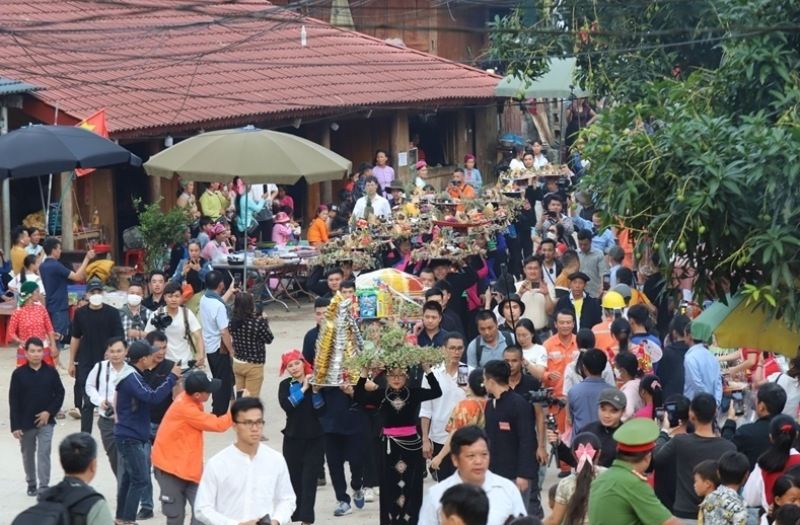
Du Gia Market, held every Friday, offers a notably different atmosphere from the busier Sunday markets. Set against a backdrop of lush rice paddies and traditional Thai stilt houses, this smaller market prioritizes authentic community life over spectacle. It is an ideal stop for travelers who find the crowds at Meo Vac overwhelming but still want a genuine market experience.
6. Hoang Su Phi Market
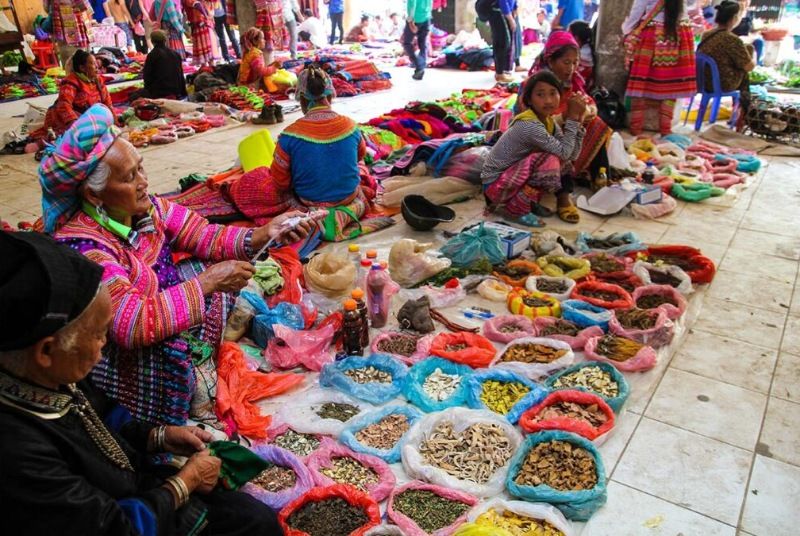
Hoang Su Phi Market stands apart for its photographic beauty — Red Dao women in long indigo coats with red headdresses, La Chi farmers carrying forest vegetables, and stalls of hand-dyed cloth stretched along the main street create visuals that rival any market on the Loop. This market is particularly well-suited for photographers and travelers seeking a quieter, more scenic alternative.
7. Sa Phin Market
Sa Phin Market is one of the most intriguing stops on the Ha Giang Loop, operating on a backwards rotating weekly schedule — shifting one day earlier each week — which means it falls on a different day of the week every session. This unconventional timing keeps the market genuinely local, as only well-prepared travelers who research their dates in advance manage to visit. Located just 15 km from Dong Van near the historic H’Mong King Palace, Sa Phin draws predominantly H’Mong vendors trading embroidered garments, handwoven baskets, fresh highland produce, and small livestock. The compact, stone-paved setting framed by karst limestone formations creates an atmosphere of striking intimacy. Unlike the busier Friday gathering at Du Gia Market — which attracts Thai and H’Mong communities in a scenic rice paddy setting — Sa Phin offers a quieter, more unhurried experience where locals go about their transactions with minimal outside disruption. For travelers who have already experienced the high energy of Meo Vac or Dong Van markets, Sa Phin delivers something rarer: a genuinely undisturbed glimpse into everyday highland trading life.
8. Lung Phin Market
Lung Phin Market is a smaller, more traditional gathering held in Lung Phin Commune, Dong Van District, approximately 25 km from Dong Van Town along scenic mountain roads. Unlike the fixed weekly schedule of major Loop markets, Lung Phin operates on a lunar calendar system, convening on days corresponding to the Tiger and the Monkey — meaning the session falls on different Gregorian calendar dates each month, requiring travelers to verify timing well in advance. The market serves primarily the local H’Mong community, offering a tightly curated range of goods including hand-embroidered clothing, woven baskets, wooden farming tools, and fresh staple crops like corn, potatoes, and cabbage. What Lung Phin lacks in scale it compensates for in authenticity — the ratio of local participants to outside visitors remains exceptionally low, preserving an unhurried atmosphere rarely found at busier venues. Travelers who also plan to visit Du Gia Market on a Friday will notice a meaningful contrast: while Du Gia carries a relaxed, scenic quality shaped by its rice paddy surroundings and Thai minority community, Lung Phin feels more rugged and deeply H’Mong in character — a complementary pairing for anyone building a culturally layered Loop itinerary.
9. Sa Phin market
Sa Phin Market stands out on the Ha Giang Loop for one defining characteristic: its backwards rotating weekly schedule, which shifts one day earlier with each passing week. If the market falls on Saturday this week, it will fall on Friday the next, and Thursday the week after — a system that naturally limits tourist footfall and keeps the gathering deeply local in character. Situated in Sa Phin Commune, just 15 km from Dong Van Town and within walking distance of the legendary H’Mong King Palace, the market draws predominantly H’Mong vendors selling hand-embroidered textiles, silver ornaments, fresh highland vegetables, and small livestock. The stone-paved setting against a backdrop of dramatic karst peaks makes it one of the most visually compelling markets on the entire Loop. Compared to Du Gia Market — which offers a gentler, more accessible Friday experience shaped by Thai minority culture and lush rice field scenery — Sa Phin carries a rawer, more rugged energy that feels closer to the unfiltered pulse of H’Mong daily life. For travelers willing to track down the correct date, Sa Phin rewards the effort with an intimacy that the Loop’s more famous markets can no longer easily provide.
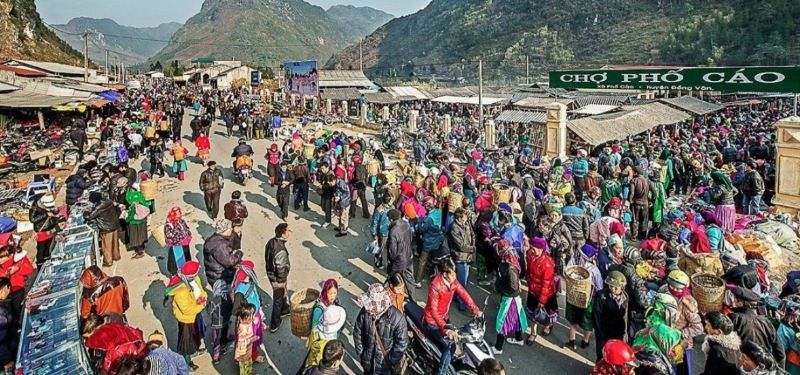
10. Pho Cao Market
Pho Cao Market is a culturally rich gathering in Yen Minh District that operates on a lunar calendar schedule, convening on days corresponding to the Dragon and the Dog — making it one of several Ha Giang Loop markets that require advance date verification before building your itinerary around it. The market is particularly well regarded for its traditional textiles and handicrafts, drawing H’Mong and Dao vendors who bring hand-dyed fabrics, embroidered garments, and intricately woven accessories that reflect generations of refined craft technique. Beyond textiles, Pho Cao stalls offer a compelling range of local food products including raw honey sourced from highland beehives, freshly distilled corn wine, and traditional highland cakes made from glutinous rice and natural plant dyes. The overall atmosphere is unhurried and genuinely community-centered, with locals treating the session as much as a social occasion as a trading event. Travelers who have already visited Du Gia Market on a Friday will find Pho Cao offers a meaningfully different experience — where Du Gia leans toward fresh produce and Thai minority culture in a scenic lowland setting, Pho Cao delivers denser craft culture and a stronger H’Mong and Dao presence in a higher-altitude, more austere environment.
When Do These Markets Take Place?
Not all Ha Giang markets follow a fixed weekly schedule while the majority of major markets are held on Sundays, several important ones operate on rotating lunar calendar days or use unique scheduling systems that shift from week to week. Understanding this distinction is the single most important practical piece of information for planning a market-focused Ha Giang Loop.
Here is a complete overview of market timing organized by day of the week and calendar type:
| Day / Schedule Type | Markets |
|---|---|
| Every Sunday | Meo Vac, Dong Van, Yen Minh, Hoang Su Phi, Quan Ba |
| Every Friday | Du Gia |
| Every Saturday | Coc Pai (Xin Man) |
| Lunar Calendar (Tiger & Monkey days) | Lung Phin, Pho Cao (Dragon & Dog days) |
| Backwards Rotating Weekly | Sa Phin (shifts one day earlier each week) |
| Once a Year (27th day, 3rd lunar month) | Khau Vai Love Market |
What Can You Buy and Eat at Ha Giang Loop Markets?
Ha Giang Loop markets are a feast for the senses — and for your shopping bag. Shopping and eating here fall into four broad categories: traditional handicrafts and ethnic clothing, fresh highland produce and medicinal herbs, livestock and agricultural tools, and an incredible spread of street food and local drinks. What you actually find at any given market shifts depending on which ethnic groups dominate that session.
On the handicraft side, H’Mong embroidered textiles are the standout buy women hand-stitch intricate geometric patterns onto indigo-dyed hemp cloth using cross-stitch, batik, and appliqué techniques, with prices ranging from 100,000 VND for small decorative pieces to 2,000,000 VND for full garments. If silver jewelry is more your style, head to Dong Van or Hoang Su Phi, where Red Dao silversmiths sell beautifully crafted necklaces, bracelets, and hair ornaments between 300,000 and 800,000 VND. Always bring small-denomination cash — most vendors don’t accept cards.
The food scene at Ha Giang Loop markets is just as rewarding. Thang co a slow-simmered horse or buffalo stew seasoned with cardamom and star anise — is the dish that defines market culture here, served steaming hot for around 30,000–50,000 VND a bowl. Wash it down with locally distilled corn wine, which vendors sell by the liter and happily pour out as samples from early morning. Don’t overlook au tau porridge, made from aconite tuber slow-boiled for hours into a warming, slightly bitter highland specialty, or the photogenic five-color sticky rice dyed naturally with indigo, turmeric, and gac fruit. Every bowl tells a cultural story worth tasting.
Plan a Ha Giang Loop Itinerary Around the Market Schedule
Bellow are two sample itineraries a 3-day and a 4-day option designed to maximize market exposure while still covering the Loop’s major scenic and cultural landmarks:
| Day | 3-Day Loop (Sunday start) | 4-Day Loop (Friday start) |
|---|---|---|
| Day 1 | Ha Giang City → Quan Ba → Yen Minh (overnight) | Ha Giang City → Du Gia Market (Friday) → overnight Du Gia |
| Day 2 | Yen Minh → Dong Van (overnight, prep for Sunday market) | Du Gia → Mau Due → Meo Vac (overnight, prep for Sunday market) |
| Day 3 | Dong Van Market (Sunday AM) → Meo Vac → return route | Meo Vac Market (Sunday AM) → Dong Van (overnight) |
| Day 4 | — | Dong Van Market (Sunday AM) → Ha Giang City return |
The ethnic minority markets of the Ha Giang Loop are not simply stops on a route they are the living heartbeat of highland culture, and experiencing even one session authentically will permanently change how you understand this region. We hope this guide from Viet Motorbike Tour helps you plan a journey that goes far beyond scenic roads and reaches the genuine soul of Ha Giang.
Ready to explore these incredible markets for yourself? Viet Motorbike Tour is Ha Giang’s leading provider of quality motorbike rental and guided loop tours with well-maintained bikes, experienced local guides, and flexible itineraries designed to get you to the right market on the right day. Contact us today and let us build your perfect Ha Giang Loop experience from the ground up.
Read more: