
 Home
Home About
About Tours
Tours Bikes Rental
 Contact
Riding the Ha Giang Loop means more than conquering mountain passes it means riding past doorways into worlds most travelers never slow down enough to enter. Tucked along the winding roads of Vietnam’s northernmost province, ethnic minority villages like Lo Lo Chai, Lung Tam, and Du Gia hold living cultures that have endured for centuries: hand-woven indigo linen, silver casting by firelight, herbal baths brewed from mountain plants, and festivals that fill stone-walled valleys with color and sound.
At Viet Motorbike Tour, we don’t just take you through these villages we take you into them. This guide reveals the top ethnic minority villages on the Ha Giang Loop, including hidden gems most riders never find, so your journey becomes the kind of story worth telling long after the road ends.
What Makes Ethnic Minority Villages on the Ha Giang Loop Worth Discovering?
Ha Giang is home to 19 distinct ethnic minority groups, with nearly 90% of the local population being ethnic minorities — a demographic reality that has no close parallel elsewhere in Vietnam. What you find here is not a curated reconstruction of traditional life, but the real thing: communities where people are born, farm, weave, celebrate, and grow old using methods passed down across centuries. Here is what specifically sets these villages apart:
- Culture that is lived, not performed. Unlike Sapa or Mai Chau, where tourism infrastructure has reshaped much of the minority village experience into something closer to a cultural display, Ha Giang’s villages still lack English signage, souvenir rows, and paved walkways. You arrive as a guest entering someone’s daily life, not a customer entering a themed attraction.
- Architecture built by the landscape. The physical environment shaped every design decision in these villages. Walls up to 0.7 meters thick were built to survive brutal highland winters. The construction materials, the orientation of houses, the placement of villages on hillsides all of it is a direct response to one of the harshest mountain environments in the country.
- A cultural depth recognized globally. The Dong Van UNESCO Global Geopark, covering the four northern districts of Quan Ba, Yen Minh, Dong Van, and Meo Vac, was designated Vietnam’s first UNESCO Global Geopark in 2010 an acknowledgment not just of the region’s geological significance but of the living cultural heritage embedded within it.
- Scale that exists nowhere else in Vietnam. Nineteen ethnic groups in a single province, most still practicing traditional agriculture, textile crafts, and seasonal festivals largely unchanged by commercial pressure. That concentration, in a landscape this dramatic, is genuinely rare anywhere in Southeast Asia.
Top Ethnic Minority Villages to Visit on the Ha Giang Loop
1. Lo Lo Chai Village
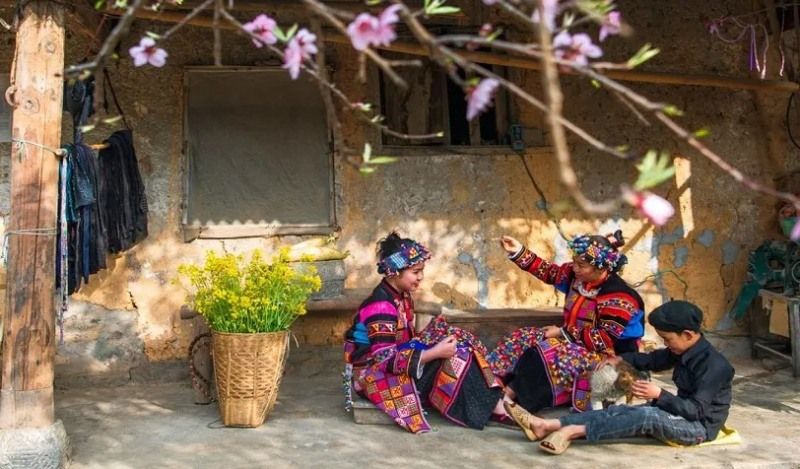
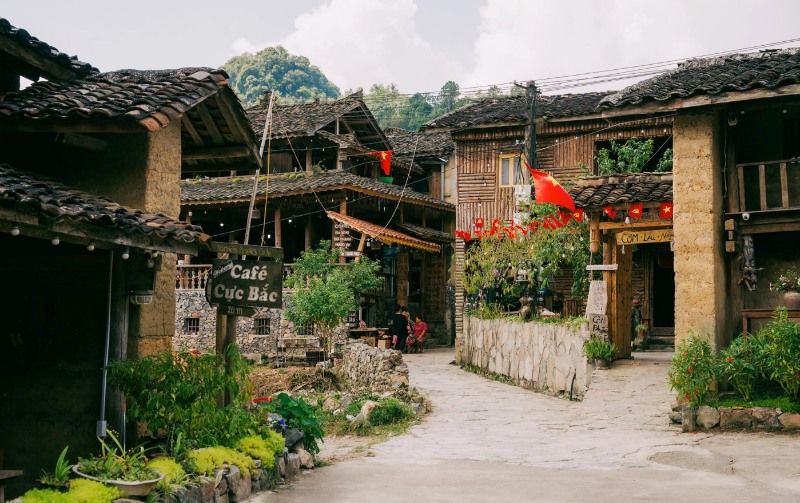
Tucked into a hollow just below Lung Cu Vietnam’s northernmost point Lo Lo Chai is home to the Black Lo Lo, one of the country’s smallest ethnic minority groups, and it packs a remarkable density of living culture into a very compact space. The village is built from thick-walled earthen houses with traditional tiled roofs, and the sense of stepping into something genuinely unchanged is immediate. The highlight of the cultural calendar is the Lo Lo New Year Festival in late January or early February, when the village fills with traditional songs, ceremonial dances, and games that have no equivalent elsewhere on the Ha Giang Loop.
Outside of festival season, visitors can engage directly with locals about traditional weaving and embroidery the geometric patterns on Lo Lo clothing function as a visual language, recording the group’s history and identity in textile form. Lo Lo Chai is growing in popularity, so timing matters. Arriving early or staying overnight transforms the experience entirely at dawn, before any day-tour groups appear, the village is simply itself: smoke from kitchen fires, women at their looms, and a quietness that feels earned.
2. Lung Tam Village
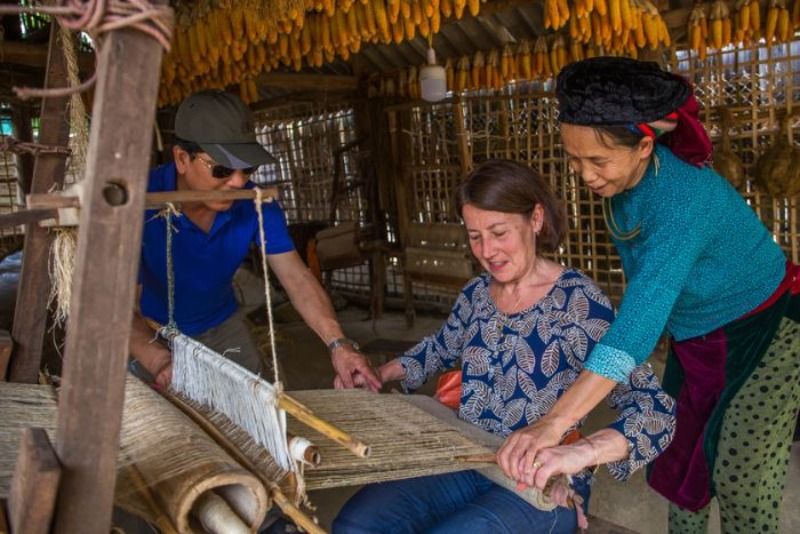
Lung Tam sits near the Quan Ba Heaven Gate one of the most dramatic viewpoints on the entire Loop making it unusually accessible without feeling like it has traded authenticity for convenience. This H’mong village has built its identity around a single craft done exceptionally well: homemade linen weaving with natural indigo dye. The process runs entirely by hand from start to finish. Villagers grow and harvest flax, spin the fibers, weave the cloth on traditional wooden looms, and dye it using indigo extracted from plants cultivated locally — producing a dark blue-black fabric with a texture and depth that no synthetic alternative replicates.
The village linen cooperative is a primary income source for many families here, and buying directly from artisans ensures your money reaches the people behind the work rather than a middleman further down the road. Beyond the weaving, Lung Tam participates in the broader cultural calendar of the region including the Hmong Pao Festival during Lunar New Year and the renowned Khau Vai Love Market, where young people from surrounding villages gather to meet and exchange gifts. If your itinerary passes through Quan Ba, Lung Tam is a half-day stop that consistently delivers more than its modest size suggests.
3. Du Gia Village
Du Gia sits on the eastern side of the Ha Giang Loop — the stretch that many travelers skip in favor of the faster western route through Dong Van and Meo Vac. It is an understandable trade-off when time is short, but it means missing a village that looks and feels unlike almost anywhere else on the circuit. While the Loop’s dominant character is rocky, wind-scoured highland terrain, Du Gia opens into a green valley hemmed in by limestone cliffs, with rivers threading through rice paddies and stone houses that seem to grow naturally out of the karst hillside. A waterfall sits within easy walking distance of the village center, and the Saturday market — drawing vendors and buyers from surrounding communities — runs as a genuine weekly gathering rather than anything staged for visitors. The honest warning about Du Gia is this: thirty minutes here produces little more than a vague impression of prettiness. The village only reveals itself to travelers who slow down. An overnight homestay is what separates a forgettable checkpoint from a genuine memory — waking to mist over the valley, a slow breakfast with a local family, and a morning with no particular schedule. Du Gia fits best into a three to four-day loop itinerary built around that kind of pace.
4. Thon Tha Village
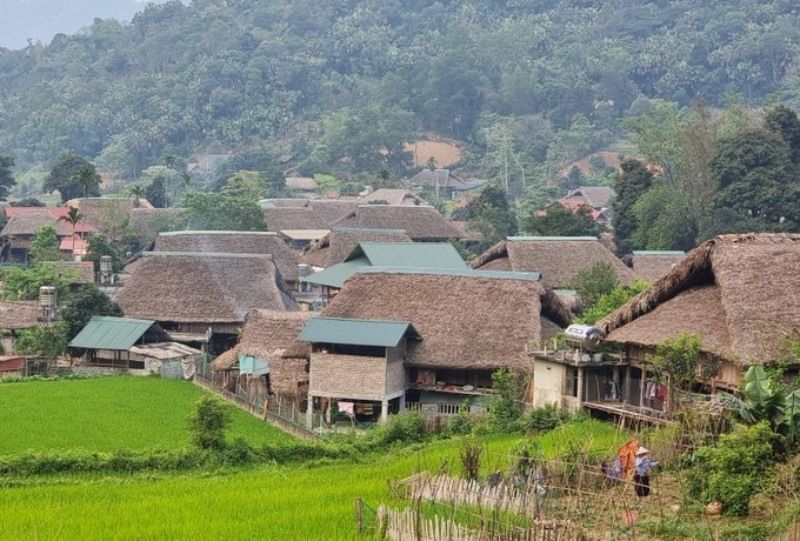
Thon Tha is a Tay village just outside Ha Giang City, and it is the first to admit it cannot compete with the remote drama of Lo Lo Chai or the craft identity of Lung Tam. What it offers instead is something quieter and, for many travelers, genuinely useful: a calm, unhurried entry point into the Loop — or a gentle way to leave it. The village is known for its traditional stilt houses, a building style the Tay people have maintained for centuries as a practical response to the humid, river-adjacent lowland terrain. Surrounding rice terraces and seasonal cultural festivals give Thon Tha its own rhythm throughout the year, and the community has built YESD Travel, a local social enterprise that directs tourism income toward education and community development in the area — meaning a night here carries some weight beyond the experience itself. Logistically, Thon Tha solves a real problem for travelers arriving late from Hanoi who are not ready to throw themselves onto mountain roads the following morning, and equally for those finishing the Loop who need a night to decompress before heading south. It is an honest, unassuming place that does not overstate what it is — and that quality, on a circuit that can feel relentlessly intense, is worth more than it sounds.
5. Lao Xa Village
Lao Xa sits off the main road in the central section of the Loop, home exclusively to H’mong families who still practice silver casting as a working craft rather than a cultural display. Walk the narrow lanes and you will find artisans at small forges, melting silver and shaping it by hand into jewelry using techniques passed down across generations — not because visitors are watching, but because this is simply how the village earns its living. There are no souvenir shops, no English menus, no entrance fee, and no signage pointing the way. The village moves at a pace that feels almost suspended: children in alleyways, agriculture structuring the hours, the sound of metalwork drifting between stone walls. Lao Xa stays this way for one straightforward reason — it sits far enough off the main road that most tour itineraries never include it. Getting there requires either a local guide who knows the turn or the willingness to follow an unmarked route and ask directions through whatever combination of hand gestures and goodwill gets the job done. That small effort is precisely what keeps Lao Xa feeling like a discovery rather than a destination — and it is the kind of place the Ha Giang Loop was built for.
6. Pho Bang Village
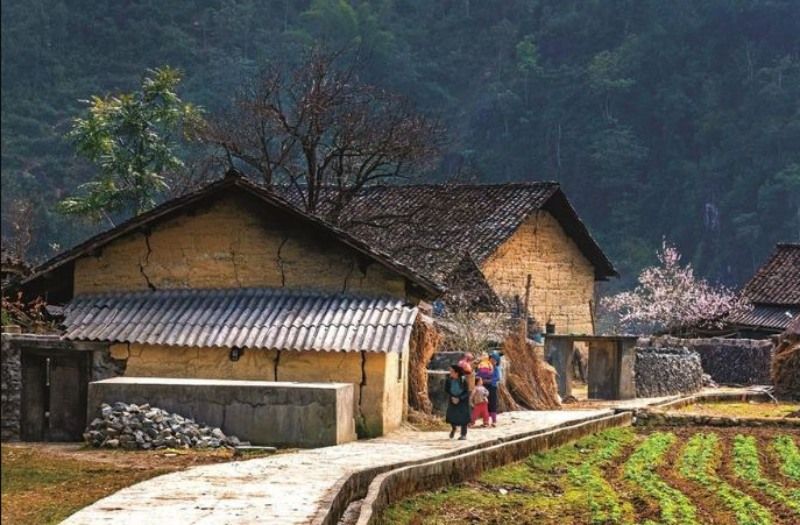
Pho Bang sits near Dong Van and offers something genuinely uncommon on the Ha Giang Loop: a window into Hoa culture — ethnic Chinese communities whose presence in this northernmost border region reflects centuries of migration and cultural exchange along the Vietnam-China frontier. The architecture announces the difference immediately. Roof lines, courtyard layouts, and decorative details carry clear Chinese influence, creating a visual and cultural contrast with the H’mong and Lo Lo villages that dominate the rest of the circuit. This is not a subtle distinction — Pho Bang simply looks and feels like a different world from everything surrounding it. The village remains largely off the radar of organized tour groups, which means it has retained an everyday quietness that more visited stops on the Loop have gradually lost. For travelers who approach Ha Giang as more than an H’mong landscape — who want to understand it as a border region shaped by multiple cultures across a long history — Pho Bang offers a perspective available nowhere else on the route. It rewards the detour not with spectacle but with a kind of cultural depth that takes a moment to register and lingers considerably longer than most things you will see on the road.
7. Nam Dam Village
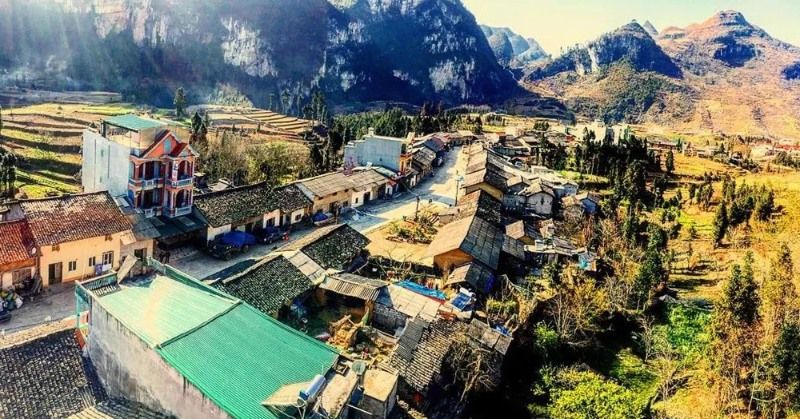
Nam Dam sits outside Quan Ba town and is home to a Dao community — one of Vietnam’s most culturally distinct ethnic groups, recognized across the country for their striking red headdresses and generations of accumulated knowledge about medicinal plants. The village’s most memorable offering for visitors is something deceptively simple: a traditional herbal bath. A wooden tub, hot water, and a complex blend of herbal extracts prepared according to Dao medicinal recipes that have been refined over centuries. After four or five days of mountain roads, cold mornings, and a different bed each night, the effect is immediate and difficult to overstate — heat working into tired muscles, the pungent smell of unfamiliar herbs, and a stillness that the Loop rarely offers. It is worth being clear about what this is and what it is not. This is not a spa treatment repackaged for tourism. It is a traditional healing practice offered in a working village, by people for whom it carries genuine cultural meaning. That distinction matters — and it is exactly what separates Nam Dam from the kind of experience you book through a hotel concierge. For travelers building a Quan Ba overnight into their itinerary, Nam Dam is the reason to slow down rather than push on.
The Best Time to Visit Ethnic Villages on the Ha Giang Loop
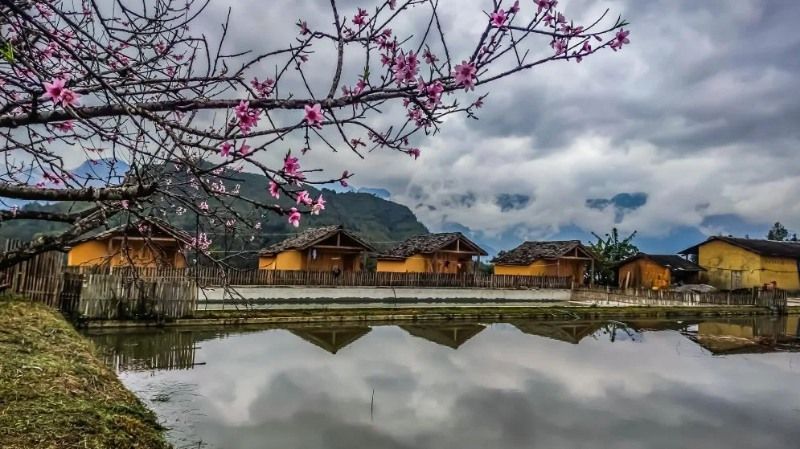
The best time to visit ethnic minority villages on the Ha Giang Loop falls between September and November, when the landscape is at its most visually dramatic and the weather is stable enough for comfortable riding and walking.
- September – The Golden Rice Harvest
September brings the rice harvest season to the terraced fields surrounding villages like Du Gia, Thon Tha, and the lower Yen Minh valley. The hillsides turn from green to gold, and village life intensifies around the physical work of harvesting. This is arguably the most photogenic season, and it coincides with relatively dry roads and mild temperatures. - October to November – Buckwheat Flower Season
The buckwheat flower bloom transforms the rocky plateau around Dong Van and Meo Vac into a landscape of pink and white fields. This season draws the highest number of visitors to the Loop overall, so villages like Lo Lo Chai will be at their busiest. Arriving early in the morning or staying overnight remains the best strategy during this period. - January to February – Ethnic Festival Season
This window covers the Lo Lo New Year Festival in Lo Lo Chai, the Hmong Pao Festival in Lung Tam, and various Lunar New Year celebrations across multiple ethnic groups. For travelers whose primary interest is cultural immersion rather than landscape photography, this is the most rewarding time — though the mountain roads can be cold, with temperatures dropping significantly at night. - June to August – Avoid if Possible
The rainy season brings landslides, slippery roads, and flooding on lower sections of the eastern loop near Du Gia. Road closures are not uncommon, and the mist that makes the Loop atmospheric in other seasons becomes persistent grey cloud cover that obscures the mountain views entirely. Village visits are still possible but logistically frustrating.
Which Villages on the Ha Giang Loop Are Best for Families vs. Solo Adventurers?
Families with children will find the most comfortable and rewarding village experiences at Thon Tha and Lung Tam, while solo adventurers seeking challenge and depth should prioritize Du Gia, Lao Xa, and Pho Bang.
The distinction comes down to accessibility, infrastructure, and the kind of unpredictability involved:
Best villages for families:
- Thon Tha: Close to Ha Giang City, flat terrain, Tay stilt houses are visually engaging for children, community social enterprise provides context for culturally sensitive engagement
- Lung Tam: Well-organized weaving cooperative offers hands-on textile activities that work for all ages; accessible location near Quan Ba means shorter riding time from the city
Best villages for solo adventurers:
- Du Gia: Requires commitment to the eastern loop, rewards with waterfall hikes, river landscapes, and a Saturday market that draws vendors from across the surrounding valley
- Lao Xa: Off-map location, silver casting culture, minimal tourism infrastructure — everything that makes it challenging is also what makes it worthwhile
- Pho Bang: The cultural contrast with the rest of the Loop makes it intellectually compelling; its quietness and self-sufficiency reward travelers who arrive without expectations and stay long enough to notice things
This guide has walked you through the most rewarding communities along the route, from the well-known warmth of Lo Lo Chai to the silver-lit lanes of Lao Xa that most riders never find. We hope it gives you not just a list of stops, but a genuine sense of what slow, respectful travel through Northern Vietnam can feel like. When you’re ready to make the journey, Viet Motorbike Tour is here to make it count. As a trusted provider of Ha Giang Loop tours and premium self-ride motorbike rentals, we give every traveler the freedom, safety, and local insight to discover these villages on their own terms.