 Home
Home About
About Tours
Tours Bikes Rental
 Contact
Below is a complete guide to all 9 festivals — what they are, when they happen, which ethnic groups celebrate them, and why each one deserves a place on your travel calendar; most are accessible only by mountain road, so arranging Ha Giang motorbike rental in advance is one of the most practical first steps in your planning
Top 9 Must Experience Festivals in Ha Giang
Bellow is a detailed look at each festival:
1. Gau Tao Festival
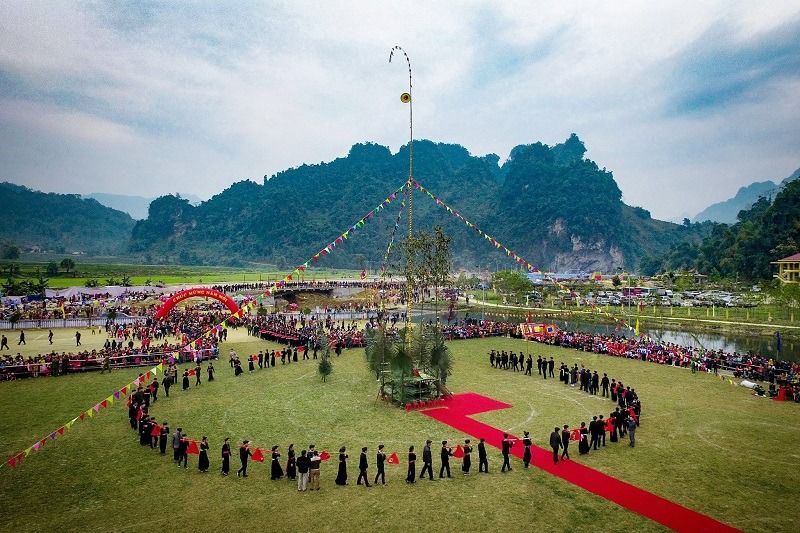
The Gau Tao Festival is the H’Mong community’s most important annual celebration, held between the first and third month of the lunar calendar typically January through March across districts including Dong Van, Meo Vac, and Quan Ba.
The name “Gau Tao” translates roughly to “playing on the hillside,” and the festival’s setting reflects this directly: celebrations unfold on open mountain slopes, with a tall bamboo pole erected at the center of a cleared field as a sacred focal point. Around this pole, the community gathers to give thanks, pray for health and fertility, and welcome the new year with music, games, and shared feasting.
What makes the Gau Tao Festival particularly compelling for travelers is its layered sensory experience. The H’Mong’s traditional courtship songs called “khen” music, played on a distinctive bamboo mouth organ — fill the mountain air throughout the event. Young men and women in full traditional dress, embroidered with meticulous geometric patterns, use these gatherings as an opportunity to meet potential partners. Tug-of-war, spinning tops, and crossbow competitions run alongside the ceremonies, giving the festival a warm, communal energy that feels genuinely welcoming to outside observers.
- When: 1st–3rd month of the lunar calendar (approx. January–March)
- Where: Dong Van, Meo Vac, Quan Ba districts
- Ethnic group: H’Mong (Flower H’Mong, Black H’Mong)
- Highlight activity: Khen music, courtship rituals, bamboo pole games
2. Khau Vai Love Market Festival
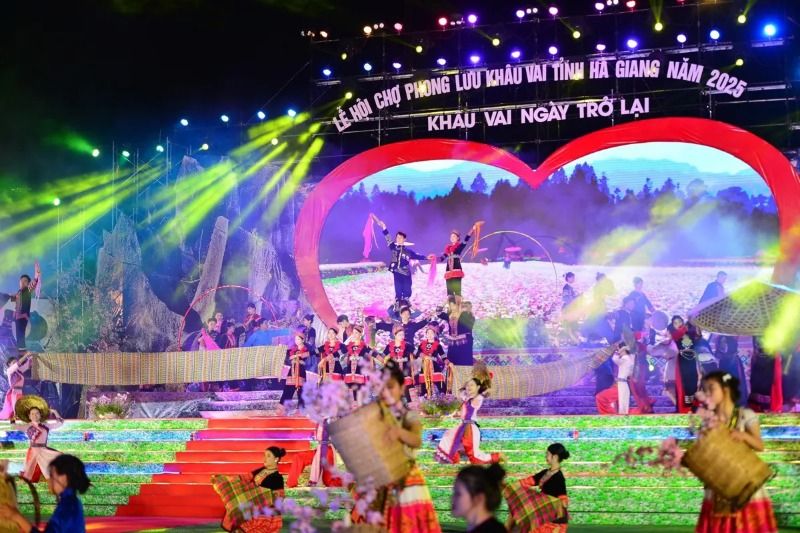
The Khau Vai Love Market is unlike any festival in Vietnam held once a year on the 27th day of the third lunar month in Khau Vai commune, Meo Vac district, it is the one night when former lovers, separated by circumstance or family obligation, are permitted to meet again freely.
The legend behind this festival is deeply human. According to oral history, a H’Mong man and a La Chi woman fell in love but were forbidden from marrying due to clan differences. They agreed to meet once a year at this location so their love would never be entirely lost. Over generations, this personal story became a communal ritual and today, thousands of people from a dozen different ethnic groups converge on Khau Vai for a single extraordinary night.
The festival has evolved beyond its romantic origins. Today it serves equally as a marketplace where goods are traded, a gathering for old friends, and a meeting point for entire communities spread across the highland valleys. Elderly couples attend hand-in-hand; young people participate in traditional singing and instrument-playing alongside the market stalls. The atmosphere is tender, festive, and unlike anything manufactured for tourists — because the people attending are not performing for an audience. They are simply living a tradition that has meaning for them.
- When: 27th day of the 3rd lunar month (approx. April–May)
- Where: Khau Vai commune, Meo Vac district
- Ethnic groups: H’Mong, Tay, Nung, La Chi, Giay
- Highlight activity: Former lovers’ reunion, highland market, traditional music
3. Buckwheat Flower Festival
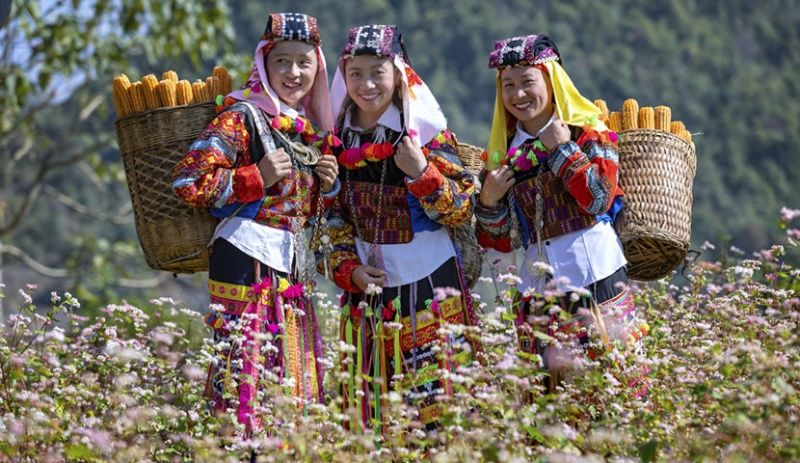
The Buckwheat Flower Festival known locally as Lễ hội Hoa Tam Giác Mạch transforms the Dong Van Karst Plateau into one of the most visually stunning landscapes in all of Vietnam each October and November, when the triangular buckwheat blossoms carpet the rocky terrain in shades of pale pink, white, and deep violet.
This festival, now in its tenth edition, is organized across multiple communes on the Dong Van Plateau including Lung Cu, Ma Le, and Sung La. It celebrates both the natural spectacle of the flowering season and the agricultural heritage of the H’Mong people, for whom buckwheat has long been a staple crop grown in the thin soil of the karst highlands. The Buckwheat Flower Festival formally runs for several weeks, typically from late October through mid-November, though the blooms themselves extend the experience for visitors throughout the month — and given how quickly accommodation fills during peak season, consulting a curated list of Ha Giang check in places early is strongly recommended for anyone targeting this window.
The festival program includes traditional music and dance performances, H’Mong embroidery exhibitions, highland food markets, and cultural exchange programs between the dozen ethnic groups of the plateau. The backdrop of ancient stone houses, karst peaks, and seemingly endless fields of blooming buckwheat makes this the most photographed festival in Ha Giang and one of the most visually arresting events in all of northern Vietnam.
- When: Late October – mid November
- Where: Dong Van, Meo Vac, Yen Minh districts; Lung Cu, Sung La, Ma Le communes
- Ethnic groups: H’Mong (primary), multi-ethnic celebration
- Highlight activity: Flower fields, embroidery exhibitions, highland food market
4. Pa Then Fire Dancing Festival
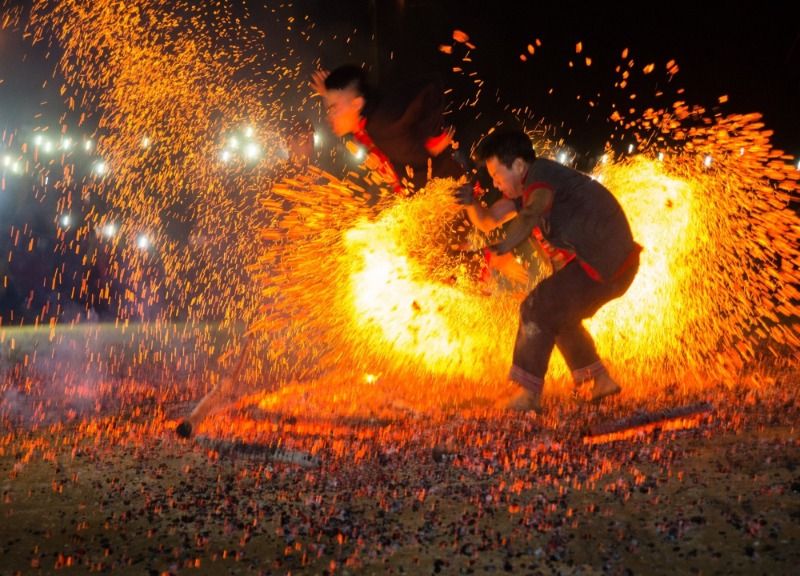
The Pa Then Fire Dancing Festival Lễ hội Nhảy Lửa is one of the most extraordinary and spiritually charged ceremonies in all of Ha Giang: participants enter a trance state and leap barefoot into an open fire, an act believed to summon protective spirits and bring fortune to the community for the year ahead.
This ritual belongs to the Pa Then ethnic people, a small community of approximately 6,000 individuals concentrated in Bac Me and Quang Binh districts of Ha Giang. The festival takes place in the 10th and 11th lunar months typically November through December after the harvest is complete, as a form of spiritual thanksgiving and protection-seeking before winter.
The ceremony begins with the chanting of a shaman, who calls upon the fire spirits through hours of prayer and incantation. As the chanting intensifies and the fire reaches its peak, young men enter an altered state and approach the flames — some walking through them, some leaping directly into the embers. Witnesses consistently report that participants show no burns or pain during or after the ritual. Whether explained through spiritual or physiological frameworks, the Pa Then Fire Dancing Festival remains one of the most genuinely astonishing human experiences available to any traveler in Vietnam.
- When: 10th–11th lunar month (approx. November–December)
- Where: Bac Me and Quang Binh districts
- Ethnic group: Pa Then
- Highlight activity: Trance-state fire dancing, shaman rituals, spiritual chanting
5. Long Tong Festival
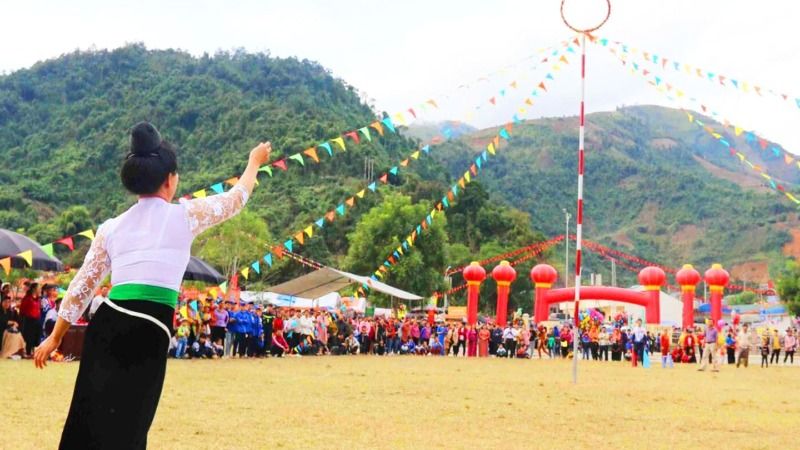
The Long Tong Festival also called the “Going to the Fields” Festival is the Tay ethnic people’s most important annual ceremony, held in the first lunar month (January–February) to bless the farmland, invoke the earth spirits, and pray for a plentiful rice harvest in the year ahead.
Long Tong translates literally as “xuong dong” descending to the fields and the ceremony begins with village elders leading a procession to the communal rice paddy, where offerings of sticky rice, meat, and fruit are laid out on bamboo altars. A shaman performs prayers in the Tay language, then the first ceremonial furrow of the season is plowed as a symbolic act of agricultural beginning. What follows is a full day of communal celebration: folk games such as tug-of-war, bamboo dancing, and throwing colorful fabric balls between groups of young men and women.
The Long Tong Festival functions as a powerful social equalizer within Tay communities. On this day, hierarchies soften, neighbors who may have had disputes reconcile, and the collective well-being of the village takes precedence over individual concerns. For travelers, it offers a rare opportunity to witness the intimate connection between the Tay people and their agricultural landscape — a relationship that has shaped the terraced rice paddies of Ha Giang’s lower valleys for over a thousand years.
- When: 1st lunar month (approx. January–February)
- Where: Vi Xuyen, Bac Me, Bac Quang districts
- Ethnic group: Tay
- Highlight activity: Field blessing ceremony, shaman rituals, fabric ball throwing games
6. Ha Giang Plateau Geology Festival
The Ha Giang Plateau Geology Festival is a modern cultural celebration that honors the scientific, ecological, and cultural significance of the Dong Van Karst Plateau recognized as Vietnam’s first UNESCO Global Geopark in 2010 through a multi-day program combining heritage exhibitions, ethnic performances, and outdoor exploration events.
Held annually in October, the festival is centered in Dong Van town and serves a dual purpose: it introduces both domestic and international visitors to the geological wonders of the 2,356 km² karst plateau — one of the world’s four special karst formations while simultaneously celebrating the living cultures of the ethnic communities who have inhabited this extraordinary landscape for centuries.
The festival program typically includes geology exhibitions displaying the plateau’s 500-million-year-old rock formations, cultural performances by H’Mong, Lo Lo, Pu Peo, and Giay ethnic groups, traditional craft markets, and organized trekking routes through designated geopark sites. The Lung Cu Flag Tower situated at Vietnam’s northernmost point serves as one of the festival’s symbolic landmarks, drawing visitors who combine the geological exploration with patriotic sentiment.
- When: October (often coincides with Buckwheat Flower Festival)
- Where: Dong Van town and surrounding geopark sites
- Ethnic groups: Multi-ethnic; H’Mong, Lo Lo, Pu Peo, Giay
- Highlight activity: Geology exhibitions, ethnic cultural performances, geopark trekking
7. Nao Cong Festival
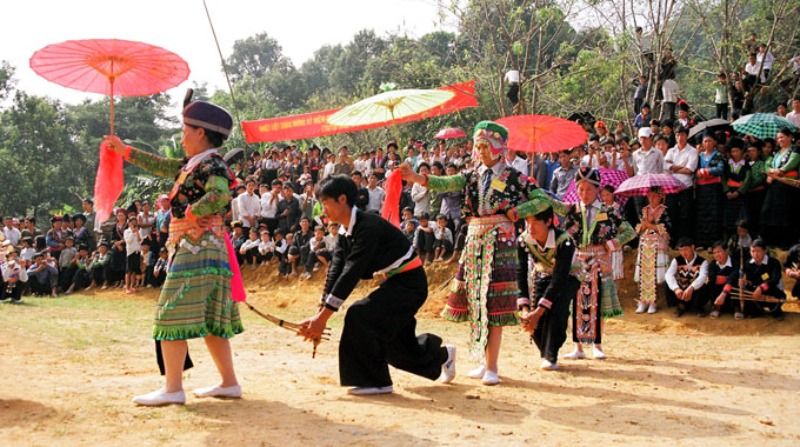
The Nao Cong Festival is the Flower H’Mong community’s spring celebration of music, courtship, and communal identity a joyful, color-saturated gathering held in the second lunar month (February–March) that is widely regarded as one of the most visually spectacular ethnic festivals in the entire northern highlands.
“Nao Cong” refers to the act of gathering together and this festival lives up to that meaning fully. Flower H’Mong women arrive in their most elaborate traditional dress: layered skirts of vivid batik fabric, intricately embroidered aprons, and silver jewelry that catches the mountain light. Men carry their khen mouth organs and perform the distinctive khen dance a dynamic, acrobatic form that involves spinning, leaping, and playing the instrument simultaneously. These performances are not choreographed for tourists; they are how the Flower H’Mong have expressed joy and identity for generations.
The Nao Cong Festival is also one of the primary venues for young H’Mong people to meet potential life partners. Singing competitions called “hát giao duyên” allow young men and women to exchange improvised verses expressing admiration, humor, and romantic intent. The festival’s setting, typically held on open mountain slopes in Dong Van and Meo Vac districts, adds to its wild, unhurried atmosphere — far from the crowds of Ha Giang town.
- When: 2nd lunar month (approx. February–March)
- Where: Dong Van and Meo Vac districts
- Ethnic group: Flower H’Mong
- Highlight activity: Khen dancing, courtship singing, traditional dress showcase
8. San Sa Ho Traditional Market Festival
The San Sa Ho Market Festival is one of Ha Giang’s most intimate and least commercialized festival experiences a traditional weekly market in Dong Van district that, on designated festival days, expands into a full cultural gathering where highland barter culture, traditional medicine trade, and inter-ethnic exchange come alive in their most authentic form.
Unlike the larger, more widely publicized festivals, San Sa Ho draws primarily local ethnic minority communities H’Mong, Nung, and Giay families who descend from the surrounding mountains on foot and by motorbike to trade goods, share news, and maintain social bonds that the isolation of highland life makes difficult to sustain on ordinary days. The market operates on a six-day cycle rooted in the traditional agricultural calendar, with the largest gatherings coinciding with specific festival dates in the winter months.
What distinguishes San Sa Ho from other highland markets is the survival of genuine barter exchange alongside currency trade. Herbs, livestock, hand-loomed textiles, and locally distilled corn wine change hands in transactions that follow customs largely unchanged for centuries. For travelers seeking the Ha Giang that exists beyond the Instagram-friendly buckwheat fields, San Sa Ho offers something rarer: a market where the participants are not performing for an audience, and where the exchange of goods is inseparable from the exchange of culture.
- When: Six-day cycle; peak festival gatherings November–January
- Where: San Sa Ho commune, Dong Van district
- Ethnic groups: H’Mong, Nung, Giay
- Highlight activity: Highland barter market, traditional medicine trade, inter-ethnic exchange
9. Ha Giang Ethnic Cultural Festival
The Ha Giang Ethnic Cultural Festival is the province’s largest and most inclusive celebration a multi-day government-organized event, typically held in conjunction with major national holidays, that brings all 19 of Ha Giang’s ethnic minority groups together for a unified showcase of music, dance, costume, cuisine, and traditional craft.
Held in Ha Giang city, the festival functions as a living cultural museum where each ethnic group presents its most distinctive traditions side by side. The Lo Lo people perform their ancient drum dances; the Dao women display their red-embroidered ceremonial headdresses; the Pu Peo one of Vietnam’s smallest ethnic communities, numbering fewer than 700 people share songs that few outsiders have ever heard.Cooking competitions feature traditional dishes from each community, and craft demonstrations show the production of batik textiles, silver jewelry, and bamboo instruments in real time.
This festival is the single event in Ha Giang’s calendar where a traveler can encounter all of the province’s cultural diversity in one concentrated space. For those who cannot time their visit to coincide with the specific dates of smaller, community-based festivals, the Ethnic Cultural Festival provides a comprehensive if slightly more curated window into the full breadth of what Ha Giang’s highland cultures have preserved.
- When: Variable; often April (Hung King Commemoration Day) or September (National Day)
- Where: Ha Giang city center
- Ethnic groups: All 19 ethnic minority groups of Ha Giang
- Highlight activity: Multi-ethnic performances, traditional costume showcase, highland cuisine festival
When Do the Ha Giang Festivals Take Place?
The following table shows Ha Giang festivals organized by month:
| Festival | Approx. Month | Ethnic Group | Location |
|---|---|---|---|
| Gau Tao Festival | January – March | H’Mong | Dong Van, Meo Vac, Quan Ba |
| Long Tong Festival | January – February | Tay | Vi Xuyen, Bac Me |
| Nao Cong Festival | February – March | Flower H’Mong | Dong Van, Meo Vac |
| Khau Vai Love Market | April – May | Multi-ethnic | Meo Vac district |
| Ha Giang Ethnic Cultural Festival | April or September | All 19 groups | Ha Giang city |
| Buckwheat Flower Festival | October – November | H’Mong (multi-ethnic) | Dong Van Plateau |
| Ha Giang Geology Festival | October | Multi-ethnic | Dong Van town |
| San Sa Ho Market Festival | November – January | H’Mong, Nung, Giay | Dong Van district |
| Pa Then Fire Dancing Festival | November – December | Pa Then | Bac Me, Quang Binh |
Best time to visit for festival travelers: October and November offer the highest concentration of festival activity — with the Buckwheat Flower Festival, Geology Festival, San Sa Ho Market gatherings, and the lead-up to the Pa Then Fire Dancing all falling within the same six-week window, travelers who book a guided loop experience through Vietmotorbiketour can efficiently cover multiple festivals in a single well-planned trip.
The lunar new year period from late January to early March runs a close second, combining Gau Tao, Long Tong, and Nao Cong celebrations with Ha Giang’s crisp, clear mountain winter.