 Home
Home About
About Tours
Tours Bikes Rental
 Contact
Visitors to Lung Tam Village can observe the linen weaving process, participate in hands-on workshops, and purchase authentic brocade products. Additionally, the village lies on the famous Ha Giang Loop route approximately 50km from Ha Giang City center travelers planning to include it as a Loop stop should review a complete Ha Giang loop packing list in advance, as the mountain approach roads and hands-on workshop activities each have specific gear requirements that a standard day-bag setup may not cover.
Below, let’s explore the details of Lung Tam linen weaving village through its cultural aspects, traditional crafts, and unique travel experiences.
Where is Lung Tam Village Located?
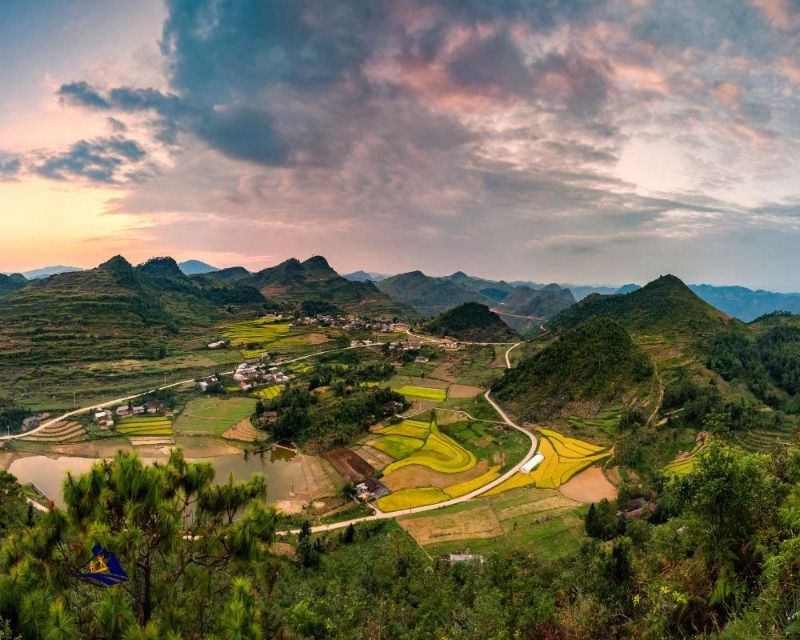
Lung Tam Village is nestled in a small valley beside the Mien River (also known as Miem River), surrounded on all four sides by towering rocky mountains. This unique terrain creates a landscape of majestic mountains intertwined with the poetic charm of a highland countryside. The village currently has over 100 households, primarily consisting of Flower Hmong and Tay people, whose main occupation is weaving linen and brocade for both domestic use and export.
History of Lung Tam Linen Weaving Village
Lung Tam linen weaving village has a long history intertwined with the lives of the Hmong people across many generations, officially organized as a cooperative model since 2001.
To better understand the origins of this craft village, one must know that the Hmong linen weaving tradition has existed for hundreds of years, passed down from mother to daughter as an indispensable part of ethnic culture. Initially, Lung Tam village had only about 10 households. Over time, people from the high mountains migrated down to settle, forming the thriving community we see today.
The year 2001 marked a crucial turning point when the Hop Tien Linen Weaving Cooperative was established under the leadership of artisan Vang Thi Mai. This model not only revived the traditional linen weaving craft but also created sustainable livelihoods for over 100 Hmong women in the region. Notably, the cooperative has transformed Lung Tam Village into a renowned community tourism destination, attracting hundreds of international visitors daily.
Why Was Lung Tam Village Recognized as National Cultural Heritage?
Lung Tam Village was recognized as National Intangible Cultural Heritage in January 2016 by the Ministry of Culture, Sports and Tourism due to three core values: preserving traditional linen weaving techniques, maintaining Hmong cultural identity, and developing sustainable community economics.
Specifically, this recognition stems from the village’s significant contributions to preserving the 41-step entirely handcrafted linen weaving process – a technique gradually disappearing in many other regions. Furthermore, the hemp cultivation and linen weaving techniques of the Hmong people in Lung Tam carry special cultural value, reflecting the unique worldview and philosophy of this ethnic group a philosophy equally expressed through the specialties of Ha Giang, where traditional food preparation methods, natural ingredients, and ethnic ritual are woven together with the same depth of cultural meaning found in every thread of Lung Tam linen
Additionally, the recognition acknowledges the local community’s efforts in combining heritage preservation with tourism development. The Lung Tam linen weaving cooperative model has become an exemplary model for sustainable community tourism in Vietnam, simultaneously generating income for residents while promoting traditional culture to international friends.
The Traditional Linen Weaving Process at Lung Tam Village
The traditional linen weaving craft at Lung Tam Village consists of 41 meticulous handcrafted steps, divided into 4 main stages: growing and harvesting hemp, processing hemp fibers, weaving fabric, and dyeing and creating patterns.Below, let’s explore each stage of this unique linen weaving process in detail:
Hemp Growing and Harvesting Process
The hemp growing and harvesting process at Lung Tam Village spans approximately 2-3 months, beginning with seed sowing in spring and harvesting when plants reach 1-1.5 meters in height with stems turning pale yellow.
Specifically, according to Hmong customs, each girl upon reaching adulthood receives her own plot of land from the family to grow hemp. This serves not only as a source of raw materials but also as a symbol of maturity and independence in Hmong culture. Hemp plants are grown on rocky mountain slopes where the climate is cool and humidity is suitable.
After harvesting, hemp plants are dried under gentle sunlight for several days. Next, Hmong women proceed to peel the bark to extract the inner fibers. This stage requires dexterity and patience, as hemp fibers must be separated evenly for the woven fabric to be durable and beautiful. The separated hemp fibers are then rolled into small bundles, ready for the next processing stage.
Hemp Fiber Spinning and Handweaving Techniques
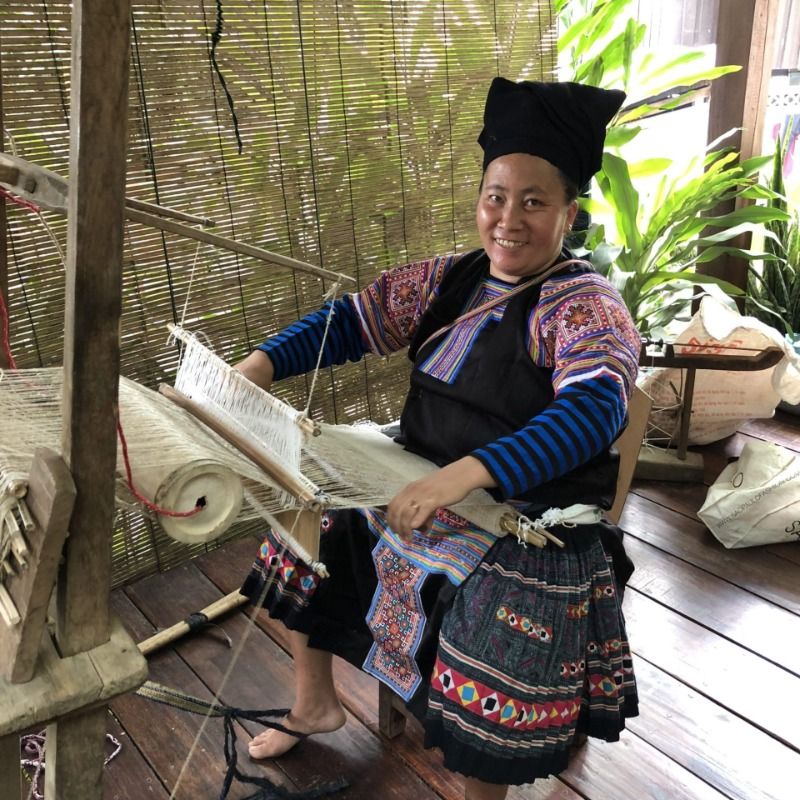
The hemp fiber spinning and linen weaving techniques at Lung Tam Village are performed entirely by hand through 5 main steps: soaking fibers, boiling with ash and beeswax, spinning, splicing, and weaving on a traditional backstrap loom.
To illustrate, the hemp fiber processing proceeds as follows: First, raw hemp fibers are soaked in water mixed with kitchen ash and beeswax for several days to soften. Then, the fibers are boiled multiple times until reaching the required whiteness and softness. Next, workers use tools coordinating foot and hand movements to spin fibers, creating fine yet sturdy hemp threads.
Particularly, the fiber splicing stage best demonstrates Hmong women’s dexterity. They join short hemp fibers together with such precision that no knots or bumps remain, ensuring the finished fabric’s surface is smooth. Once sufficient thread is prepared, weavers begin working on the backstrap loom – a simple frame with one end leaning against a house pillar and the other attached to the weaver’s waist belt.
Finally, the completed woven fabric is placed between a stone slab and a wooden cylinder, where the worker stands on it and rolls back and forth until the entire fabric surface is flattened, softened, and smoothed. This unique technique gives Lung Tam linen its superior quality compared to other products.
Indigo Dyeing and Beeswax Pattern Drawing Methods
The indigo dyeing and beeswax pattern drawing methods at Lung Tam Village are two unique techniques that distinguish Lung Tam linen, using entirely natural dyes and patterns hand-drawn with melted beeswax.
More specifically, the indigo dyeing process involves soaking fabric in natural indigo solution extracted from indigo plants. The fabric is dyed multiple times, with each dyeing session followed by drying before dyeing again, repeating until achieving the characteristic deep indigo blue. Depending on weather conditions, this process can take anywhere from 3 days to several months. Beyond indigo, the Hmong also use various leaves, woods, roots, and tubers to create different colors.
More importantly, the beeswax drawing technique is a distinctive feature unique to Lung Tam weaving village. Young yellow beeswax is melted together with old black beeswax, creating a mixture used for drawing patterns. Workers dip their brushes into the hot wax and draw intricate lines on white fabric. Common motifs include triangles, spirals, flowers, leaves, birds, coins, and crosses – each image reflecting the Hmong perspective on the universe and human existence.
After drawing is complete, the fabric is dyed with indigo. The wax-covered portions won’t absorb dye, creating white patterns that stand out against the deep indigo background. This is the traditional batik technique, delivering the unmistakable unique beauty of Lung Tam linen.
What Does Linen Mean in Hmong Spiritual Culture?
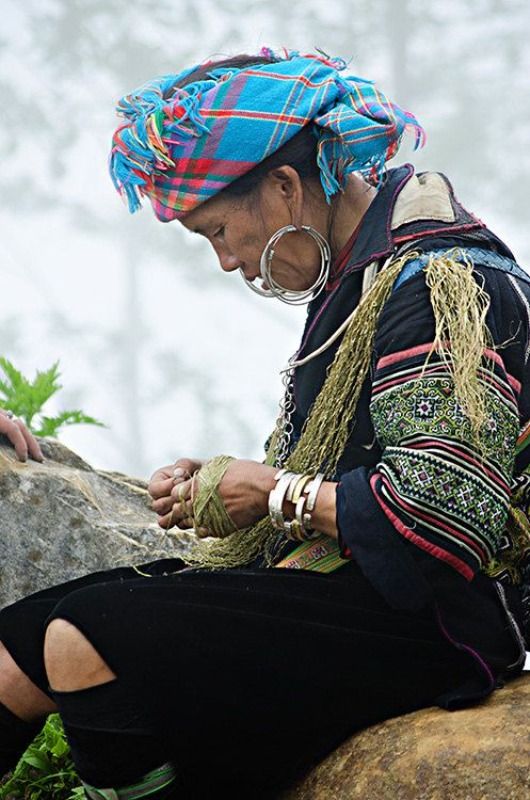
Linen plays a sacred role in the spiritual life of the Hmong people at Lung Tam Village, regarded as the thread connecting the worlds of yin and yang, helping the souls of the living communicate with ancestors and guiding the deceased to eternal rest.
To better understand, one must know that for the Hmong, linen is not merely a clothing material but carries profound spiritual meaning. The traditional Hmong proverb states: “Only by wearing linen can one find their ancestors.” This belief governs the entire cultural life and important ceremonies of the ethnic group.
The Role of Linen in Hmong Funerals
Linen plays an essential role in Hmong funerals, regarded as the “ticket” helping the deceased’s soul find their way back to ancestors and reincarnate as humans in the next life.
More specifically, the Hmong believe that when a person dies without linen clothing, the entire village and clan will not conduct funeral rites for them. The soul will wander aimlessly, unable to find its way back to grandparents and ancestors, and ancestors cannot recognize their descendants. This profound spiritual belief explains why linen weaving has been passed down through generations within the Hmong community.
Additionally, Hmong funeral attire is made entirely from white linen or indigo-dyed linen fabric. The deceased’s family typically prepares linen clothing years in advance, or relatives will weave new garments to send off the departed. Every stitch on the funeral clothing contains the love and prayers of the living for the deceased.
More importantly, hemp fibers in Hmong belief symbolize the connection between the two worlds of yin and yang. The delicate yet sturdy hemp fibers are likened to a bridge guiding souls, helping them cross the boundary between life and death. Due to this sacred significance, the Hmong place particular importance on linen quality – fibers must be even, fabric must be smooth, colors must be beautiful – as a way of showing reverence for the deceased and ancestors.
Products Made from Linen at Lung Tam Village
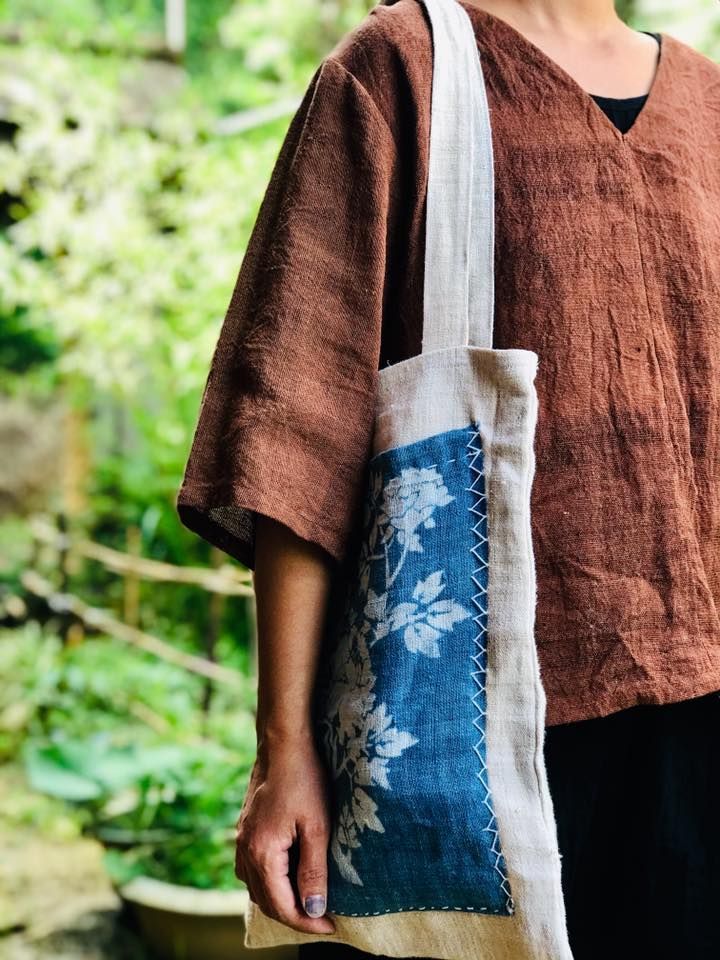
Over 20 types of products are made from linen at Lung Tam Village, divided into 4 main groups: traditional clothing (skirts, shirts, headscarves), fashion accessories (handbags, wallets, belts), home decorations (tablecloths, pillowcases, wall hangings), and souvenirs (keychains, embroidered patches, stuffed animals).
Below, let’s explore the diversity of Lung Tam linen products in detail:
Lung Tam linen products excel over industrial products in three important criteria: higher color durability thanks to natural indigo dyeing, health-friendly materials due to no chemical use, and each product being unique because it’s made entirely by hand.
More specifically, the biggest difference lies in the dyeing method. While industrial fabrics use chemical dyes that may fade after several washes, Lung Tam linen is dyed with natural indigo through multiple soaking and drying cycles. The result is fabric color that remains beautiful over time, actually becoming softer and more attractive with each wash.
Furthermore, the natural linen material is completely safe for users. Hemp fibers have excellent sweat absorption, breathability, and natural antibacterial properties – characteristics that synthetic fabrics cannot possess. Notably, linen also provides warmth in winter and coolness in summer, suitable for the harsh highland climate.
More importantly, each Lung Tam linen product is a unique work of art. From the weave pattern to the motifs and colors, each bears the distinct mark of the craftsperson who created it. Customers purchasing these products don’t just own a quality item but also take home the cultural story and soul of the Hmong woman who spent months perfecting that product.
What Can Visitors Experience at Lung Tam Village?
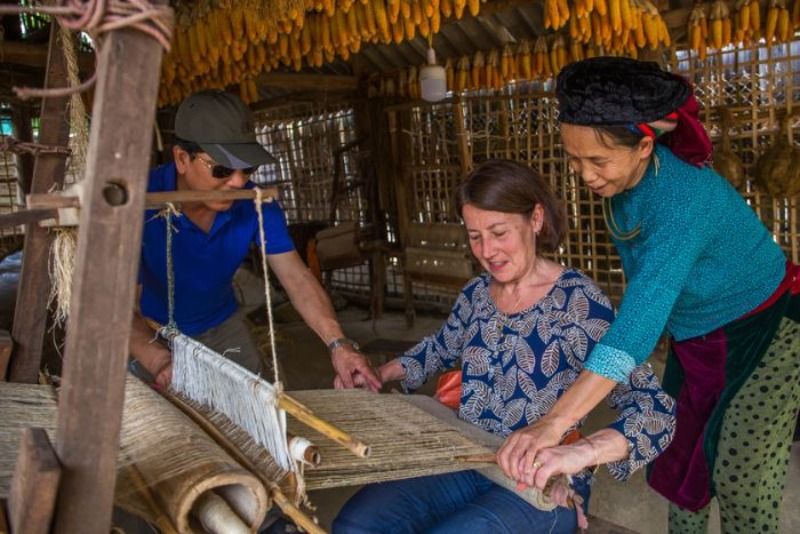
Visitors to Lung Tam Village can participate in 4 main experiential activities: observing the 41-step linen weaving process, joining hands-on workshops for weaving and beeswax drawing, shopping for authentic brocade products, and cultural exchange with local residents.
Workshops at Lung Tam Village are designed suitable for all types of visitors, from newcomers to those wanting to delve deeper into linen weaving techniques. Workshop activities include:
- bserving the production process: Visitors can witness all 41 steps from fiber separation and hemp spinning through to indigo dyeing and beeswax pattern drawing — each stage offers distinct visual compositions, and travelers who have reviewed dedicated Ha Giang Loop Photography Tips before arriving will be better equipped to capture the texture of hand-spun fibers, the depth of indigo-dyed fabric, and the intricate detail of beeswax motifs in low-light workshop conditions.
- Practicing hemp fiber spinning: Learning to join fine hemp fibers without creating knots – a technique requiring patience and dexterity
- Experiencing weaving on a traditional loom: Sitting beside the traditional backstrap loom and personally weaving a small piece of fabric
- Learning beeswax drawing: Practicing drawing simple motifs like triangles and spirals on fabric using hot beeswax
How to Get to Lung Tam Village
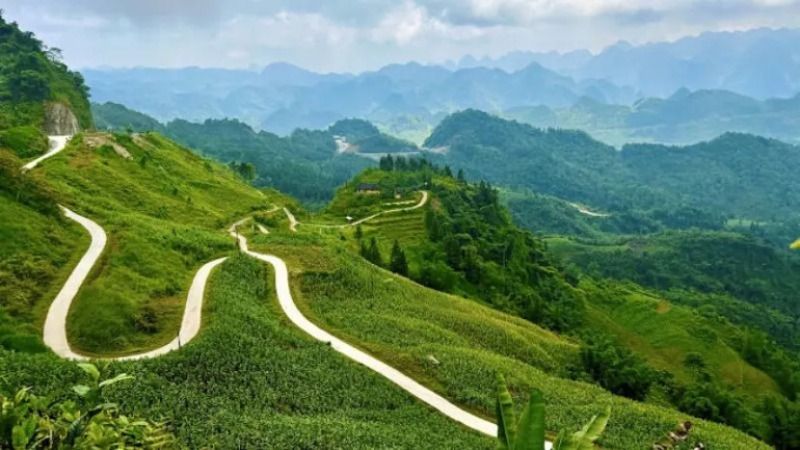
There are 2 main routes to reach Lung Tam Village from Ha Giang center: Route 1 via Quan Ba Heaven’s Gate (73km, 2 hours) suitable for those wanting to sightsee, and Route 2 via Ma Pi Leng (56km, 1 hour 50 minutes) suitable for those who have already passed through Heaven’s Gate.
Route 1:
- Route 1 covers 73.1km from Ha Giang City via National Highway 4C through Bac Sum Slope, Quan Ba Heaven’s Gate, and Tam Son Town before turning right into Lung Tam Village — an approximately 2-hour ride that rewards the extra distance with a sequence of the Loop’s most iconic viewpoints; travelers who arrange Ha Giang motorbike rental in Ha Giang City before departure will find this route fully accessible on a standard semi-automatic bike.
- Advantages: Passes through many famous check-in spots, with cafes and rest stops along the way
Route 2:
- Ha Giang City → Nguyen Trai Street → National Highway 4C → Thuan Hoa Bridge → Ma Pi Leng Pass → Thuan Hoa Market → A Boong Waterfall → Road 181 → Lung Tam Village
- Total distance: 56.3km
- Duration: approximately 1 hour 50 minutes
- Advantages: Shorter route, suitable if you’ve already visited Heaven’s Gate
Best Time to Visit Lung Tam Village
The ideal time to visit Lung Tam Village is from October to April when the weather is cool and dry, or May-June if you want to witness the unique hemp harvesting season.
Specifically, the table below analyzes the best visiting times for Lung Tam Village by season:
| Season | Characteristics | Advantages | Disadvantages |
|---|---|---|---|
| October – December | Buckwheat flower season | Romantic scenery, cool weather | Crowded with tourists |
| January – April | Dry season, chilly | Little rain, convenient roads | Morning fog possible |
| May – June | Hemp harvesting season | See the entire process from harvest | Rainy season begins |
| July – September | Rainy season | Fewer tourists, lower service prices | Slippery roads, possible landslides |
Read more:
- Top 9 Festivals in Ha Giang: Explore Ethnic Rituals