
 Home
Home About
About Tours
Tours Bikes Rental
 Contact
Conquering Ma Pi Leng Pass demands thorough preparation from choosing the right vehicle and planning your itinerary to budgeting your costs and knowing how to stay safe. This guide brings together everything you need to know from A to Z so you can hit the road with confidence.
Here is everything you need to prepare: understanding what Ma Pi Leng actually is, picking the ideal time to visit, figuring out how to get there, deciding how many days to allocate, estimating your budget, choosing which attractions to visit and the essential safety tips you cannot afford to ignore when tackling the most treacherous mountain pass in Northern Vietnam.
About Ma Pi Leng Pass
Ma Pi Leng Pass sits along National Highway 4C, stretching between Dong Van Town and Meo Vac Town in Ha Giang Province. Nicknamed the “King of Passes,” it holds a place among the legendary Four Great Passes of Northern Vietnam thanks to its sheer cliffs, breathtaking scenery, and 20 kilometers of road carved into rock at an average elevation of 1,200–1,500 meters above sea level.
To understand why Ma Pi Leng holds such a powerful grip on the imagination of every rider who has ever heard its name, it helps to look at the pass from the ground up — its name, its geography, and the terrain that made it famous.
Ma Pi Leng Pass lies within the boundaries of Pa Vi and Pai Lung communes, Meo Vac District, Ha Giang Province — a remote frontier region in the far northeast of Vietnam, bordering China. In the H’Mong language, “Ma Pi Leng” means “the ridge of a horse’s nose” — an image that captures the pass perfectly: a thin, near-vertical spine of rock where a single mistake can send you hundreds of meters into the gorge below.
The pass is approximately 160 kilometers from Ha Giang City along National Highway 4C and around 300 kilometers from Hanoi. To reach it, travelers pass through a chain of well-known destinations: Quan Ba Heaven’s Gate (55 km from Ha Giang City), Yen Minh District (80 km), Dong Van Town (150 km), and finally the pass itself before descending into Meo Vac. Nearby attractions worth combining into your trip include Lung Cu Flag Tower, the Vuong Family Palace, Dong Van Old Quarter, and the Dong Van Karst Plateau.
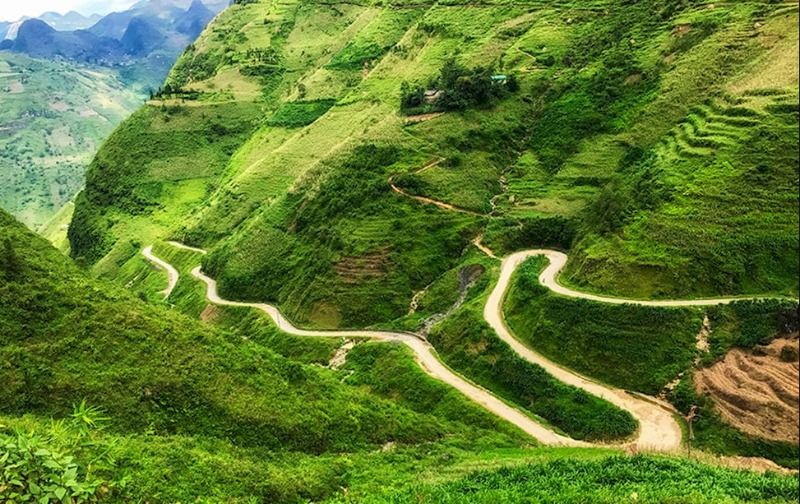
Why Is Ma Pi Leng Pass Called the “King of Passes”?
Ma Pi Leng has earned its reputation through three converging qualities: extreme and challenging terrain, some of the most spectacular natural scenery in Vietnam, and a depth of historical and cultural significance found nowhere else. It stands alongside O Quy Ho (Lao Cai), Pha Din (Son La–Dien Bien), and Khau Pha (Yen Bai) as one of the Four Great Passes of the Northern highlands.
What sets Ma Pi Leng apart from its three counterparts is a rare combination: on one side of the road, limestone cliffs rise hundreds of meters straight up; on the other, the Tu San Gorge — the deepest canyon in Southeast Asia — plunges to the valley floor where the jade-green Nho Que River winds far below. The feeling of standing between sky and earth, looking down from that height, cannot be replicated on any other pass in the country. The entire area falls within the Dong Van Karst Plateau UNESCO Global Geopark, one of the few UNESCO-recognized geoparks in Southeast Asia — a designation that only reinforces the extraordinary natural stature of this road.
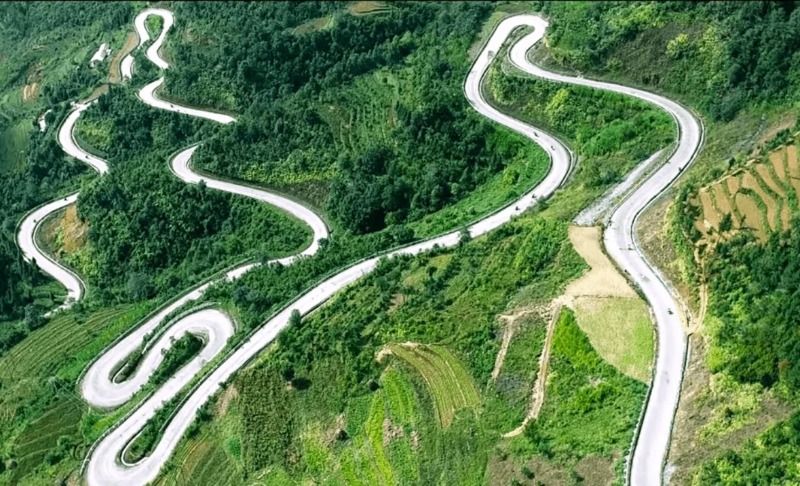
The Best Time to Conquer Ma Pi Leng Pass
Ma Pi Leng can be visited in four distinct seasons, each offering a completely different visual experience and set of weather conditions
1. Buckwheat Flower Season
This is the most beautiful time of year at Ma Pi Leng. Fields of buckwheat flowers blanket the limestone hillsides in shades of pink and purple, the weather is cool and dry, and visibility is excellent. Flowers bloom from mid-October at the base of the pass and reach the Dong Van Plateau by the first week of November the ideal window for catching both layers of bloom is November 1–15. This is also the busiest season, so book accommodation in Meo Vac or Dong Van at least two to three weeks in advance.
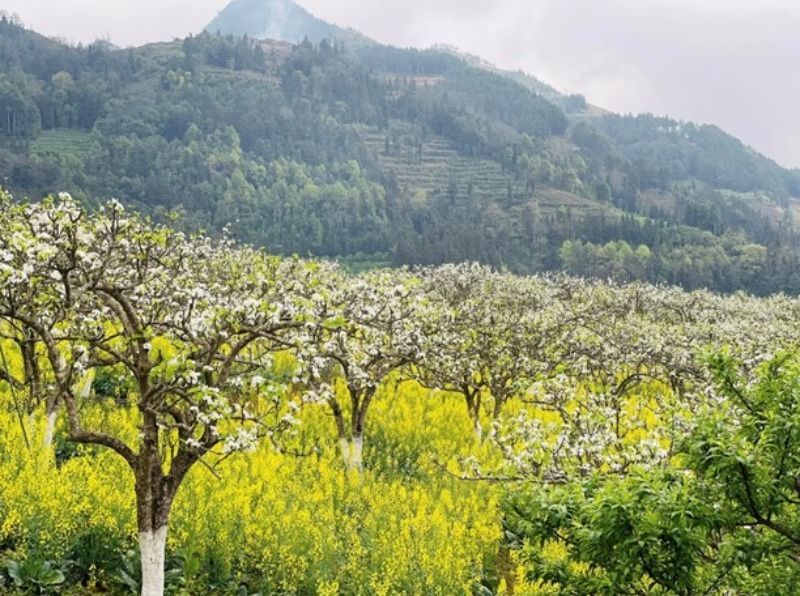
2. Canola Blossoms, Peach and Pear Flowers
The second-best time to visit. The karst plateau shifts to yellow canola fields, white pear blossoms, and pink peach flowers — a softer, more delicate landscape than the buckwheat season. Weather is mild, morning mist is light, roads are dry, and crowds are manageable. A good option for travelers who want beautiful scenery without the peak-season rush.
3. Winter, Cloud Hunting and Frost
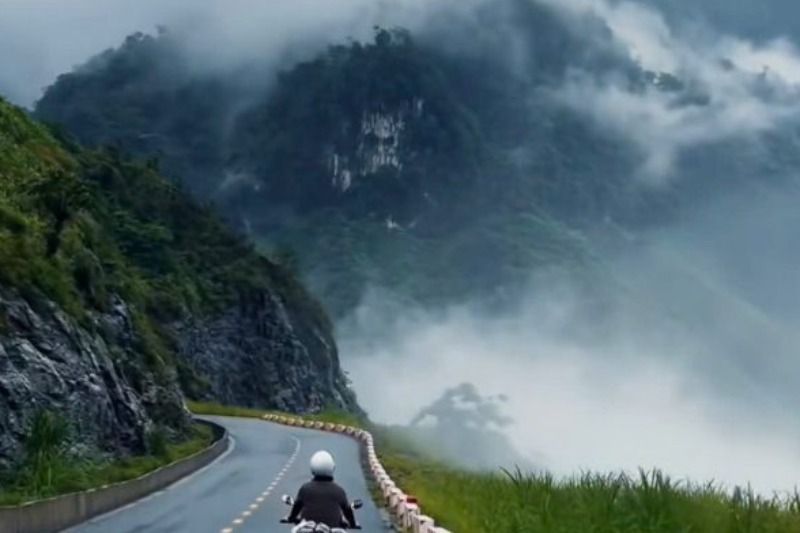
The clearest skies of the year, offering the best chance of witnessing a “sea of clouds” rolling over the mountain ridges. Temperatures can drop below 5°C in the early morning, and ice may form on the highest sections of road. Dense fog typically lingers from dawn until around 9–10 a.m., so plan to set off between 8 and 9 a.m. after the mist begins to lift — not at first light as you might in summer. Prepare warm layers and check your tire condition carefully before entering the pass.
4. Rainy Season
The plateau turns a deep, lush green and waterfalls run full, but roads become slippery and fog frequently blocks the view. The risk of rockslides and landslides increases significantly after heavy rain. This season is only suitable for experienced riders who know mountain roads well. If you do travel during this period, monitor weather forecasts closely and be prepared to stop and wait whenever conditions deteriorate.
How to Get to Ma Pi Leng Pass from Hanoi
There are three ways to travel from Hanoi to Ma Pi Leng Pass. All routes follow the same core axis:
1. Riding Your Own Motorbike from Hanoi
Best suited for experienced long-distance riders. Leave Hanoi between 5 and 6 a.m. along Highway 2 and expect to reach Ha Giang City in around four to five hours, after which you continue onto the Ha Giang Loop. The main advantage is complete freedom — you can stop anywhere you like and experience the mountain air directly. Fuel costs for the full route from Hanoi run approximately 150,000–200,000 VND per person.
2. Sleeper Bus to Ha Giang City, then Rent a Motorbike Locally
The right choice for travelers who don’t have their own bike or prefer not to ride the full distance from Hanoi. Multiple sleeper bus operators run the Hanoi–Ha Giang City route from My Dinh and Giap Bat bus terminals, with journey times of around five to six hours and ticket prices between 200,000 and 300,000 VND each way. On arrival in Ha Giang City, you can rent a motorbike from rental shops clustered around Tran Hung Dao and Nguyen Trai streets at the following rates:
- Manual Honda Wave or Dream: 150,000–170,000 VND per day
- Automatic Honda Airblade or Click: 200,000–250,000 VND per day
- Semi-automatic trail bike: 250,000–300,000 VND per day
Before accepting any bike, check the following: squeeze both brakes firmly to confirm they grip cleanly; inspect the tires for wear and correct pressure; test the headlight, turn signals, and tail light; confirm the fuel tank is full stations are sparse along the pass itself. Photograph the entire bike before riding away to protect yourself against any damage disputes when you return it.
3. Hiring a Car with Driver
The most comfortable option for families, older travelers, or anyone with young children. Hiring a four-seat car with a driver for a full day costs approximately 1,500,000–2,500,000 VND. One important caveat: a car is not always safer than a motorbike on Ma Pi Leng Pass. Some hairpin bends are so tight that larger vehicles need to reverse multiple times to make the turn. Always hire a driver who knows the local roads rather than attempting to self-drive if you have never taken this route before.
3-Day Itinerary for Conquering Ma Pi Leng Pass
Below is an itinerary compiled from the real-world experience of thousands of riders. Choose the version that best fits your available time and energy.
Day 1: Hanoi → Ha Giang City → Quan Ba → Yen Minh (overnight)
- Depart Hanoi at 5–6 a.m., ride Highway 2 to Ha Giang City (~4–5 hours)
- Pick up rental bike, eat breakfast, check gear in Ha Giang City
- Ride to Quan Ba Heaven’s Gate (55 km, ~2 hours) — stop at the Twin Fairy Mountains viewpoint
- Continue to Yen Minh for the night (~80 km from Ha Giang City)
- Total distance Day 1: ~380 km (including Hanoi–Ha Giang City)
Day 2: Yen Minh → Dong Van → Ma Pi Leng Pass → Meo Vac (overnight)
- Depart at 7 a.m., ride to Dong Van Old Quarter (~70 km from Yen Minh) — visit Dong Van Market and the Vuong Family Palace
- Ride the 20 km Ma Pi Leng Pass — the undisputed highlight of the entire trip
- Stop at Panorama Ma Pi Leng to photograph and take in the view over the Nho Que River
- Descend to Meo Vac; take a boat trip on the Nho Que River if time allows in the afternoon
- Overnight in Meo Vac
Day 3: Meo Vac → Ha Giang City → Hanoi
- Morning: visit Meo Vac Market if it falls on a market day (Mondays and Thursdays)
- Ride from Meo Vac back to Ha Giang City via the longer loop route (through Mau Due and Bac Me) or retrace the same road
- Return the rental bike in Ha Giang City; take a bus or ride back to Hanoi
Must-See Attractions at Ma Pi Leng Pass
There are six attractions at and around Ma Pi Leng Pass that no visitor should miss — each offering a completely different experience, from standing above a near-vertical drop to drifting through the deepest canyon in Southeast Asia by boat.
1. Panorama Ma Pi Leng
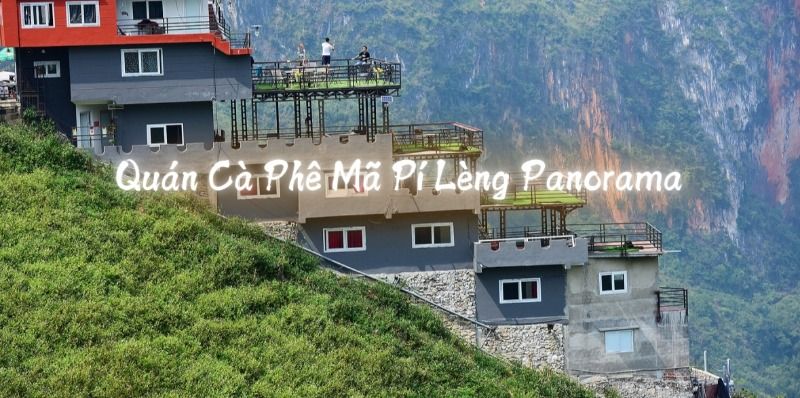
The most famous viewpoint on the pass, located on the slope of Pai Lung Commune, 15 kilometers from Dong Van Town and 5 kilometers from Meo Vac Town. A wooden observation deck juts out over the edge of the cliff, giving you a direct line of sight down to the Nho Que River nearly 1,000 meters below — this is the signature image of Ma Pi Leng Pass. Entry to the deck costs approximately 30,000–50,000 VND per person. Directly alongside the paid area, there is a free viewpoint on the road itself that is equally impressive. Arrive before 8 a.m. or after 3 p.m. to avoid the busiest period and catch the best natural light for photography.
2. Tu San Gorge
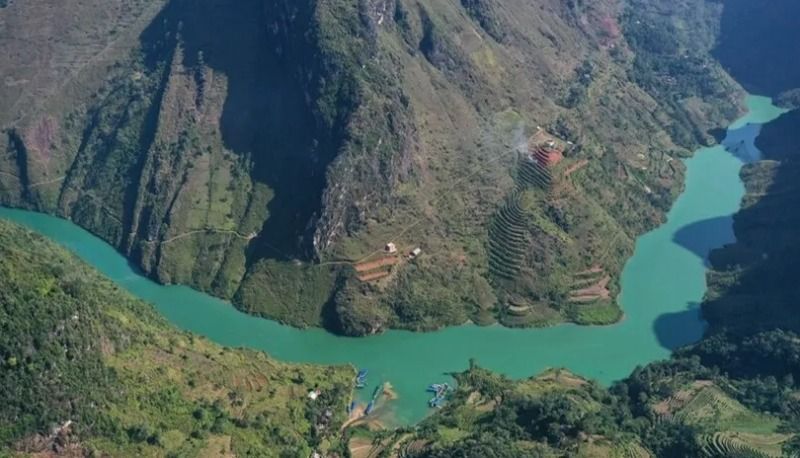
The deepest gorge in Southeast Asia, carved directly beneath the cliffs of Ma Pi Leng Pass over millions of years as the Nho Que River cut through the limestone bedrock, leaving vertical walls hundreds of meters high on both sides. You cannot fully appreciate the scale of Tu San from the road above a boat trip is the only way to see it properly.
3. Nho Que River – Boat Trip
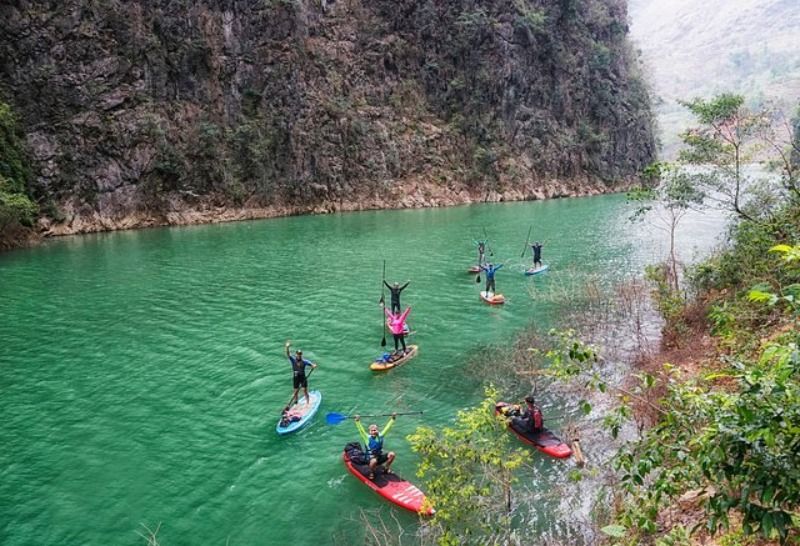
The boat departure point sits at the river’s edge below the pass, around 5–7 kilometers from Panorama along the road descending toward Meo Vac. A trip takes 45–60 minutes and costs 100,000–150,000 VND per person. The river’s distinctive jade-green color is a natural phenomenon caused by the water’s pH as it flows through limestone — it is not artificially dyed. This is the only way to see the full face of the cliff from below, a completely different perspective from standing on the pass above. Book your ticket in advance during peak season (October–November), wear the life jacket provided by the operator, and bring a waterproof camera bag or zip-lock pouch.
4. Sunrise and Cloud-Hunting on the Summit
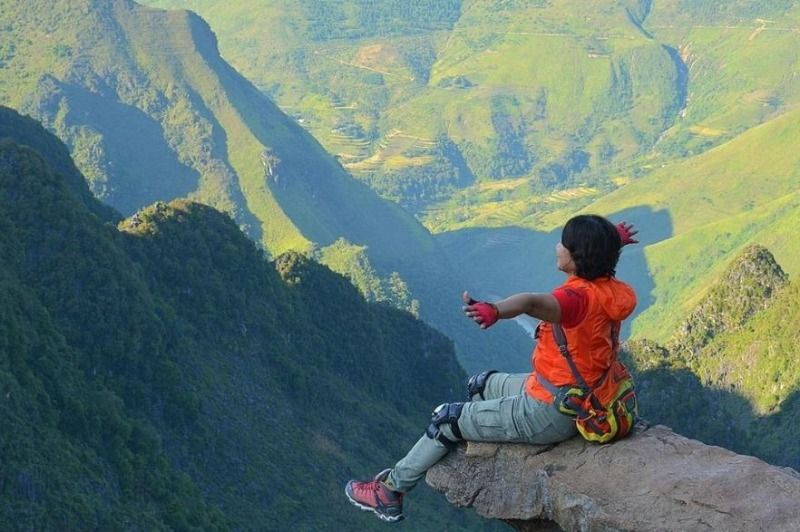
The window between 5 and 7 a.m. is the golden hour for cloud photography at Ma Pi Leng, especially in autumn and winter. When the temperature difference between the summit and the valley is large enough, white cloud banks spill over the rock faces and fill the gorge below, creating a scene that looks more dreamlike than real. Bring warm layers — the temperature at the top of the pass runs 5–8°C colder than at the base.
5. Ethnic Minority Villages Along the Pass Road
The full 20-kilometer stretch of the pass road passes through several H’Mong, Red Dao, and Flower Lo Lo villages — most notably Sin Cai, Pa Vi, and Pai Lung — where traditional rammed-earth houses line the roadside and the community’s daily life continues largely unchanged. Stop to buy local specialties (wild buckwheat honey, Ha Giang corn liquor, hand-woven brocade), try a bowl of thang co (a traditional H’Mong stew) at a roadside stall, and take a moment to speak with the people who live here. Many riders say this is the part of the journey that stays with them longest — long after the scenery has faded.
6. The Full 20-Kilometer Pass Road
The road itself, running from Dong Van down to Meo Vac, is an attraction in its own right — a continuous sequence of tight hairpin bends, sheer cliff faces, and views that open onto the deep valley at every turn. Resist the urge to ride it straight through without stopping. Pull over at the points where the road juts closest to the edge, switch off your engine, and sit quietly with the wind and the silence. Many riders describe this as the single most memorable moment of the entire trip.
Essential Safety Tips for First-Time Riders on Ma Pi Leng Pass
Below are safety guidelines drawn from the real-world experience of thousands of riders.
Bike and luggage preparation:
- Check brakes, tires, and fuel before entering the pass — do not count on finding a repair shop along the road
- Avoid overloading the bike or tying cargo loosely — a heavy backpack shifts your center of gravity dangerously through corners
- Distribute weight evenly across both sides of the bike if using saddlebags
Riding behavior on the pass:
- Keep your speed below 20–30 km/h through hairpin bends
- Never overtake on the pass — always yield to trucks and buses coming from the opposite direction
- Do not stop in blind corners or on steep sections — only pull over at designated stopping points
- Put your phone away while riding
Clothing and timing:
- Wear warm layers even if the weather feels mild when you set off — the temperature at the summit is 5–8°C colder than at the base
- Wear a full-face or certified open-face helmet — baseball caps and half-shell helmets offer inadequate protection
- Wear closed-toe shoes with grip — sandals and heels are not appropriate footwear for mountain roads
- Ride only in daylight — never cross the pass after dark
Emergency contacts and communication:
- Save the phone numbers of the Pai Lung Commune People’s Committee, Meo Vac District authorities, and local rescue services
- Tell someone your planned route and estimated arrival time before entering the pass
- If your bike breaks down or you have an accident, move it to the road’s edge and switch on your hazard lights — never leave it blocking the lane