
 Home
Home About
About Tours
Tours Bikes Rental
 Contact
Everything you need to plan a complete trip, where the Nho Que river is, what to do there, when to go, how to get to the boat docks, and how much to budget is covered in detail below.
Where Is Nho Que River Located in Ha Giang?
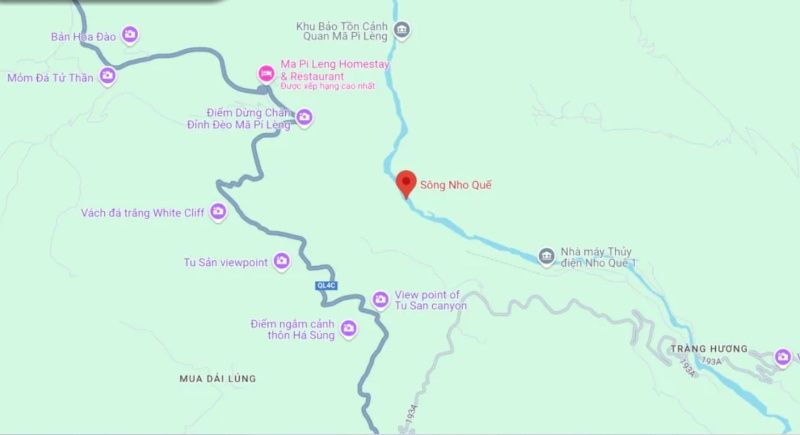
The Nho Que River is a tributary of the Gam River within the Red River system. It originates from the Nghiem Son mountain range in Yunnan Province (China) at an altitude of over 1,500 meters. The river has a total length of 192 km, of which 46 km flows through Vietnamese territory in a northwest direction.
The river enters Vietnam at Seo Lung village, Lung Cu commune, Dong Van district — the northernmost point of the country. From there, it flows through the Tu San Canyon, along the foot of Ma Pi Leng Pass, and continues to Meo Vac district. At Meo Vac, the river splits into two branches: one flows east, while the other flows southeast into Cao Bang province before merging with the Gam River at Na Mat junction in Ly Bon commune, Bao Lam district.
The entire Vietnamese section lies at an average elevation of 800–1,200 meters above sea level, creating a cool climate and some of the most spectacular Ha Giang check in places and landscapes in all of northern Vietnam.
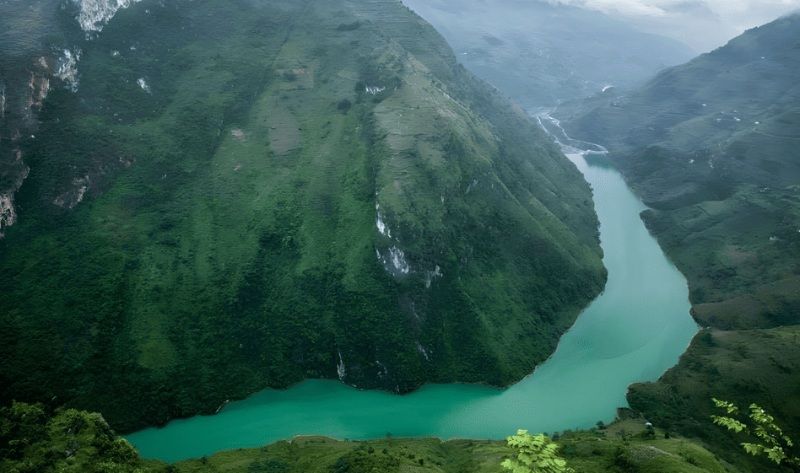
Why is Nho Que River emerald green all year round?
The river’s distinctive emerald-green color results from a combination of geological and optical factors: white limestone riverbeds reflecting sunlight, water depth, and unique mineral composition.
The river flows through the Dong Van Karst Plateau, one of Vietnam’s UNESCO Global Geoparks. The white limestone beneath the water reflects sunlight, creating a vivid green hue—distinct from the muddy brown of lowland rivers or the dark blue of mountain lakes.
Additionally, since the Nho Que hydropower system became operational, the current has slowed, allowing sediment to settle at the bottom. This makes the water clearer and greener. During the dry season (November to April), reduced rainfall lowers clay content, making the emerald color even more vibrant.
This natural color requires no photo editing, making Nho Que River a rare phenomenon among Vietnamese rivers.
The Role of Tu San Canyon in the Nho Que River Journey
Tu San Canyon is the deepest canyon in Southeast Asia, located in Pa Vi commune, Meo Vac district, Ha Giang province. It features cliffs 700–1,000 meters high and stretches about 1.7 km, formed over ملايين years of geological activity.
This canyon is the heart of the Nho Que experience. As boats move through it, towering limestone cliffs rise dramatically on both sides, leaving only a narrow strip of sky above.
From Ma Pi Leng Pass, the canyon appears as a thin green line. But from within, it reveals the overwhelming grandeur of nature. Both perspectives—from above and below—are essential for a complete experience.
Top experiences on Nho Que River
There are three main experiences for visitors:
Motorboat ride
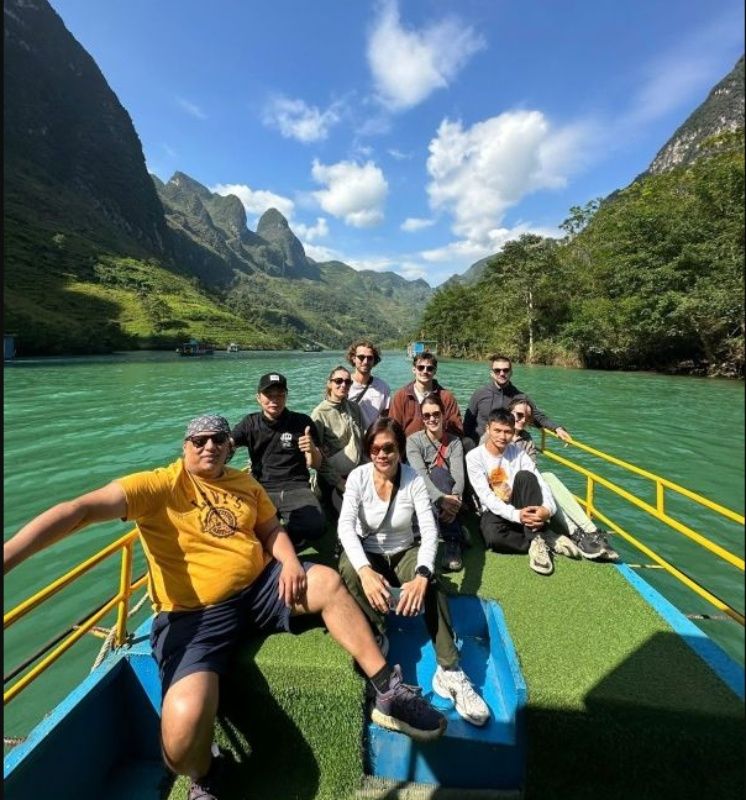
A motorboat trip lasts about 45 minutes to 1 hour, departing from Ta Lang or Xin Cai piers. It takes visitors through Tu San Canyon, offering close views of towering cliffs and emerald waters.
This is the most popular option, suitable for all ages. Local guides operate the boats and explain the landscape. Visitors can even touch the cool, clear water.
Price: 120,000 – 350,000 VND per person (round trip)
Kayaking
Kayaking offers a more immersive and peaceful experience. Paddling through the calm water allows deeper connection with nature.
Price: 50,000 – 150,000 VND per person (30–60 minutes)
View from Ma Pi Leng Pass
There are three best viewpoints:
- Midpoint of the pass (clear river curve)
- Tham Ma viewpoint (widest view)
- Cliff edge near Meo Vac (closest to the river)
Ma Pi Leng Pass, about 20 km long and nearly 2,000 meters high, is one of Vietnam’s “Four Great Passes.” From above, the river appears like a jade ribbon winding between massive gray cliffs.
Best time for photos:
- Morning: 7:00–9:00 AM
- Afternoon: 4:00–6:00 PM
Cloudy days can create a surreal, dreamlike view.
Best time to visit Nho Que River
The ideal time is the dry season from September to April:
- October–November: Buckwheat flower season
- March–April: Red cotton flower season
Avoid June–August due to heavy rain, dangerous roads, and possible suspension of boat services and regardless of when you travel, reviewing a thorough Ha Giang loop packing list beforehand will help you stay prepared for the region’s unpredictable mountain weather
How to get to Nho Que River
Hanoi → Ha Giang
- Distance: 300 km
- Sleeper bus: 200,000 – 350,000 VND (overnight)
- Self-drive: 7–8 hours
Ha Giang → Nho Que area
- The ~160 km route from Ha Giang city to the Nho Que area follows National Highway 4C, passing through Dong Van and over Ma Pi Leng Pass bookmarking a detailed Ha Giang loop map before departure is strongly recommended, as mobile signal along this stretch is unreliable.
Access to the river
- Motorbike (self-drive): For independent travelers, Ha Giang motorbike rental is the most flexible and popular option for reaching the piers at Ta Lang and Xin Cai
- Taxi or motorbike taxi from Dong Van or Meo Vac
- Tour packages from Hanoi: Travelers who prefer a guided experience can book organized tour packages from Hanoi operators such as Vietmotorbiketour offer structured Ha Giang Loop itineraries that include transport, accommodation, and local guides.
Main piers: Ta Lang and Xin Cai
Estimated travel cost
| Category | Budget | Comfortable |
|---|---|---|
| Boat ticket | 120,000 VND | 350,000 VND |
| Kayak | 50,000 VND | 150,000 VND |
| Transport to pier | Free (motorbike) | 50,000–100,000 VND |
| Traditional costume rental | Not included | 50,000–150,000 VND |
| Meals (1 day) | 100,000 VND | 300,000 VND |
| Accommodation (1 night) | 200,000 VND | 500,000–1,000,000 VND |
| Total | ~500,000 VND | ~1,500,000 VND |
Suggested Ha Giang Loop itinerary (4 days 3 nights)
There are 5 must-visit destinations to combine with Nho Que River on a 4-day 3-night Ha Giang Loop itinerary: Lung Cu Flag Tower, Dong Van Ancient Town, Ma Pi Leng Pass, Dong Van Karst Plateau, and Meo Vac Town with Nho Que River serving as the emotional high point of the entire journey.
Below is a suggested 4-day, 3-night itinerary that covers all five destinations and builds naturally toward the Nho Que River experience on Day 3:
- Day 1 — Hanoi → Ha Giang → Yen Minh: Take an overnight sleeper bus from Hanoi, arriving in Ha Giang City by early morning. Rent a motorbike and begin riding north toward the plateau. The scenery gradually transitions from lowland valleys to limestone karst formations. Overnight in Yen Minh.
- Day 2 — Yen Minh → Dong Van → Lung Cu: Visit Lung Cu Flag Tower — the northernmost point of Vietnam, where the national flag flies above a hilltop overlooking the Chinese border. Explore Dong Van Ancient Town in the afternoon, with its centuries-old stone architecture and traditional market. Overnight in Dong Van.
- Day 3 — Dong Van → Ma Pi Leng Pass → Nho Que River → Meo Vac: This is the centerpiece day of the entire loop. Depart early to catch sunrise from the summit of Ma Pi Leng Pass. Then descend to Ta Lang Dock for a motorboat journey through Tu San Canyon. Spend the afternoon wandering Meo Vac’s weekly market, one of the most authentic highland markets in northern Vietnam. Overnight in Meo Vac.
- Day 4 — Meo Vac → Ha Giang City → Hanoi: Return via an alternate route, passing additional viewpoints and villages across the northeastern highlands. Return the motorbike in Ha Giang City and take the evening bus back to Hanoi.
Read more:
- Discover 9 Wild Waterfalls in Ha Giang – Destinations You Cannot Miss